Imagine walking into a stunning, minimalist concept store in London's Spitalfields Market.
The lighting is soft, the shelves are pristine, and the air smells like wealth you’ve never experienced and for a second, wonder if you ever will.
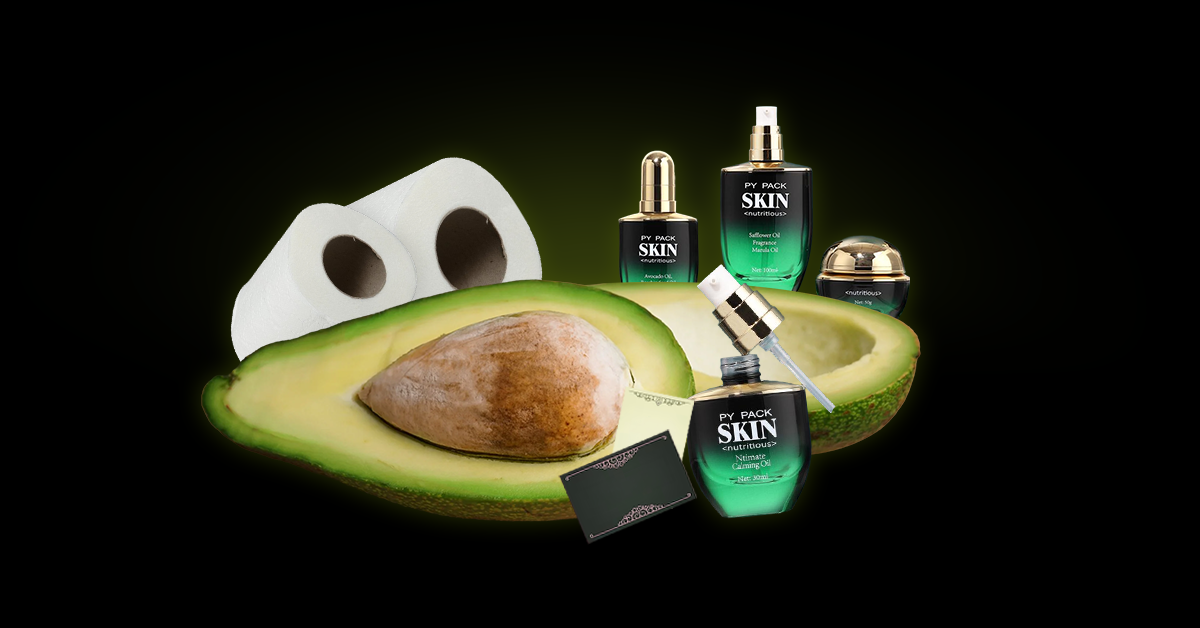
You pick up a sleek round item labelled "100% Natural Glow-Enhancing Vitality Orb."
Ok, well. I need glow. And vitality. And who doesn’t like orbs?? The price tag reads a cool £305.00. Yikes.
A sales associate unironically explains that it is formulated with "fast-absorbing actives to dynamically optimise your skin’s cellular vitality". And then you realise. It’s a fkn avocado.
This is literally exactly what happened at the Markup Marche, a global experiential pop-up by The Ordinary and Uncommon Creative Studio.
Taking over six cultural hubs including Paris, Toronto, and Melbourne, the activation features a fake grocery store. Here, everyday household necessities are aggressively repackaged like luxury skincare.
Alongside the £305 avocado, they are unironically ‘selling’ £96 toilet paper rebranded as High-Retention Cleansing Cylinders and £175 bananas masquerading as All-Natural Magical Energy-Boosting Bars.
It’s hilarious and so clever, but it’s also the best example of anti-marketing I’ve seen in a hot minute.
The brilliant absurdity of the stunt relies entirely on this linguistic bait-and-switch. They've wrapped a standard roll of toilet paper or a bunch of bananas in heavy, premium typography and clinical descriptions. And in doing so, they perfectly mirror the deceptive aesthetics of high-end department store counters.
The activation forces consumers to realise that the massive markups they willingly pay elsewhere aren't funding groundbreaking skincare biotechnology—they are simply funding the premium cardboard box it came in.
The beauty and wellness sectors have forever operated on a shared, silent agreement: the more confusing the language, the higher the price tag you can justify.
Mainstream skincare marketing relies heavily on gatekeeping.
Brands routinely invent fake scientific suffixes. They weaponise the word clean. And they introduce absurd buzzwords like “magnetic cellular infusers". All to mask the reality that a product is mostly water, glycerine, and a fraction of a percent of an active ingredient.
The Ordinary’s campaign lands a devastating blow. Because it drags this exact strategy out of the sleek department store and drops it into a supermarket aisle. When you see a banana priced at £175 because it contains "energy-boosting botanical actives," you laugh because the deception is obvious.
And that, my friends, is The Ordinary’s exact point. We willingly accept this exact same linguistic trickery every single day in the beauty aisle.
In traditional marketing, positioning is about defending your spot on the ladder.
But The Ordinary has never climbed the ladder. Rather, they sawed the legs off everyone else's.
By building a fake luxury supermarket, they executed a textbook "repositioning of the competitor”. Except it was more like framing every luxury competitor as a predatory joke.
Positioning is entirely relative.
By anchoring the concept of skincare marketing to a £305 piece of fruit, they permanently alter the consumer's value matrix.
The next time a shopper stands in front of a luxury counter looking at a triple-digit eye cream, their brain won’t register "prestige"… it will register "avocado." Lmfao.
See what I mean when I say this is genius? The brand is effectively altering how we perceive products, including its own, in the beauty sector. They in turn have positioned themselves as the baseline for logic and honesty in a sea of hysteria. They are the only rational choice. Not the cheap alternative.
Why this works for growth:
The ultimate contrast effect.
By assigning an astronomical price to a piece of fruit, they force a psychological pivot. A shopper leaves the pop-up, looks at a luxury brand's £150 serum, and immediately thinks: Is this just another avocado? Suddenly, The Ordinary's actual £6 Niacinamide serum looks like the ultimate act of rational consumerism.
Radical honesty as a competitive moat.
In an era of intense consumer scepticism and de-influencing, audiences are profoundly fatigued by miraculous marketing claims. By ruthlessly mocking the very industry they belong to, The Ordinary positions themselves as the only transparent adult in the room. Their tagline for the activation literally says it all: "Buy the ingredients, not the hype."
Immersive meta-marketing.
The brand went way deeper than witty billboards. They actually built physical infrastructure, designing custom packaging for produce, and even listing the fake “products” on The Ordinary Official Website with over-engineered product descriptions. The commitment to the bit is insane. And the level of dedication rewards their community with a massive, shareable inside joke.
When your entire industry relies on complexity, illusion, and inflated prestige, your greatest weapon is aggressive simplicity.
The Ordinary just reminded us that the most memorable way to capture consumer attention isn't to shout louder than your competitors. It’s to rip the veil off of everyone’s eyes so you don’t have to shout at all.
-Sophie Randell, Writer