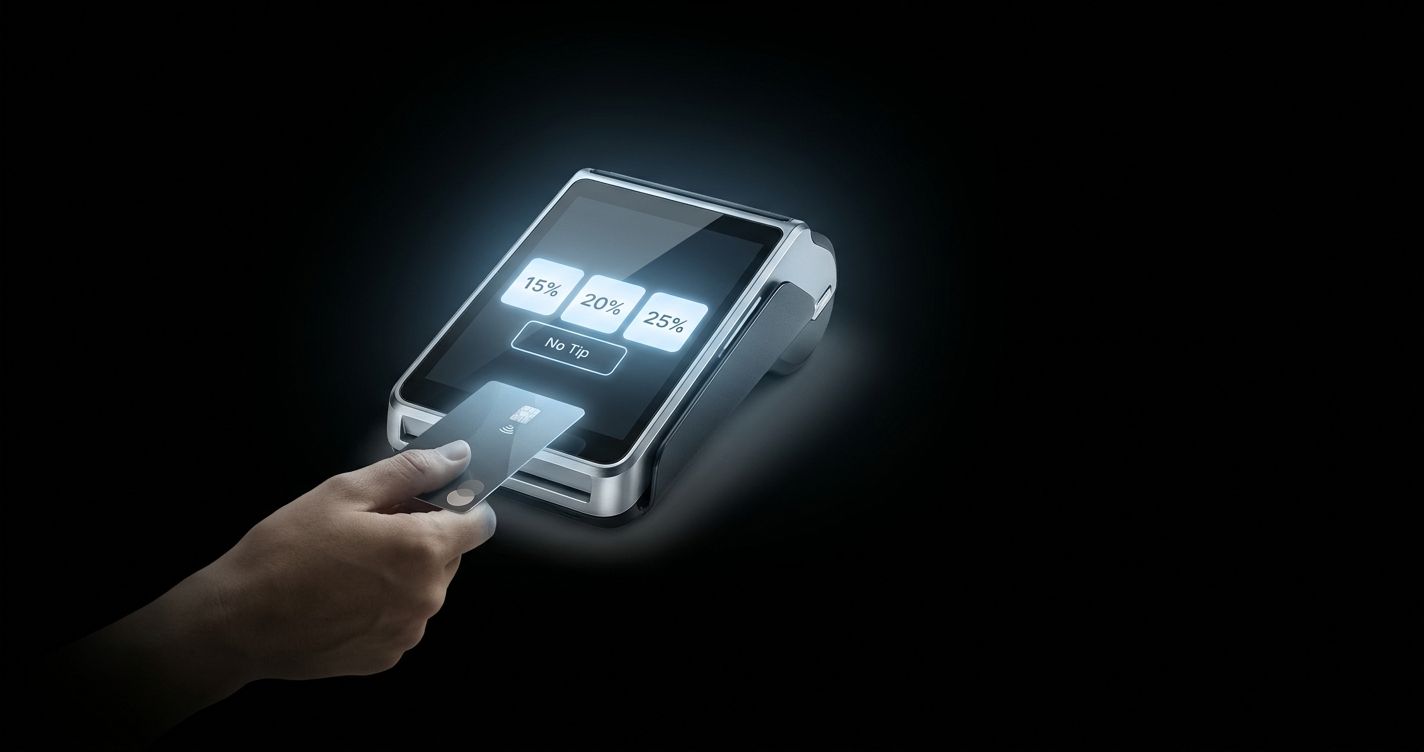
The barista handed me the card reader, and that freaking mandatory prompt asking me to select a tipping percentage popped up before I could even tap my card.
15%, 20%, 25%, or… the super awkward and uncomfortable, socially high-stakes button that reads "No Tip" right under the intense, watchful gaze of the person who just poured the cream into my long black in a paper cup.
Thoughts raced through my mind, my cheeks flashed red; do they think I’m a bad person? Am I a bad person? Does this wanky Ponsonby establishment think I’m a brokey? Am I? I mean, yeah. But still.
One tiny prompt, so much to think about. Glad I didn’t overreact.
You may not have the same cool calm reaction as me to such a tiny bit of stimuli. But nobody likes the idea of being guilt tripped into tipping for, well, nothing.
People dislike it so much, that I’ve literally heard it being called The Tip Fatigue Epidemic.
Tipping used to be a behavioural custom reserved exclusively for sit-down dining or exceptional hospitality service. Today, the digital checkout screen has mutated into an omnipresent psychological guilt trip. You are prompted to tip when you buy a pre-packaged sandwich from a cabinet, or when you order a pair of boots online???? The audacity is insanity. In this economy? Be so for real.
It feels small and localised in the moment. But it is actually driving a massive wave of consumer resentment. In a desperate bid to subsidise operational overheads, businesses are breaking the foundational social contract of retail and trading long-term customer loyalty for a handful of loose digital change.
The rapid spread of this checkout guilt comes down to a lazy, software-driven intervention.
When digital payment processors integrated pre-set tipping screens into their default user interfaces, corporate accounting departments didn't see an ethical boundary. Instead, they saw an un-optimised revenue stream. Nice one, bozos.
They realised they could artificially inflate their staff compensation or corporate margins. All without having to actually raise baseline wages or invest their own capital.
Butttttt what they didn’t realise is that you can’t automate generosity through peer pressure. Without making people feel a little weird about it, at least.
When a transaction requires a consumer to perform a moral calculation just to purchase a basic product, the entire joy of consumption… well, it just doesn’t hit the same.
Because It introduces an immediate layer of resentment and anxiety into what should be a seamless, positive brand touchpoint. Now, I’m not leaving the store thinking about how good my coffee was, or how cute their curated selection of antique spoons was a great touch. I’m leaving with the lingering, bitter taste of manipulation.
True, sustainable customer loyalty isn't built on a foundation of awkward compliance. It is built on a fair, transparent value exchange. When a business forces its front-line staff to act as automated collection agents for an interface prompt, they’re kind of cheapening the entire brand experience. It’s basically signalling to the market that they lack the confidence to price their products accurately.
Instead, they’re shifting the ethical burden of business operations entirely onto the shoulders of the customer.
Listen, if your payment gateway or checkout sequence relies on exploiting an audience’s social anxiety to squeeze out an extra percentage point at the register, I’m going to hold your hand while I say this, but you’re playing a bit of a short-sighted game.
The ultimate luxury asset in a hyper-transactional, digital world is transparency, not software to guilt trip your consumer. Just serving some food for thought, babes. No need to tip me x
-Sophie Randell, Writer