The way our brains process visual content has shifted. And it’s shifted oh-so-subtly that it’s almost imperceptible.
That doesn’t mean, however, that it’s not creating a massive headache for corporate marketing departments.
For decades, the holy grail of commercial design was absolute perfection. Thousands of dollars were spent on high-end retouching, flawless lighting, and clinical colour grading to ensure that every visual asset looked completely immaculate.
Smooth skin was airbrushed within a pixel of its life. We saw perfectly symmetrical layouts, and pristine, unblemished product shots. These were the universal signals of premium quality.
But as our feeds have become completely saturated with generative AI images, that flawless aesthetic has taken on a deeply toxic connotation.
Because it looks fake af.
So instead of signalling luxury, hyper-perfection has begun to trigger an immediate, visceral sense of digital side-eyes.
Consumers are developing a highly sophisticated internal filter for what I’d like to call the Synthetic Stain. Because the moment an asset looks a little too smooth, a little too perfectly lit, or a little too symmetrical, my subconscious brain instantly categorises it as slop.
I’m not mesmerised by perfection. I never have been, but particularly not right now. I’m actually repelled by it. No friction = no fun. Now, the ultimate premium asset isn’t a flawless design. It's an explicit, undeniable human texture.
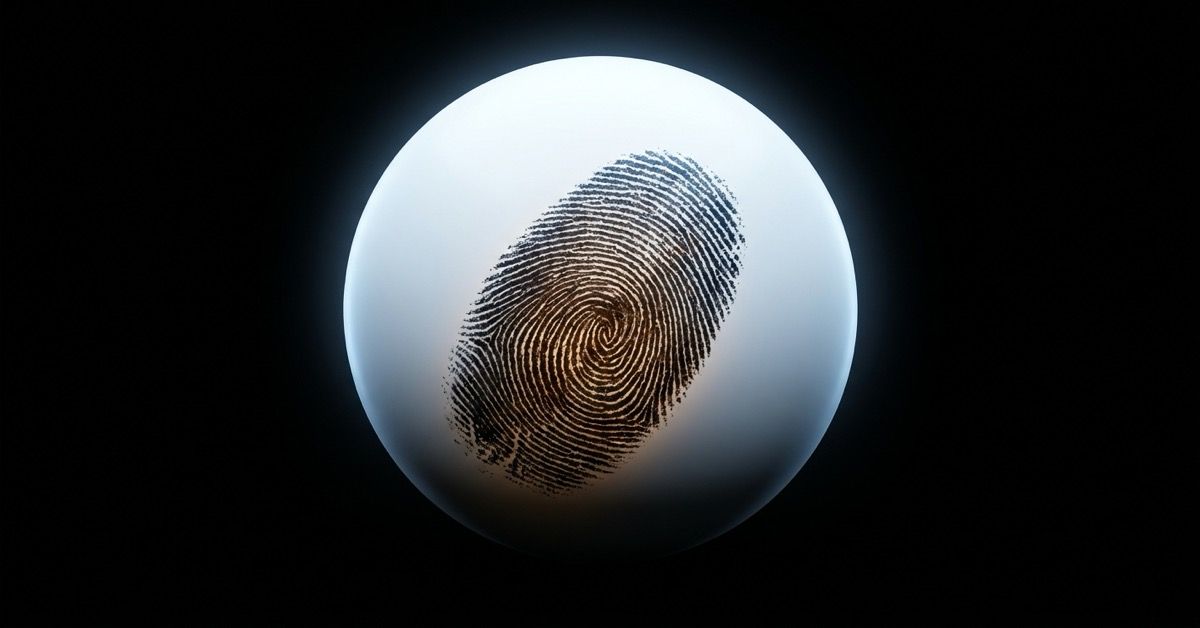
The return of the visual fingerprint is among us.
The rapid rise of this behavioural rejection comes down to basic evolutionary psychology. Human beings are incredibly proficient at spotting unnatural patterns. When generative software can churn out a mathematically perfect, frictionless graphic in three seconds, perfection ceases to be a metric of skill. It becomes a metric of automation.
To combat this automated fatigue, a powerful subculture of deliberate imperfection is taking over high-end branding.
We, the audience, now need somewhat of a visual fingerprint.
A subtle, un-optimised mistake that proves an asset was touched by an actual human hand.
Maybe it’s a slight grain on a photograph. A hand-drawn asymmetry in a typography layout. Or even a natural, unedited stutter left in a video clip. These flaws are no longer seen as technical failures. Instead, they’ve been elevated to the highest form of luxury provenance: the only remaining proof of life in a landscape flooded with synthetic mirrors.
Protecting your brand from the synthetic stain requires an intentional injection of friction:
The unfiltered capture.
Consider putting hyper-polished studio photography aside for a second. Instead, transition your visual assets toward natural, ambient lighting. Leave the unexpected lens flare, allow the background to be slightly cluttered, and let the shadows fall unevenly.
The asymmetric layout.
Try stepping away from rigid grid systems and perfectly balanced template boundaries. Incorporate hand-drawn elements, slightly irregular font spacing, or overlapping textures that feel intentionally organic. If a graphic looks like it could have been generated by a single prompt, start over.
The conversational glitch.
When editing video content or podcast audio, resist the urge to slice out every single "um," "ah," or natural pause. A hyper-edited, seamless vocal track sounds increasingly like a synthetic voice clone. Keeping the real cadence, laughter, and conversational stumbles is what hooks modern retention.
The market is hitting a saturation point with the performance of perfection.
We don't want to buy from a flawless, robotic entity that lives inside an idealised digital vacuum. We want to engage with brands that possess texture, character, and an organic pulse.
True brand authority is to possess the confidence to show your human seams.
Avoid that synthetic stain babes. Because it’s not a good look.
-Sophie Randell, Writer