Success = possession
That’s what we’ve always been taught.
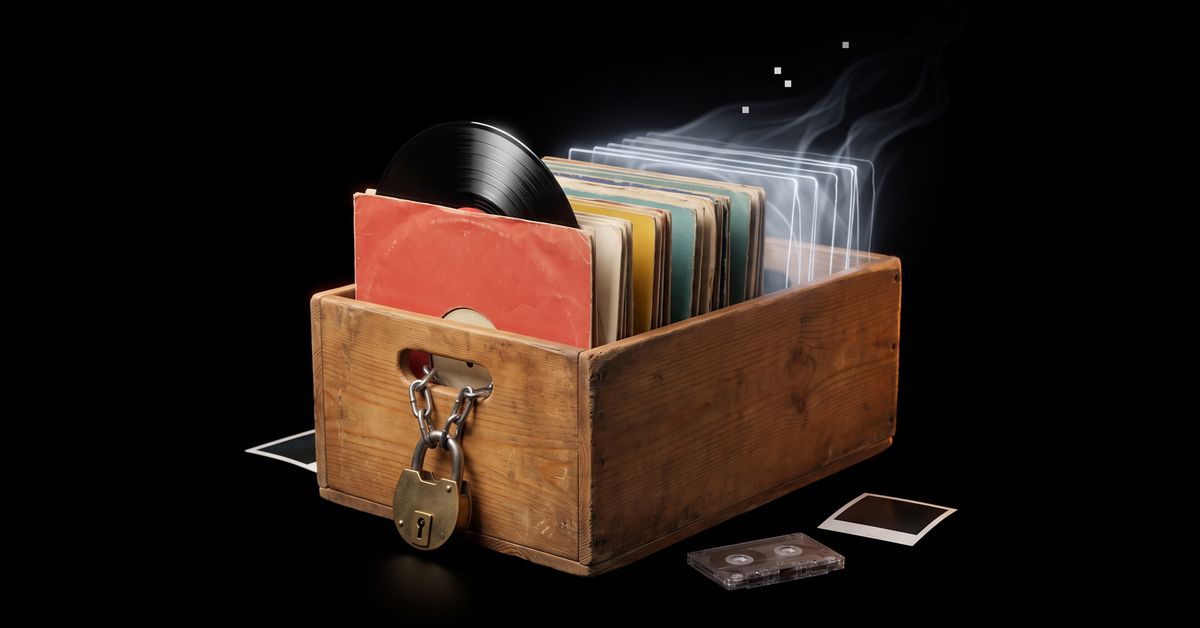
Success means accumulation. Your living room, a monument to your taste: racks of physical vinyl records, shelves packed with hardcover books, and binders filled with DVDs. You didn’t just love media; you owned it.
But over the past decade, we’ve noticeably migrated from tangible property and stepped into the access economy.
We traded ownership for temporary licensing. Instead of buying a film or going to the video store, we subscribe to Netflix. Instead of purchasing an album, we rent the right to stream it on Spotify. Even software, cars, and clothes have been shifted to subscription-as-a-service models.
On paper, it was pitched as a consumer utopia: infinite convenience, no storage hassle, and access to everything on earth for the price of a few monthly lattes.
But now that we are well and truly living in this rental landscape, the novelty is wearing off.
The Reality of Fractional Possession
The structural glitch of the access economy is that it introduces a permanent state of impermanence. When you “buy” a digital book on a Kindle or a digital movie on Amazon Prime, you (obviously) aren’t actually buying an object.
You are buying a conditional license that can be revoked at any moment due to boardroom disputes or changing digital rights management (DRM) laws.
A real-world example of this: when Sony announced it was removing over 1,300 titles of purchased Discovery show content from PlayStation users’ libraries because of a licensing update. Consumers who had spent actual money “buying” these shows woke up to find their digital shelves empty.
And this is the structural baseline of the modern web.
The psychological byproduct of this shift is a feeling of fractional possession. When your relationship with your belongings is mediated by an internet connection and a paywall, your relationship with those objects becomes incredibly detached.
The items we consume lose their emotional weight, their history, and their identity. A Spotify library containing millions of songs is and always will be less valuable than a crate of twenty physical vinyl records you had to search for, clean, and manually place onto a turntable. When everything is universally accessible, nothing feels particularly special.
At all, in fact.
The Return of the Tactile Counter-Movement
This is exactly why we are seeing a renaissance in tactile, analogue products. Look at the ongoing boom of physical book sales among Gen Z, driven largely by subcultures like #BookTok. Young consumers aren’t just buying paperbacks to read them, they want to build a physical library, a monument to their personal taste.
Similarly, companies like Fujifilm with their Instax cameras or Polaroid have made a major comeback. In an era where everyone has a flawless, infinite camera roll on their smartphone, a single, grainy, physical photo that takes two minutes to develop and cannot be duplicated becomes an incredibly precious luxury object. It possesses a quality that digital access can never replicate: scarcity.
The Takeaway:
The access economy has commodified convenience, but it has hollowed out the emotional equity of possession.
Look for ways to introduce tactile friction back into your ecosystem.
Send your subscribers high-quality physical zines, design beautiful, collectible packaging for your products, or create exclusive real-world artifacts that your community can actually hold.
In a world where everything is rented, the brand that gives its audience something real to keep will hold the deepest loyalty.