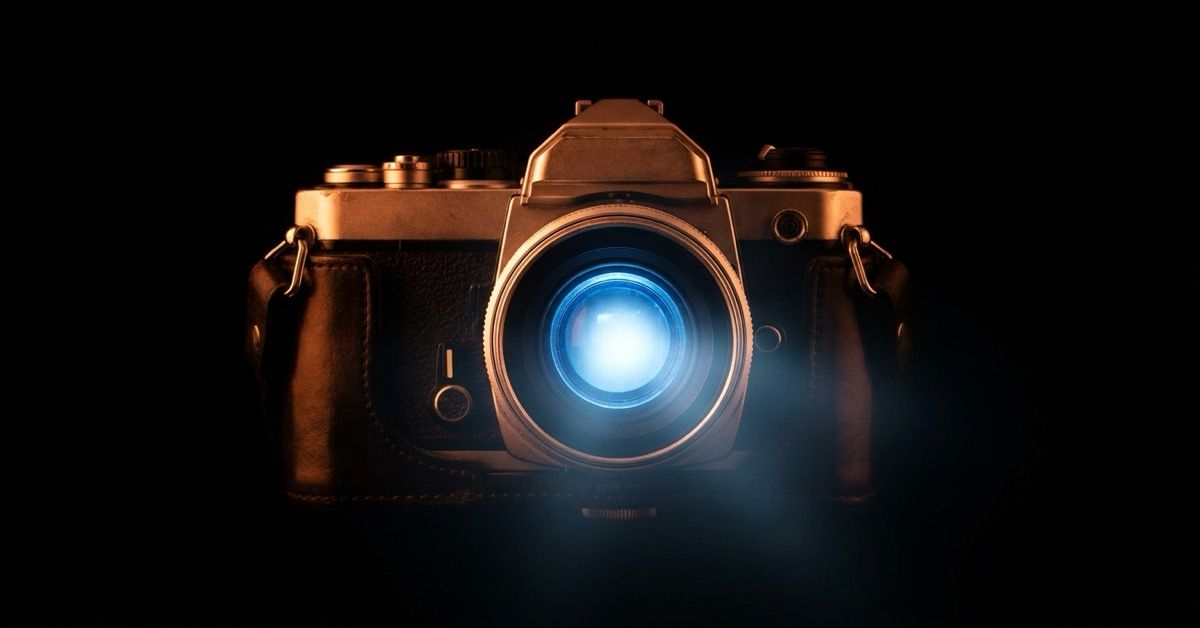
A few years ago, the cultural commentators, myself including promised you a beautiful, tactile revolution.
The general consensus was that society had finally hit a breaking point with screen fatigue. And, to be fair, the signs were freaking everywhere. Vinyl records were selling-out, teens were buying low-res digital cameras from 2004, flip-phone sales were spiking, and people were proudly stacking physical paperbacks on their bedside tables. We were supposedly on the precipice of a massive, collective analogue revival.
We were all supposedly going to reclaim our attention spans, turn our backs on the algorithms, and go back to engaging with the physical world.
Except, it was more like a cute fantasy, and never actually happened.
We didn’t log off and run away to the forest and smash our smartphones. Instead, we did something infinitely more modern and depressing: we turned the idea of being offline into an aesthetic. We converted our deep, existential dread of digital surveillance into a lifestyle brand.
We are no longer rebelling against the machine… we are instead just cosplaying a digital retreat while staying firmly tethered to the grid.
Human beings naturally crave friction.
We need texture, weight, and boundaries. The modern internet and technology have smoothed over every single edge of our lives, making everything frictionless, automated, and hyper-monitored.
The analogue revival was meant to be the antidote, a deliberate injection of healthy friction back into our days.
But the interest-based algorithm is a hyper-efficient assimilation machine.
It took our genuine hunger for a slower life, stripped away the actual lifestyle changes, and repackaged the visuals.
Now, we don’t buy a retro camera to experience the slow, agonising, beautiful wait of developing film. We buy it because the look of a vintage film grain performs exceptionally well on the feed. The same way we don't read a book to escape the screen. We arrange the book perfectly next to an iced matcha latte so we can take a photo of it with our screen.
The resistance has been completely neutralised. It has been neatly folded, colour-corrected, and sold back to us by the exact same platforms we are pretending to escape.
This has given birth to a bizarre new psychological phenomenon: the algorithmic pastoral.
We scroll through videos of people living in remote cabins, baking sourdough from scratch, writing in leather-bound journals, and knitting blankets by candlelight. The content feels peaceful, grounding, and anti-tech.
But the irony is staggering. The only reason we are witnessing this "offline" life is because that creator has optimised their SEO, monitored their watch-time metrics, and deployed a hyper-aggressive digital marketing strategy to appease the platform.
Welp.
It is a simulated rebellion.
It tells us that we can buy our way out of digital exhaustion. If we just buy the right linen shirt, the right record player, or the right analogue notebook, we can pretend we are no longer cogs in the data-harvesting machine.
But a leather journal doesn't protect your data privacy. A vintage camera doesn't stop an AI model from scraping your digital footprint. It just makes the cage look a little more, idk, rustic.
How can we navigate the post-aesthetic market:
If you want your brand to command real, unshakeable authority in a world of simulated authenticity, you need to change your approach from performative aesthetics:
Build real friction, not fake nostalgia.
Maybe just adding vintage filters to your marketing or putting retro fonts on your packaging… isn’t going to quite cut it. Create products or experiences that actually require human presence. If you host an event, make it a strict "no-phones-allowed" space. Don't just look analogue; enforce the boundaries of the analogue world.
Acknowledge the machine.
Continuing to gaslight your audience with hyper-polished, "organic" lifestyle marketing that pretends it isn't an ad? Yeah, how’s that going? Audiences respect a brand that looks them in the eye and says: “Yes, this is an Instagram ad, and yes, we want you to buy this. But here is why the product is actually worth your real-world time.”
Value utility over vibes.
The "vibe economy" is collapsing because vibes are cheap and easily replicated by AI software. Duh. Shift your brand positioning from how your product looks on a feed to how it functions when the phone is turned off. Focus on durability, utility, and immediate physical value.
The internet is an incredibly difficult place to leave.
By design, btw. It has woven itself into our banking, our relationships, our careers, and our identities. Leaving it entirely is a privilege very few can afford.
But we need to stop lying to ourselves about our consumer habits. Buying a piece of retro tech or romanticising a slower era through a 15-centimeter glass screen isn't an act of defiance. It’s just another transaction inside the panopticon.
If you’re feeling an overwhelming urge to buy into the latest offline aesthetic, do something actually radical. Even if it’s as small as leaving the phone on the kitchen counter and walking outside. Touching grass. Hugging a tree.
Oh, and don't tell a single soul on the internet that you did it.
-Sophie Randell, Writer