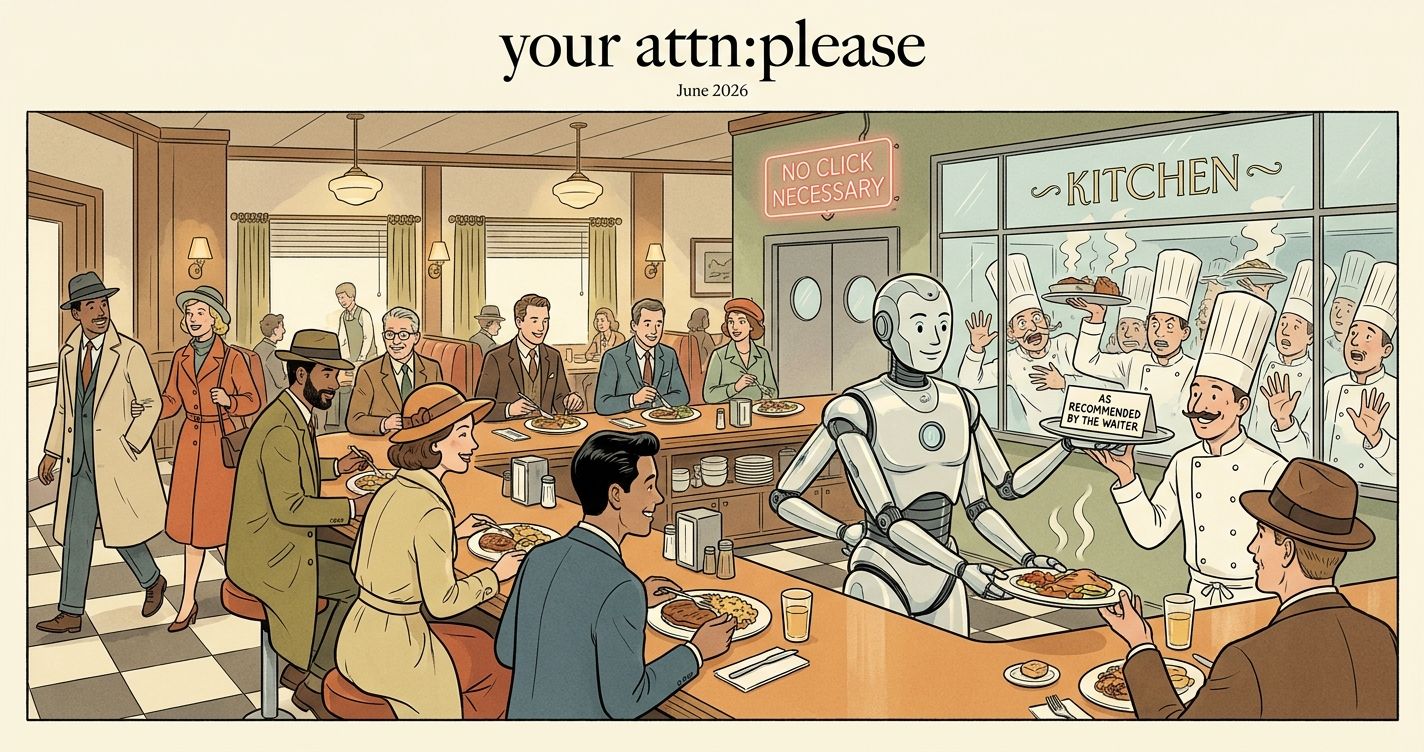
Most searches now end with no click. The person asks a question, reads the AI answer or the snippet at the top, and never visits a website. Industry research in 2026 puts the no-click share around 65 percent. Brands still win by becoming the source the answer quotes, so your name reaches the searcher even when they never click through.
I run a social media and education brand in New Zealand. The first time I really felt this, I checked our numbers and saw impressions climbing while clicks stayed flat. People were seeing us in the answer and not coming to the site. That is not a loss. It is a new way to win, if you build for it. This guide explains the zero-click reality and the play that still gets you in front of customers.
What is zero-click search?
Zero-click search is when someone gets their answer right on the results page or inside an AI answer and never clicks through to a website. The search ends where it started. Recent industry research in 2026 estimates around 65 percent of searches now end with no click at all. The answer came first, and that was enough.
It happens because the answer moved to the top. Google's AI Overviews, featured snippets, and tools like ChatGPT and Perplexity hand over a written answer before the list of links. The person reads it and stops. Why scroll to ten links when the AI already summed it up?
This is not a glitch. It is the design. Search engines and AI tools are competing to answer the question fastest. The faster they answer, the less reason anyone has to click. That trend is only growing.
Why the old playbook breaks
The old playbook chased rank and counted clicks. Get to position one, win the traffic. That logic breaks when most searches never produce a click. You can rank number one and still lose the searcher to the AI box sitting above you. Rank is no longer the same as visibility.
Two old habits hurt you now.
- Measuring success by clicks alone. If clicks are the only number you track, zero-click search looks like failure even when your brand is reaching more people than ever inside answers.
- Writing pages that hide the answer. The classic SEO article opens with a long intro and buries the point halfway down. AI cannot lift a buried answer, so it quotes a competitor who got to it first.
The painful version: your best, most thorough blog post can be the one that never gets quoted, because the answer is too far down for the AI to extract. Depth without a fast answer up top is invisible to AI.
The citation play
If you cannot count on the click, you win by being the citation. The play is to make your content the source the AI quotes and names. Your brand reaches the searcher inside the answer, builds trust, and earns the click or the customer later, when they are ready to act.
Here is how to become the cited source.
- Answer the question in the first two sentences of the page. AI lifts that direct block. This is the single biggest move.
- Add a clean definition near the top for your main term. AI cites definitions often.
- Load the page with real data and named sources. A Princeton study on generative engines found that adding statistics, quotes, and cited sources raised a page's visibility in AI answers by up to 40 percent.
- Structure for extraction. Short paragraphs, question-style headings, bullet lists, and comparison tables. AI parses these cleanly.
- Add an FAQ section that mirrors the real questions people ask. Those pairs match the prompts people type.
- Use schema markup so the engine understands your content.
- Keep your brand name and facts consistent everywhere, so the AI learns to trust and name you.
Why a citation is worth more than it looks
A citation with no click still pays. When the AI names your brand as the source, you get something an ad cannot buy: a recommendation from a tool the person already trusts. The AI is effectively vouching for you. That builds awareness and credibility before the person ever lands on your site.
Think about how you use AI yourself. When ChatGPT says "according to attn:seeker," that name lodges in your head. Next time you are ready to buy, you remember it. The click might come a week later, straight to the brand, skipping search entirely. The citation planted the seed.
So track the right things.
- Citation rate: how often your pages get cited across the questions you care about.
- Share of model: your citations against total citations for 20 to 50 priority questions, checked monthly across ChatGPT, Perplexity, Gemini, Copilot, and Google AI Overviews.
- Brand mentions inside answers, not just clicks.
The local angle for Kiwi brands
For a New Zealand business, zero-click search is an opening, not a threat. Most local competitors still measure clicks and bury their answers. Be the brand that answers fast, sources well, and stays consistent across the web, and you can become the name the AI quotes for your niche here. When someone asks an AI "who's the best at this in NZ?", you want to be the answer. Start before your competitors notice the door moved.
Frequently asked questions
What percentage of searches are zero-click?
Industry research in 2026 estimates around 65 percent of searches now end with no click. People read the AI answer, featured snippet, or summary at the top of the page and never visit a website. The exact figure varies by study and query type, but the trend is clear and rising as AI answers spread.
If people don't click, how does my business benefit?
You benefit by being the source the AI quotes. When the answer names your brand, the searcher sees you as a trusted recommendation, which builds awareness and credibility. Many people then come back to you directly later, often skipping search entirely. The citation does the work the click used to do.
How do I get cited in AI answers?
Answer the question in the first two sentences, add a clear definition, include real data with named sources, and structure the page with question-style headings, lists, and an FAQ. Add schema markup and keep your brand details consistent across the web. These moves make your content easy for AI to extract and quote.
How do I measure success without clicks?
Track citation rate and share of model. Citation rate is how often your pages get quoted. Share of model is your citations against the total for 20 to 50 priority questions, checked monthly across ChatGPT, Perplexity, Gemini, Copilot, and Google AI Overviews. Also watch brand mentions inside answers, not just site traffic.
Should I stop doing traditional SEO because of zero-click?
No. Traditional SEO still matters because AI answers pull from pages that already rank well. Ranking feeds the citation. Keep your SEO strong and add answer-first structure on top, so the same pages both rank and get quoted. Dropping SEO would starve your content of the trust AI needs.