What’s the best way to truly market the performance of your product?
I like to think about those shitty infomercials that played on TV in the middle of the day whenever I was home sick from school.
I call them shitty, but in reality, I remember some of them better than I remember the details of the literal house I was watching them in. I can still hear the Australian lady going on about the sucking power of the Shark Navigator Lift-Away; it could clean ANY mess from ANY carpet or couch. Watching them Hoover that shit up hit like crack. Or the Thin Lizzy lady. Can’t forget her. Nor can I forget the ab-wielding, ultra-spray-tanned freaks promoting strange at-home exercise equipment that looked absolutely not safe for any human’s neck or back.
But again, there they are, in my head, rent-free for a solid 20 years.
Because showcasing utility, believe it or not, is effective.
Somehow marketing has become complex, and convoluted, and a bit silly. I get it I get it brand building and world building and all that. But let me give you an example of my point.
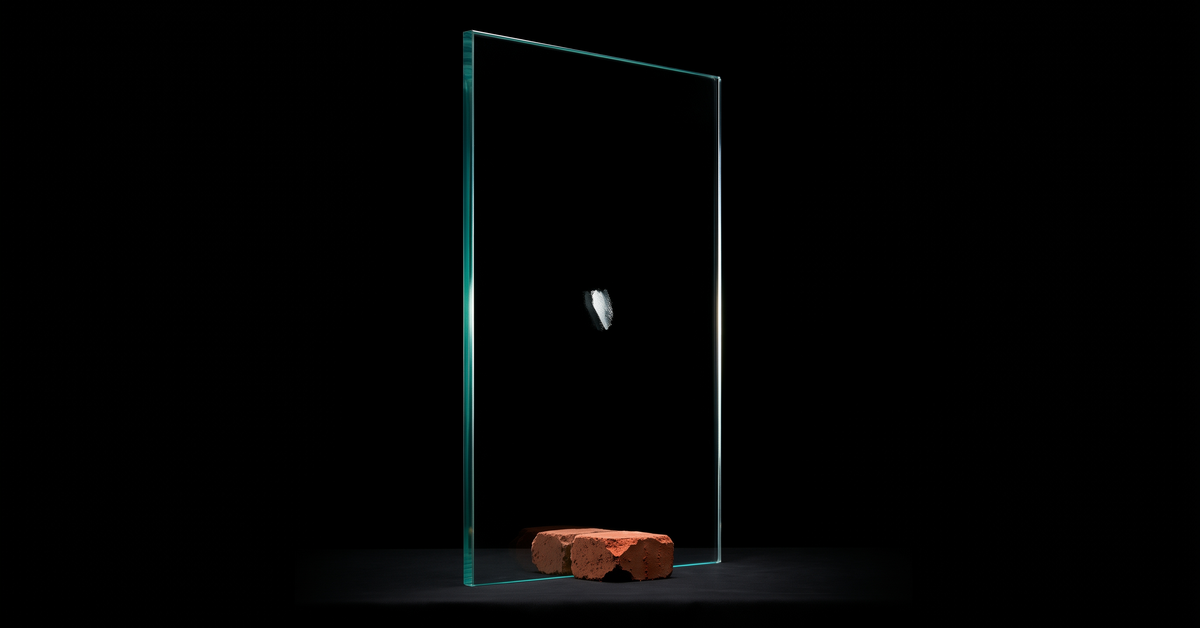
Last week, a piece of unedited, handheld footage went berserk across Douyin and X, capturing a group of Paris rioters trying their absolute best to break the glass storefront of a Louis Vuitton store. Despite their best efforts, and tools, and fire hydrants or whatever else they were using, the glass refused to shatter. It flexed, even held its structural integrity, and it completely barred entry to the crowd.
I mean, it’s just one piece of content among a sea of crazy shit that’s come out of these riots. But for the Chinese manufacturer who made the glass, Henxinfeng, it became the ultimate marketing asset.
Instead of distancing themselves from the street riot, Henxinfeng’s media team showed us how it’s done when it comes to responsive product marketing, grabbing the viral video and transforming it from a chaotic political flashpoint into an undeniable demonstration of their glass’s durability. It was sharp, it was slightly chaotic, and it was brilliant. It was an infomercial, in the wild.
The Death of the Polished Simulation
To understand why Henxinfeng’s response created such a wave of organic engagement, I want you to look at the trust deficit defining contemporary media. It’s chocka with slop. Need I say less.
But a video clip of a real-world crowd failing to break a storefront in real-time? In the middle of a god damn riot that most of the buildings haven’t survived? That is un-fakeable proof and a level of realism that a multi-million-dollar marketing budget could never buy. By being thrown directly into the frame of a real crisis, the manufacturer didn’t have to explain their product’s utility. The substance, the material, did 100% of the heavy lifting. No need for narrative creation: they simply seized an active cultural moment and anchored it to their core value proposition.
The Strategy: Embracing the Messy Context
Now, obviously this doesn’t just happen for everyone. The chances of the video being filmed in the first place, then circulating, then getting back to the manufacturer, all for it to become this cultural moment, were an unlikely chain of events. The perfect storm, if you will.
But for brand architects, founders, and content leads, the lesson of Henxinfeng proves that relevance today is rarely found inside a sterile studio. The brands capturing the zeitgeist are the ones willing to allow their products to coexist with the chaotic, unpolished context of the real world.
This requires a delicate balance. Responsive marketing doesn’t mean your brand should start blindly commenting on every controversial geopolitical issue or exploiting human tragedy for cheap traffic, that is a fast track to brand alienation… and legal liability.
Instead, look for moments of organic intersection. If a public moment naturally validates the core utility, popularity or performance of what you build, capture the asset, strip away the corporate filters, and show your audience how your substance holds up when it matters most.
True marketing authority isn’t about maintaining a perfect, un-scratched image in a boardroom; it’s about proving your product can survive the street.
The Takeaway
Infomercials, while stuck in my head, haven’t been the go-to for a long time. For a reason. Frictionless, studio-sanitised product demonstrations are losing their power to convince an exhausted audience.
If your marketing strategy relies entirely on highly curated simulations to build authority, you are vulnerable to competitors who are willing to document real-world performance.
Stop running away from the unscripted chaos of the real world, baby. Boots on the ground!