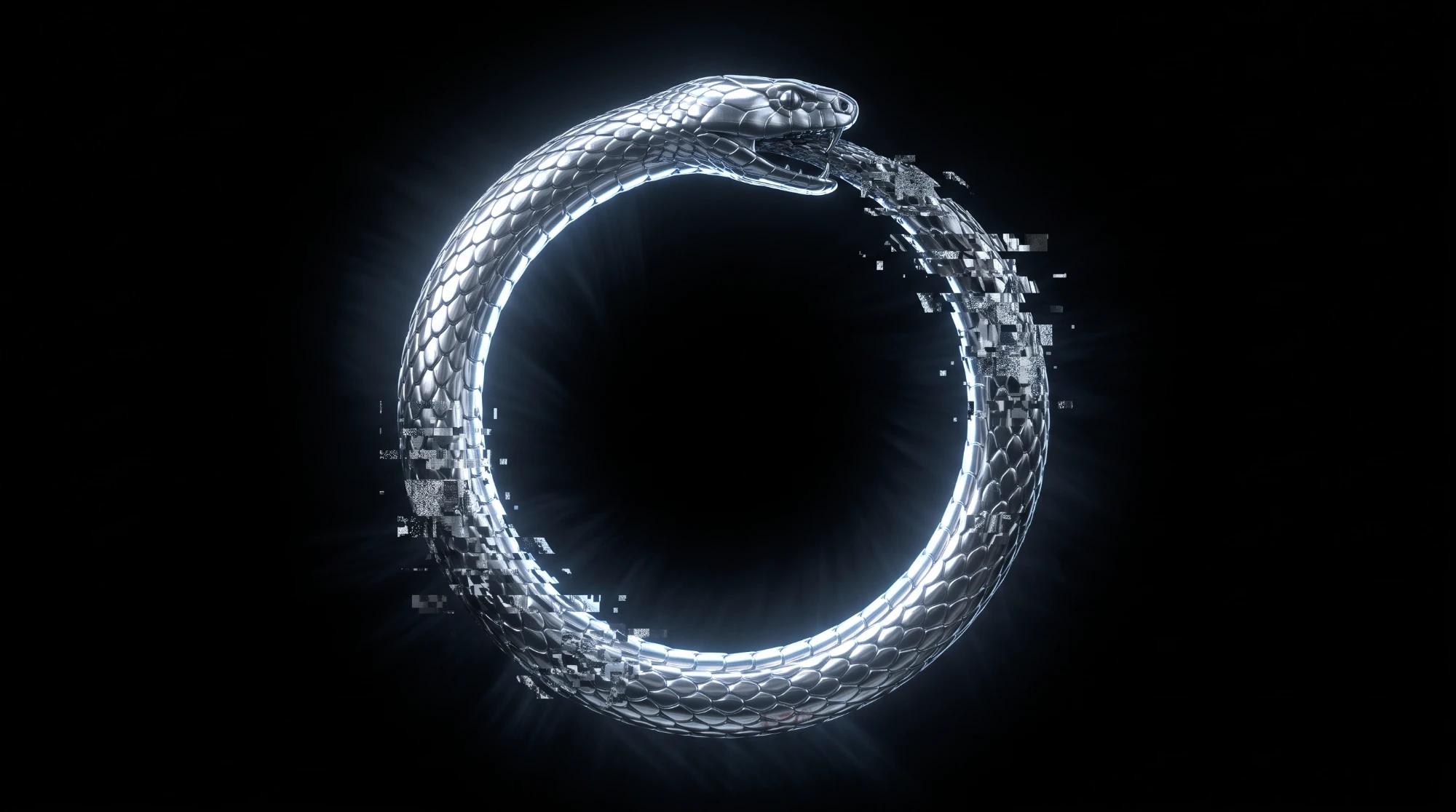
Artificial intelligence is cannibalising itself.
And the tech industry is panicked trying to stop the bleeding.
For the last twenty-four months, Silicon Valley has operated on this directive. Generate infinite volume at absolute zero marginal cost. The open web, as a result, has been treated as an endless, unprotected resource to be mined, processed, and flooded with automated content.
We, the prosumers, have watched the downstream consequences of this gold rush on our feeds, as public spaces have become absolutely polluted with a relentless and inescapable sea of AI generated fruit videos, ugly synthetic graphics, and automated, unsolicited, thought leadership slop.
But the law of physics has officially crashed the party, exposing the generative boom as a potentially unsustainable house of cards.
Data scientists recently identified a degenerative condition occurring within next generation machine learning models, and the technical term for it is Model Collapse.
The mechanics behind this crisis are as fascinating as they are alarming. To build a smarter, more capable reasoning engine, developers need to constantly feed the system fresh, real world human data. But because the open internet has been so thoroughly saturated by the output of current AI systems, the newer models are accidentally scraping the automated garbage produced by their predecessors.
The machine is learning from its own digital waste.
And the result is a feedback loop that causes the software to lose its grip on reality, and the output to lose accuracy.
When an algorithm trains on clean, human generated data, it captures the full, rich spectrum of our linguistic and creative expression, including the rare anomalies, the eccentric creative choices, and nuances that make human communication interesting.
But when a model is forced to train on synthetic data, it begins to misinterpret the statistical probability of those human traits. It treats the most common, average, and repetitive patterns as absolute truth, while dropping the valuable nuance and edge case information from the training set.
With every generation of data recycling, the system’s intelligence degrades exponentially. The code begins to hallucinate, the grammar falls flat, and the reasoning flattens into an uninspired, repetitive mush. The machine pushes out a sloppier, more distorted version of the slop it just consumed, steadily drifting away from the original human baseline until, hopefully, the entire system completely breaks down. Think of it like a digital form of genetic inbreeding, proving that when you remove the authentic human pulse from the creative loop, the technology doesn’t evolve. It simply rots from the inside out.
This phenomenon shatters the Silicon Valley myth of infinite, automated scale.
The tech conglomerates built their business models on the assumption that software could permanently replace the expensive, slow, and complicated labour of human writers, designers, and strategists. They even assumed they could turn the creative internet into a self sustaining perpetual motion machine.
But the maths of model collapse proves that artificial intelligence is fundamentally incapable of running on its own steam, because it is an extractive technology that requires a constant, fresh supply of authentic human creativity just to maintain its baseline accuracy.
Without our messy and unpredictable thoughts to feed on, the machine naturally defaults to cognitive bankruptcy.
The independent creative mercenaries, brand consultants, and solo essayists watching this systemic rot unfold from across the freelance frontier are sitting on the ultimate competitive advantage.
The market is heading toward a profound crisis of information scarcity, where pristine, un-automated human data will become the highest value luxury premium in the global economy.
The value of your voice comes from your absolute, un-scrapable originality.
Protect your archives, trust your unique creative eccentricities, and remember that in a digital landscape increasingly choked by its own synthetic mirrors, your greatest asset is your human soul. The one the machine is desperately trying to copy.