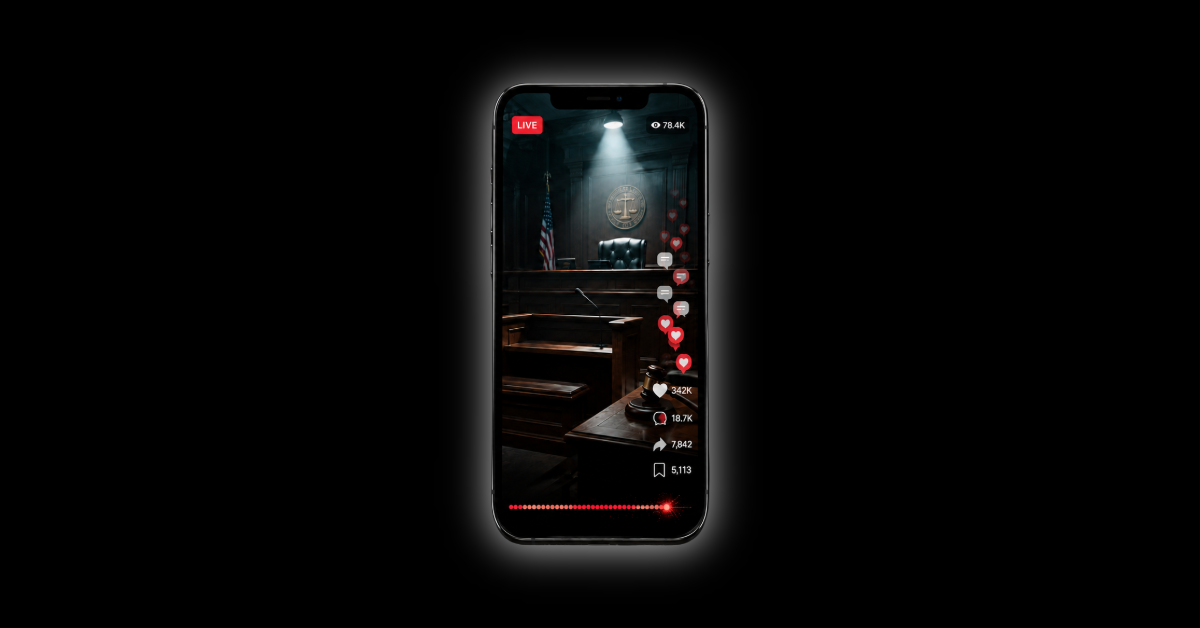
If you’ve been on social media at all over the last month, you have likely found it almost impossible to escape the overwhelming wave of content surrounding the Lindsay Clancy case.
The level of public fixation on this ongoing trial has reached a staggering, unprecedented fever pitch. Myself included. I cannot stop watching. It’s so heartbreaking and crazy and I just have to know what happens.
Millions of users feel the same, deeply embedded in the digital comment sections, meticulously picking apart every single frame of courtroom footage, debating the psychological subtext of old family photos, and analysing the behaviour of her husband, Patrick, with the intensity of a top performing forensic team.
A huge decentralised army of observers, predominantly women, have transformed a localised tragedy into a global, real-time public tribunal.
To look at this phenomenon with absolute, balanced discernment requires us to acknowledge that this intense digital spotlight serves an undeniable and necessary cultural utility.
The brutal and terrifying realities of severe postnatal depression and postpartum psychosis have long been swept under the rug. They've been treated as a taboo, shameful secret that mothers were forced to suffer through in total isolation. Often with devastating outcomes.
And so, I can’t help but view the volcanic explosion of attention surrounding this case to be a good thing. Because it has completely shattered that silence, and finally forced a conversation about the failure of maternal healthcare infrastructure, medical misogyny, and the psychological vulnerabilities of early motherhood.
We also can’t deny that the collective internet vigilance functions as a blunt instrument of public accountability.
In a historical legal landscape where the voices and mental health crises of women have been routinely dismissed or criminalised, this online community operates as a defensive shield. It ensures that the institutional trial remains entirely transparent under the watchful gaze of the public.
But as I found myself wading deeper into the endless scroll of reaction videos, theory carousels, and trial live-streams, I realised that an unsettling, and very dark boundary is being crossed here.
The line between righteous accountability and extractive voyeurism has dissolved.
The true, horrifying nature of this shift was laid bare to me recently when I read a comment under a clip of Lindsay breaking down in court to the details of her children's murders: “Netflix is about to make the most insane documentary about this.”
It was a casual, offhand remark that exposed the modern feeds’ profound moral numbness.
We have become so f*cking desensitised by the true-crime industrial complex that we are no longer capable of processing real-world grief without filtering it through the lens of a streaming service's upcoming content slate.
We are look at a catastrophic event where three innocent, young children lost their lives. A mother's psyche was completely fractured. And our immediate cognitive reflex is to evaluate its potential as high-velocity entertainment fodder. Like… I’m sick to my stomach.
This is the sinister endgame of the attention economy: the complete sensationalisation of human horror.
Because, as we all know, the interest-based algorithm doesn't care about the ethical boundaries of empathy or the sanctity of a family's grief. It only cares about the duration of your linger-time on the screen. The machine recognises that collective obsession and moral outrage are the highest-converting drivers of visual data on the digital market.
Because of this, it actively incentivises thousands of independent creators to turn a living, breathing legal tragedy into a structured, episodic reality show.
We see people picking sides, creating fan edits of courtroom lawyers, and treating a desperate search for the truth as a competitive game where they can farm engagement metrics and boost their personal brand equity off the back of an unfathomable trauma.
We have to stop and ask ourselves exactly where we draw the moral line before our digital consumption becomes entirely exploitative.
Cultural literacy means having the intelligence and moral grounding to recognise when our desire for justice has curdled into a shallow appetite for a spectacle.
It’s entirely possible to advocate fiercely for maternal mental health reform, demand absolute transparency from the legal system, and hope for a fair trial without turning the details of a family's destruction into background noise for our daily scrolling habits.
I pray that justice is served, however that looks. But at the end of the day, three children are dead, a mother is bound to a wheelchair, and potentially a jail cell.
Step out of the comment section, turn off the trial stream, close the app, and allow yourself to sit with the quiet, respectful weight of genuine human grief.
Because in a digital panopticon that wants to turn every single tragedy into an automated piece of content, sometimes the "right thing to do” is not speaking up to join the online mob; but having the basic grace to respect the dead in silence.
-Sophie Randell, Writer