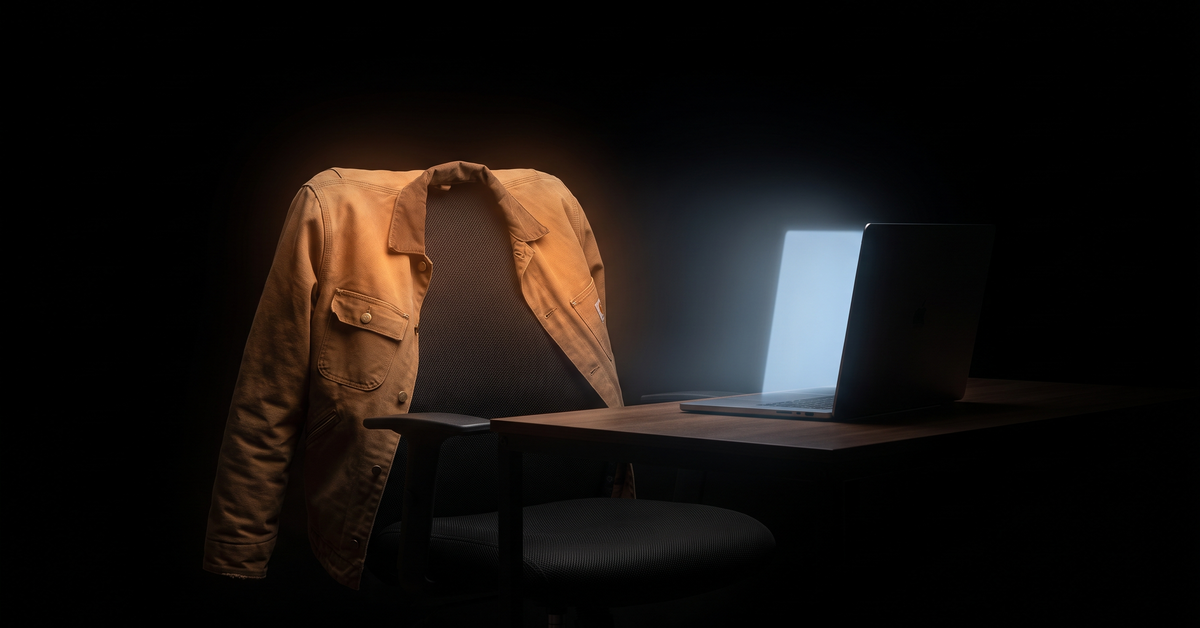
If you walked into a trendy coffee shop anywhere in the western world this morning, you probably saw someone sitting at a laptop wearing a heavy-duty Carhartt Detroit jacket, a vintage 1980s DHL delivery cap, maybe even a moustache.
At first glance, you might assume they are a courier on a quick break. But look closer. They are working on a Figma board. They are a Senior Product Designer making six figures. And they’re a purveyor of what I like to call Corporate Cosplay.
We’re currently in a strange cultural loop where the ultimate lifestyle status symbol is pretending to have a completely different, often lower-paying job than the one you actually have.
From luxury fashion houses selling pristine, $1,200 "workwear" overalls that will never touch a drop of oil, to tech workers collecting retro corporate merchandise from defunct 90s tech companies like Netscape, younger consumers are unironically romanticising the aesthetic of mundane, industrial, or low-stakes bureaucratic labour. And I believe its some kind of coping mechanism driven by existential alienation and the desperate search for tangible reality.
To understand why a software engineer wants to look like a mid-century mechanic, you have to look at the current state of white-collar work.
In 2026, a massive portion of the workforce spends eight hours a day moving digital pixels around, writing code, or managing abstract communication channels. Thanks to the absolute explosion of generative AI, much of this work feels increasingly invisible and surreal.
There is no physical output. You can’t touch a successful marketing campaign or hold a cloud database.
This creates a psychological deficit: material alienation.
By dressing in heavy-duty canvas, rugged steel-toed boots, or carrying retro office clipboards, consumers are attempting to anchor themselves to a time when work was tangible, physical, and clearly defined. It’s an aesthetic rebellion against the screen. For high-earning creatives, looking "blue-collar" or "retro corporate" acts as a shield against the perceived soullessness of the modern digital tech landscape. It's a way to signal, "I have grit, I have history, and I am not just a cog in a faceless server farm."
How Brands Can Monetise the Nostalgia of the Mundane
The luxury sector has already mastered this. When Balenciaga released a leather trash bag or when luxury streetwear brands collaborate with traditional workwear labels like Dickies, they are selling the romanticised idea of physical labour to people who have literally never swung a hammer. But this trend extends far beyond apparel.
It tells us that consumers are suffering when it comes to futuristic, sterile, "optimised" branding. If your product or service looks too sleek, too digital, or too corporate-futuristic, it might be triggering cynicism from your buyers.
Think about why trendy consumer electronic brands are releasing devices with transparent plastic cases that look like 90s pagers, or why modern SaaS startups are designing their user interfaces to look like retro Windows 95 operating systems.
They are leveraging the comfort of the mundane to cut through the terrifyingly fast, chaotic pace of modern technology.
The Takeaway:
The sleek and futuristic brand aesthetic is facing a cultural headwind.
Consumers don't want to feel like they are interacting with a seamless, faceless algorithm; they crave the friction, weight, and history of the physical world.
If your branding or product design feels entirely digital and weightless, find ways to introduce tactical, retro, or analogue elements into the mix.
Stop trying to look like the future, and start grounding your brand in the tangible mechanics of the past.
Even if it means larping as a 1950’s mechanic.