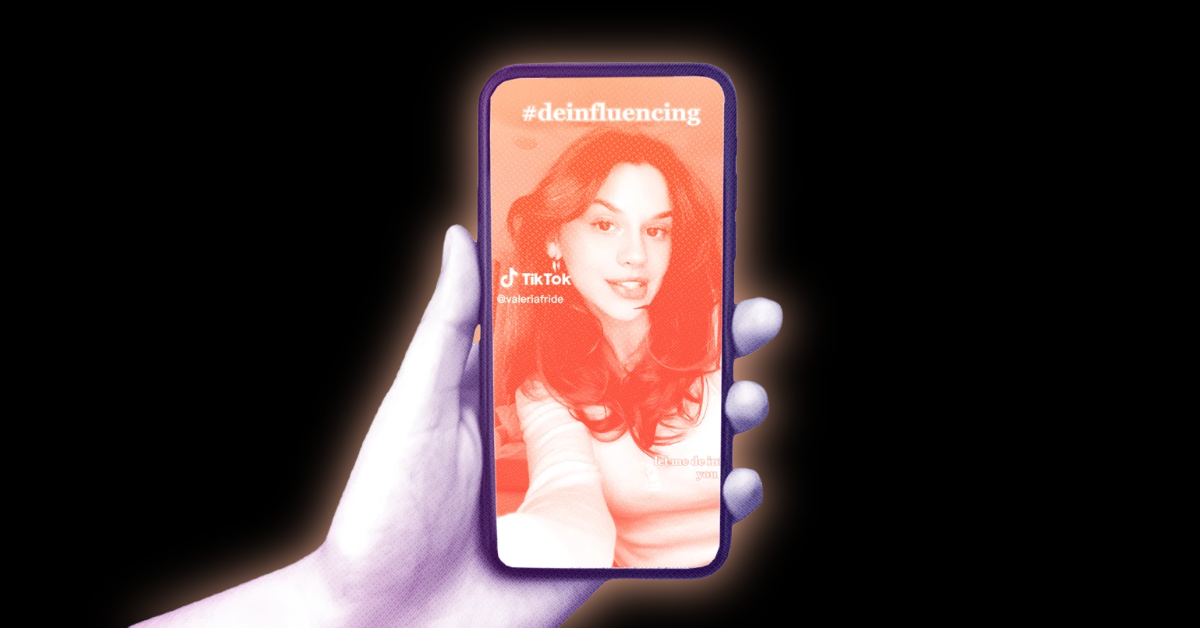
I find it incredibly amusing when influencers try to "de-influence" me.
Sitting there telling me what not to buy, because "luxury is a waste" or this viral skincare product is a "scam."
It seems so helpful and genuine. Until you realise it’s not. Because it’s always followed up with a solve that requires you to buy into a different product, even if completely unrelated.
The "de-influence" subculture was originally born out of audience exhaustion with the fake and polished performance of traditional corporate sponsorships. And at first, felt kind of powerful and anti-consumerist. Like an act of digital truth-telling. A breath of fresh air in a landscape completely choked by paid placement.
But once you look past the immediate gratification of the call-out, the illusion disappears. Along with your hopes and dreams for anything being real these days.
De-influencing has mutated into yet another high-converting Trojan Horse for modern product placement.
The corporate machine has done exactly what it always does with human resistance. It's absorbed the scepticism, repackaged the anger, and turned anti-consumption into a sales funnel.
The creator spends the first two minutes of the video burning down one specific brand to establish an unshakeable layer of trust with the audience. Then they pivot at the very last second to say: "Don't buy that garbage, buy this alternative instead, link in my bio” - a clever manipulation of our hunger for authenticity.
The rise of this marketing manoeuvre reveals a fascinating, and kind of predatory shift in the creator economy.
Brands and agencies know that consumers have become blind to standard, glowing product reviews. We know the script, can see the disclosure tag, and instinctively swipe away with a grimace on our faces.
But by leveraging the visual language of the critique, a seller can bypass THE defensive filters we’ve spent so long building.
They use the performance of honesty as a psychological crowbar to wedge their way into our wallets. Then, they turn our shared frustration with consumer culture into a mechanism that misleads us to consume more. Trust is the premium currency on the modern web. And right now, the cleverest salespeople on the market are those pretending they have absolutely nothing to sell.
Let’s call it authenticity catfishing.
By using a contrarian, anti-corporate hook, the creator sets a trap that makes viewers stop questioning the ethics of the endorsement or analyse the transactional nature of the link. They think they’re participating in a cultural rebellion, willingly entering the sales funnel like a bug in a Venus Fly Trap.
The commercial landscape has become so thoroughly game-ified that even our skepticism has a conversion rate. One tracked and optimised by data analysts who realise that an angry consumer is often the easiest one to sell to.
If you’re not hitting a wall of exhaustion with these bait-and-switch authenticity metrics, I’ll admit, you’re tougher than I am. Because they make me want to throw my phone into a volcano.
Unfortunately, we must accept that the performance of integrity on a public feed is almost always tied to an underlying monetisation loop.
The only way to take back personal authority in this hyper-manipulated digital economy isn't subscribing to the next wave of contrarian online advice or buying the "honest" alternative… it’s possessing the confidence to pull yourself off the consumerist treadmill.
If you see someone aggressively telling you to throw away your current belongings in favour of a newer, more ethical, or more authentic product, my brother in Christ, ignore that sh*t.
-Sophie Randell, Writer