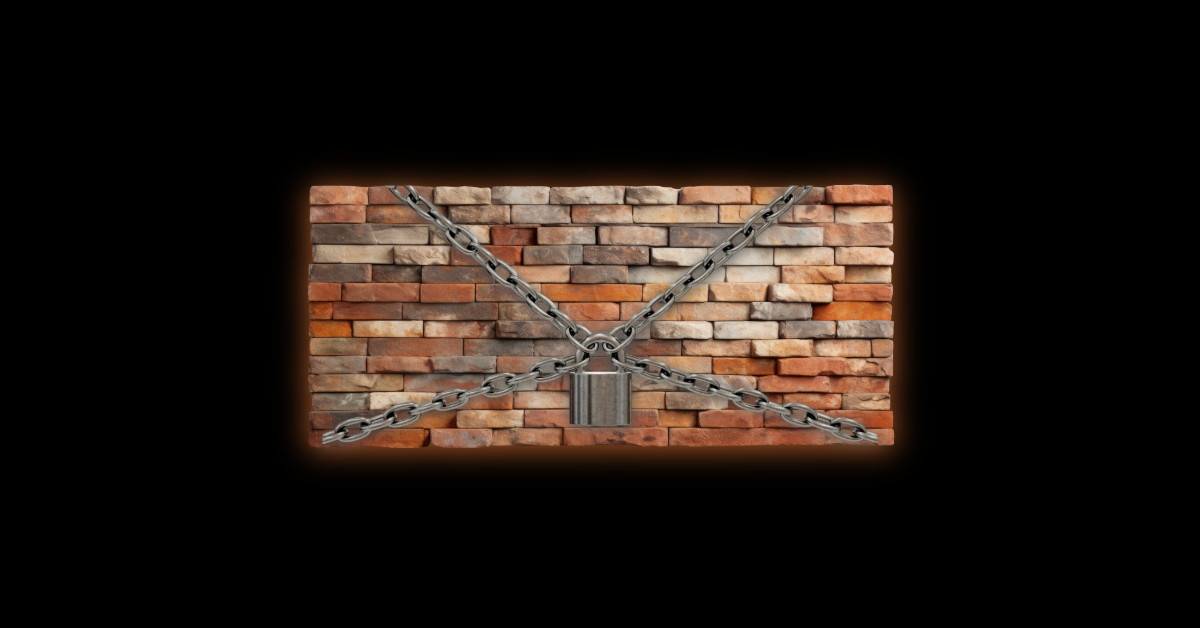
Some of the finest independent minds of the internet are packing up their libraries and pulling down the shutters.
And I’m very intrigued.
The foundational promise of the open web over the last two decades has been built on the concept of visibility.
Writers, researchers, artists, and independent thinkers have always published their best work out into the public square. They've trusted that an open search index would connect their ideas with a curious global audience and build a sustainable community over time.
But over the last two years, that open social contract (among many other things) has been completely torn up by the aggressive expansion of the artificial intelligence industry.
We have entered the era of intellectual property enclosure.
Every single day, massive, multi-billion-dollar technology conglomerates deploy automated web-scraping bots to crawl through every unprotected corner of the internet. That’s not an exaggeration.
They vacuum up millions of essays, poems, case studies, and creative portfolios. All without consent, credit, or compensation. This data is then poured into the belly of generative AI models. And it's transforming our hard-earned human insights into raw, synthetic fuel used to automate the very creative roles we rely on to make a living.
Sound like nightmare fuel? That’s because it is.
For any creative, this is our worst fear come to life.
We're all realising our unpaid intellectual capital is being used to subsidise our own economic displacement. And it’s triggered a global survival response.
It’s for this reason, that many creators are no longer playing the game of chasing public algorithmic reach.
Instead, a powerful counter-movement is taking root. Independent writers are actively pulling their historical archives off public search engines. Air-gapping their premium thoughts. And moving their distribution entirely behind encrypted paywalls and closed, private networks.
This is the birth of the Underground Web: a defensive commercial landscape where human intellect is deliberately locked away from the machine.
The rapid rise of this digital fortification reveals a profound psychological shift in how we define the value of our work. For years, marketing agencies and social media gurus told creators that absolute visibility was the premium currency.
We were told to publish everything out in the open. Give away our best insights for free. And rely on passive platform impressions to build personal brand equity.
But in an era where a machine can scrape your entire ten-year writing history in four seconds and repackage your unique perspective as an automated chat response, open reach stops being an asset. It becomes a massive structural liability.
By pulling their work behind walls, creators are forging a reclamation of their cognitive sovereignty.
They are reminding the market that human creativity possesses an un-automatable premium value. One that cannot be treated as free data slop for a Silicon Valley training model.
And this defensive retreat is altering the traditional rules of audience engagement. Because it forces the reader to move away from casual, passive scrolling and instead make a conscious, high-intent decision to invest in a direct relationship with a writer.
This tectonic shift presents a challenge for the future of consumer branding and media strategy.
The open web is slowly, one by one, being drained of its highest-quality, most original human voices. And it's leaving public search results populated by a bland, self-referential sea of automated AI-generated content.
The platforms are celebrating their computational efficiency. All while completely blind to the fact that they have built a digital ghost town where the real thinkers have already packed up their tools and gone home.
For the creatives out there: protect your archives, value your labour, and remember: your genius is entirely worth paying for.
-Sophie Randell, Writer