I don’t know how we are still collectively obsessed with “-maxxing.” But holy shit I’m tired.
It started in niche online subcultures (from that one asshole who we won’t name but is finally facing the consequences for his awful actions within the manosphere), then it quickly leaked into the mainstream marketing landscape.
Today, consumers are still looksmaxxing, skinmaxxing, careermaxxing, sleepmaxxing, bodymaxxing, you name it. A recent academic analysis perfectly diagnosed this phenomenon, describing it as a “competitive and perpetually incomplete project.” And it’s true, it’s the constant, anxiety-driven pressure to optimise every single facet of our existence: better skin, better body, better clothes, better performance, better rest, better holidays, better productivity metrics.
But I like to look at this trend for what it actually is: just another one of consumerism and hustle culture’s wicked wings. It’s an ideological framework designed to continuously whisper that more is always better, and that your baseline self is a product permanently under construction.
The inevitable result? Collective, systemic exhaustion.
We have reached a point where the pursuit of the “best life” has become the primary source of our fatigue.
The Shift from Maximising to Mining
This constant push to maximise everything relies on a very specific commercial incentive: it requires you to continuously acquire new tools, new supplements, new trackers, and new aesthetics. It tells you that the solution to your current limitations is always outside of yourself, waiting to be purchased.
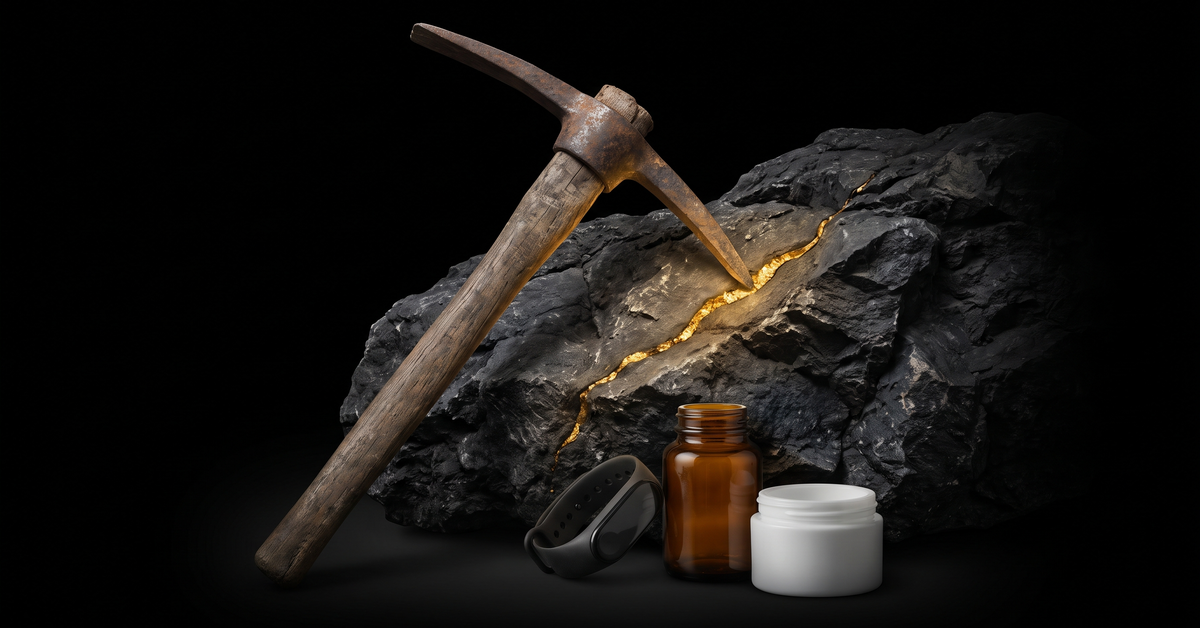
But as consumer burnout hits a visible wall, a quiet, much more nuanced counter-movement is beginning to take shape. We don’t need to keep maxxing our lives. We need to start mining them.
Mining isn’t about making your life smaller, less successful, or less impactful. Nor is it the rejection of ambition or modern convenience. Rather, it’s a decision to question why we are being pushed so aggressively toward perpetual optimisation in the first place. Instead of constantly looking outward for the next thing to add to your routine, mining is the practice of looking downward at what you already possess and extracting its deeper, untapped value.
It means leaning intentionally into less: consuming less, tracking less, comparing less, and ultimately throwing less away because you are buying less to begin with, realising that a life cannot be successfully lived when treated like a corporate quarterly earnings report that must show infinite growth.
The Marketing Reframe: Subtraction as a Premium Feature
For brand builders and marketers, this cultural fatigue represents a shift in how value is perceived. The way to market a product or service has almost always been to highlight its additive properties. “This app will add three hours to your day. This product will add five steps to your routine. This subscription will give you more access.”
Today, when consumers are already maxed out, adding more features can often feel like giving a drowning person a glass of water.
The forward thinking brands navigating this landscape have changed their positioning from maximisers to filters; realising that subtraction can be marketed as a premium feature. If your product or service can help a consumer eliminate a tracking metric, consolidate a chaotic routine, or find deep satisfaction in their existing setup, you are offering something far more valuable than optimisation: you are offering relief.
This doesn’t mean you stop selling things; it means you change the narrative of why you sell them. You shift the conversation away from “this will make you a better version of yourself” and move it toward “this will help you fully utilise what you already have.”
Show them how to mine the depth, beauty, and utility of their current reality. In an era defined by overwhelming noise, the brand that champions intentional focus over endless expansion will always capture the deepest loyalty.
I know the answer isn’t hiding in the selling and buying of more products and goods. But maybe, just maybe there’s a middle ground somewhere.