Earlier this month in Charleston, South Carolina, a 35-year-old man named John-Michael Dooley was arrested outside a Target store for leaving his six-year-old daughter asleep on the concrete sidewalk with a pillow and a blanket for over an hour while he drove home, purely so she could hold his spot in an overnight queue for a new Pokémon card expansion.
To make the situation even more dystopian, witnesses waiting in line next to the little girl told police they heard the father wake her up before driving away and ask if she "had the gun" (though officers found no weapon when they arrived to take the child into protective custody).
Call me a purist, but the internet has officially ruined Pokémon cards, and you cannot change my mind.
What used to be a genuine, tactile hobby, a low-stakes celebration of illustration, playground trading, and childhood imagination, has been commodified to the absolute maximum. The internet turned these nostalgic pieces of our childhood into high-volatility financial derivatives, and in the process, it dragged in the absolute worst kinds of people.
From Playground Art to Speculative Assets
When the Pokémon Trading Card Game launched in the late 1990s, the value of a card was anchored entirely in personal affinity and game utility. You wanted a Charizard or a Lugia because the holographic artwork looked incredible in your binder, or because it helped you beat your friends at lunchtime. We used to be a real society, I know.
Today, the joy of the pull has been almost entirely replaced by the cold mathematics of resale arbitrage.
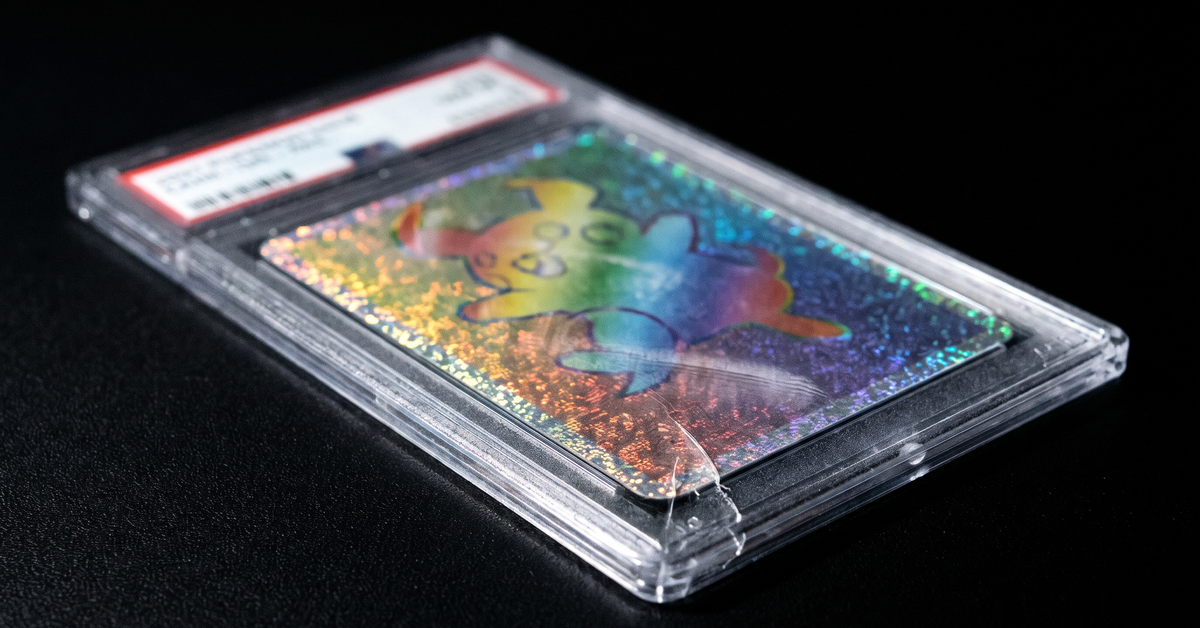
Driven by influencer unboxing stunts, grading culture, and Discord drop-alert groups, trading cards are no longer treated as collectibles to be opened and enjoyed, they’re more like speculative assets to be hoarded, graded in plastic slabs, and flipped on secondary markets. Entire aisles at major retailers are routinely wiped clean by grown men running automated bots or camping out overnight, leaving actual kids completely locked out of a game designed for them.
When every booster pack is viewed through the lens of a stock ticker, where creators flash dollar signs over every card they pull, the magic of the hobby is annihilated. Because it stops being about art and community, and becomes purely about greed.
The Tragedy of Hyper-Commodified Culture
The South Carolina arrest is an extreme, disturbing outlier, yet it highlights a broader cultural sickness that extends far beyond trading cards.
Whenever a niche hobby, a vintage clothing style, or an underground subculture gets sucked into the algorithmic hype machine, it undergoes a predictable yet destructive lifecycle. First, the internet discovers it. Second, influencers assign a monetary value to it. Third, speculators and "investment bros" flood the space to extract every last cent of profit, artificially inflating scarcity until the original community can no longer afford to participate.
We have watched this exact parasitic cycle play out with vintage sneakers, retro video games, thrift store clothing, and concert tickets. The internet lacks the ability to simply let a good thing exist for its own sake. Everything must be ranked, graded, monetised, and turned into a hustle.
The YAP Takeaway
True hobbies require friction, patience, and a disconnection from financial ROI to stay pure. When a subculture allows speculative hype and resale metrics to dictate its value, it inevitably destroys the very soul that made it worth loving in the first place.
Whether you are collecting cards, curating a personal wardrobe, or building a creative project, protect your passions from the monetisation trap. Keep your hobbies weird – and bring back gatekeeping the things you love lol.