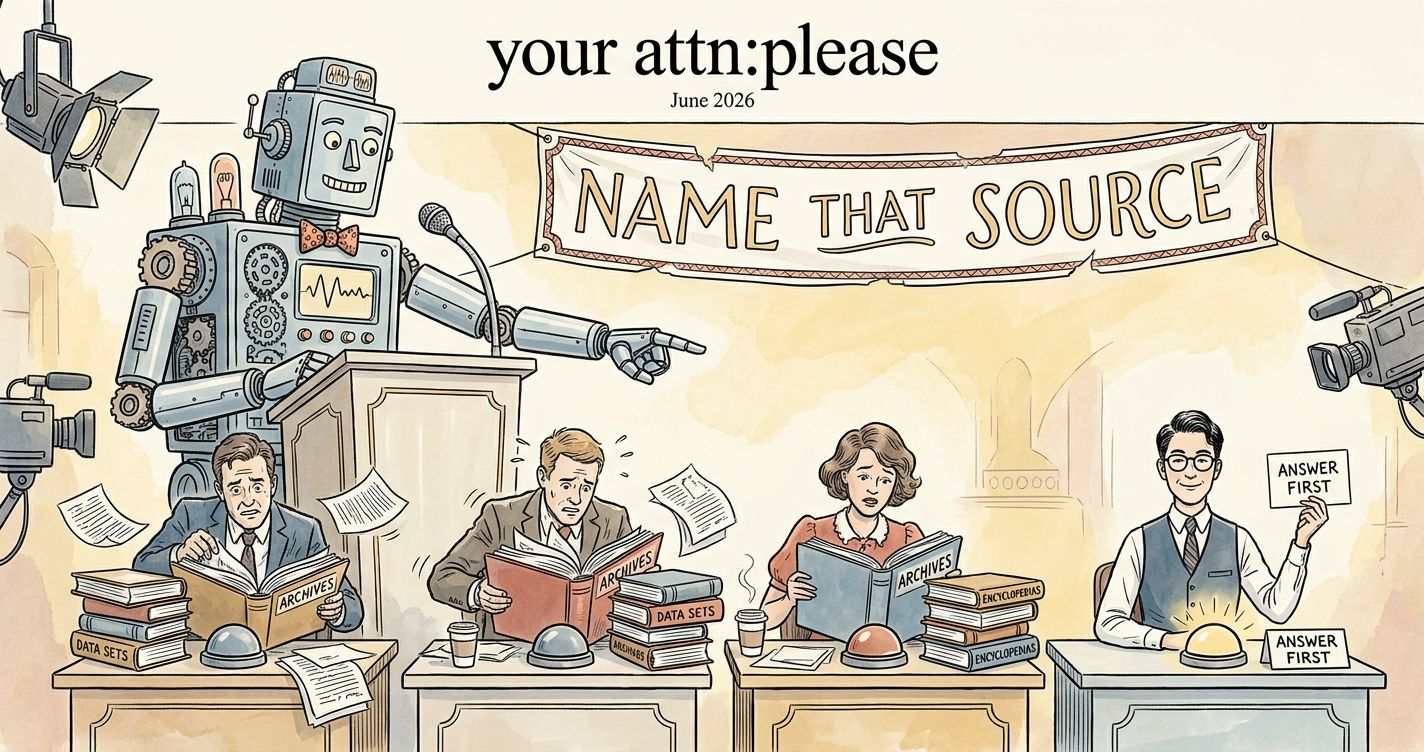
Answer engine optimization, or AEO, is the practice of structuring your content so it becomes the direct answer an AI or search engine gives to a question. Classic SEO ranks your page in a list. AEO makes your page the answer that gets read aloud or quoted. The core moves are an answer-first structure, an FAQ that mirrors real questions, and schema markup.
I run a social media and education brand in New Zealand. The shift hit me when I asked an AI a question, got a clean answer with a brand named as the source, and never opened a single link. That brand won the moment. AEO is how you become that brand. This guide explains what AEO is, how it differs from SEO, and the exact structure that gets you found when AI answers.
What is answer engine optimization?
AEO is the work of shaping your content to be the direct answer a question deserves. Answer engines include AI tools like ChatGPT and Perplexity, Google's AI Overviews, featured snippets, and voice assistants. AEO makes your content easy for them to lift and present as the answer, often with your brand named as the source.
The name says it. SEO optimises for the search engine that ranks pages. AEO optimises for the answer engine that delivers a single response. The target moved from "be on the list" to "be the answer."
A clean way to hold the three terms you will hear:
- SEO: rank in the list of links.
- AEO: be the direct answer to a question.
- GEO: get quoted inside AI-generated answers.
AEO and GEO overlap almost completely. Both want you to be the trusted, extractable answer. The moves are nearly the same.
How AEO differs from SEO
AEO and SEO start from the same quality content but aim at different finish lines. SEO wins a click from a ranked list. AEO wins the answer slot, where the engine reads or quotes your content directly. SEO optimises around keywords. AEO optimises around questions and the clearest possible answer to them.
The differences in plain terms.
| | Classic SEO | AEO |
|---|---|---|
| Goal | Rank in the list of links | Be the direct answer |
| Built around | Keywords | Questions and answers |
| User action | Clicks a link | Reads or hears the answer |
| Wins on | Backlinks, meta tags | Clear answers, structure, schema |
| Surfaces on | Results page | Snippets, AI answers, voice |
They are not rivals. AEO sits on top of solid SEO. A page that already ranks and shows real expertise is far more likely to be chosen as the answer. You build the SEO foundation, then shape it to answer.
Answer-first structure
Answer-first structure means putting the direct answer to the page's main question in the first two sentences, before any intro or backstory. This is the heart of AEO. Engines lift that opening block to use as the answer. Bury it under a long warm-up and the engine skips you for a competitor who got to the point.
Build every page like this.
- Open with the answer. One tight paragraph, 40 to 60 words, that answers the page's core question in plain language.
- Add a definition box near the top for the main term. Answer engines cite clean definitions often.
- Use question-style headings. Write "What is AEO?" not "Introduction." Each heading should match how people actually ask.
- Give each section its own short answer up top, then the detail. Every section becomes its own quotable block.
- Keep paragraphs short and use lists and tables. These parse cleanly and read fast.
The rule is simple. Lead with the answer, every page, every section. Practise what AEO preaches.
FAQ and schema
An FAQ section and schema markup are the two technical moves that lock in AEO. The FAQ gives engines clean question-and-answer pairs that mirror real prompts. Schema markup tells the engine exactly what each part of your page is, so it can pull the right block with confidence.
Start with the FAQ.
- Build it from the questions customers actually ask you, in their words.
- Write each answer as a tight 40-to-60-word block that stands on its own.
- Mirror the phrasing people use when they speak to an AI, since that is how queries now arrive.
Then add schema markup, which is code that labels your content for machines.
- FAQPage schema marks your question-and-answer pairs so engines read them as a true FAQ.
- Article schema labels the page as an article with an author and date.
- Organization and Person schema, with the sameAs property, link your brand and authors to profiles like LinkedIn. This helps the engine confirm who you are.
Add a real author with credentials and a visible "last updated" date too. Google's March 2026 core update made experience and expertise its top quality signal, and answer engines favour fresh, credible sources.
The local angle for Kiwi brands
For a New Zealand business, AEO is a fast lane. Most local competitors still write long, rambling pages that bury the answer and skip schema entirely. Restructure your top pages to answer first, add a real FAQ, and mark them up, and you become the cleanest answer in your niche. When someone asks an AI a question in your category here, the clearest, best-structured source wins. Right now that can be you.
Frequently asked questions
What is the difference between AEO and SEO?
SEO earns a rank in the list of links. AEO makes your content the direct answer an engine gives, whether in a snippet, an AI answer, or a voice response. SEO is built around keywords; AEO is built around questions and clear answers. AEO sits on top of strong SEO, not instead of it.
Is AEO the same as GEO?
They overlap almost completely. AEO is answer engine optimization, focused on being the direct answer to a question. GEO is generative engine optimization, focused on being quoted by generative AI tools. The core moves are identical: answer first, define clearly, add data, structure for extraction, and use FAQ schema markup.
What is the most important AEO technique?
Answer-first structure. Put the direct answer to the page's main question in the first two sentences, before any intro. Answer engines lift that opening block to use as the answer. Do the same for each section. Bury the answer and the engine picks a competitor who led with theirs.
Does schema markup really help AEO?
Yes. Schema markup is code that labels your content so engines understand it. FAQPage schema marks your question-and-answer pairs, Article schema labels the page, and Organization and Person schema confirm who you are. This clarity makes engines more confident about quoting the right block from your page as the answer.
How do I write a good FAQ for AEO?
Build it from the questions customers actually ask, in their words. Write each answer as a tight, standalone block of 40 to 60 words. Mirror the way people phrase questions when they speak to an AI. Then add FAQPage schema so engines read the section as a real FAQ and quote it directly.