If the intersection of the marketing and fashion worlds has you nerding the f*ck out like it does with me, you’d have looked at the retail marketing data as of late.
Which means you’ve felt the tension. Over-saturation is up, margins are down, and the traditional playbook for selling garments online is cracking under pressure. But behind the scenes, things might be transforming.
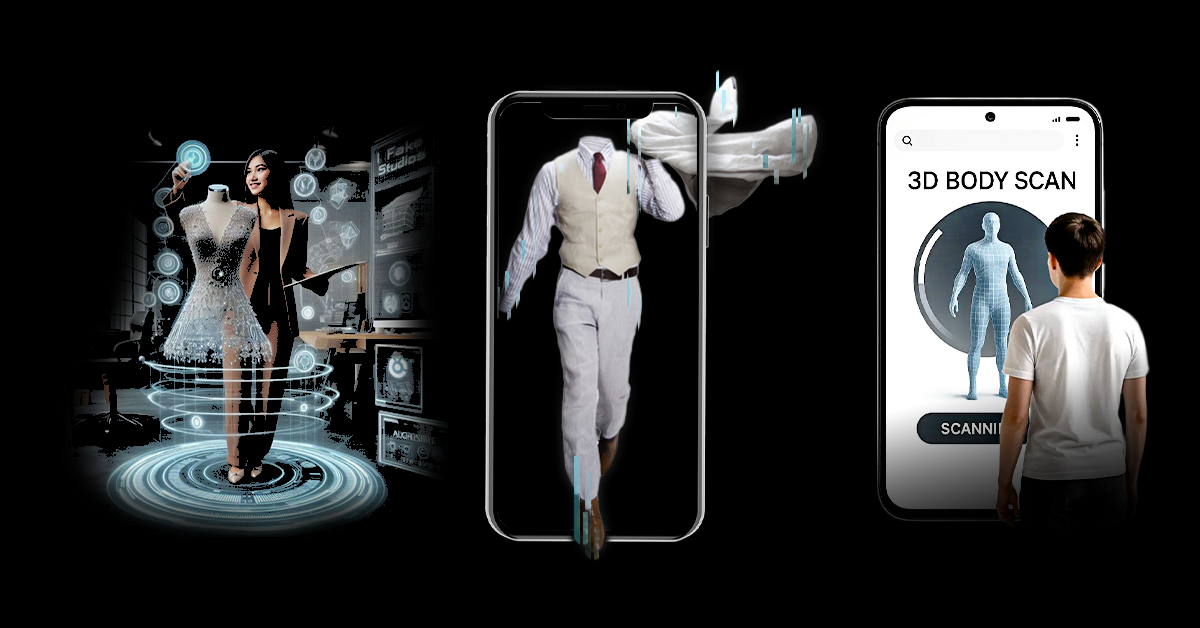
Fashion’s relationship with tech is slowly graduating from superficial gimmicks (looking at you, 2022 metaverse runways) into a foundational infrastructure - and none of it's about looking futuristic.
Today, I’m diving into the three technological pillars redefining how fashion is designed, marketed, and sold. Let’s discuss.
1. The creative shift: AI in the design studio
For years, the biggest operational bottleneck for independent fashion brands was the cost of physical prototyping and asset creation. Generative AI has turned that bottleneck into a seamless, high-speed pipeline.
Instead of cutting sample fabrics and shipping prototypes across borders, design houses are using advanced 3D digital sampling to stress-test garments virtually. This eliminates months of developmental delay and thousands of dollars in physical waste.
But the real game-changer for digital marketers is the rise of AI-driven commercial production. Platforms like WearView allow brands to take a flat product flat-lay shot and instantly render it into hyper-realistic, on-model imagery across diverse body types and backgrounds.
Why it matters for marketing:
The cost of launching an e-commerce collection has plummeted. Independent brands can now produce high-end, studio-grade visual assets without the traditional overhead of multi-day commercial photoshoots, democratising who gets to compete on our feeds.
2. The retail shift: the hyper-personalised storefront
The traditional, static e-commerce homepage is dead. In its place is a dynamic ecosystem driven entirely by predictive consumer behaviour.
In 2026, leading fashion retailers are utilising adaptive storefronts. When a consumer lands on a site, the interface instantly restructures itself based on localised weather patterns, personal browsing history, and real-time behavioral data. You see heavy outerwear during a cold snap; another user sees activewear based on their fitness search habits.
Simultaneously, the industry is finally solving its multi-billion-dollar headache: product returns due to poor sizing. Instant virtual fitting rooms powered by precise mobile body-scanning technology are replacing traditional size charts.
Why it matters for marketing:
We are moving away from broad demographic targeting to true individualisation. By pairing virtual try-ons with predictive AI styling assistants, brands are seeing spikes in average order value and a massive drop in standard return rates. It turns out that when people know a garment will fit, they buy.
3. The material shift: bio-engineering and the end of greenwashing
Consumers are sooo over the bs "eco-friendly" marketing claims. In response, the intersection of fashion and material science has gone mainstream.
We are seeing lab-grown textiles, such as mycelium-based leather alternatives and zero-waste bio-cellulosics, hit commercial-scale production. Brands like Stella McCartney are leading the charge by deeply integrating these regenerative raw materials into their core lines, which is cool af. But the real structural shift comes from the backend.
New international regulatory pressures mean that transparency is no longer optional. Brands are rolling out Digital Product Passports (DPPs) linked to blockchain ledgers. By scanning an internal QR code on a garment, a consumer can verify its entire lifecycle; from the raw fiber harvest to the factory floor.
Why it matters for marketing:
The era of mass-market greenwashing is FINALLY over. Today, sustainability is a data science problem. Marketers can no longer rely on clever copywriting; they must rely on verified supply chain metrics.
Tech for tech's sake will always fail
Like every other industry, the fashion world must consider using AI, hyper-personalisation, and material tracking to build leaner, smarter, and faster operations.
As marketers, our job is no longer just selling the aesthetic of a brand, but leverage these integrated digital systems to build deep, transparent trust with an incredibly sharp consumer base.
-Sophie Randell, Writer