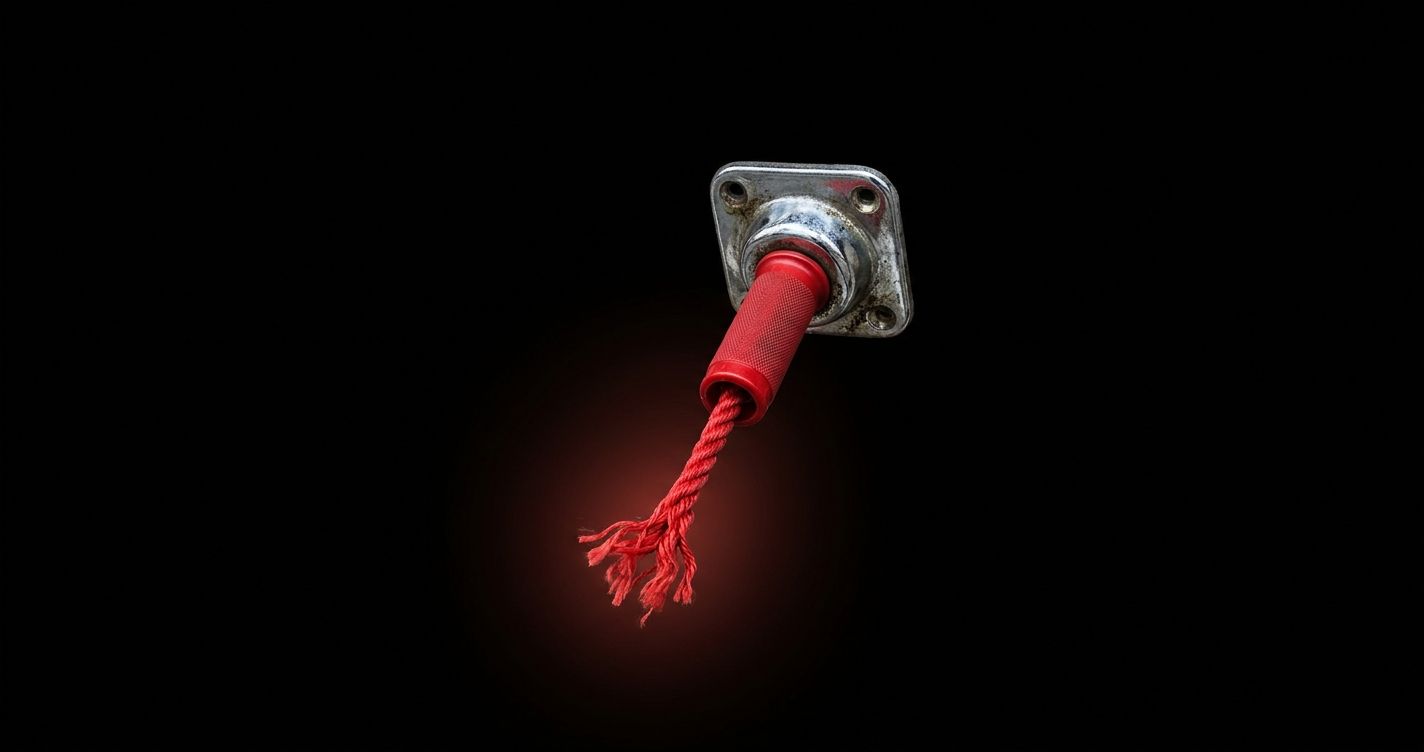
The tech world just watched a massive, high-stakes drama unfold as Anthropic pulled its most powerful new models, Mythos 5 and Fable 5, entirely offline.
The official narrative surrounding frontier AI safety has reached a fever pitch.
Regulators and corporate executives are acting as though a highly autonomous, dual-use AI model, one that is capable of hunting down deep cybersecurity vulnerabilities or conducting advanced chemical and biological synthesis, can simply be recalled like a defective batch of smartphones.
Like, hello. Are we suddenly operating under the comforting, dangerous delusion that we can pull an emergency brake on progress? Especially, technological progress. ESPECIALLY AI PROGRESS.
I’m going to be entirely blunt: the train has not only left the station, it is travelling at unprecedented, exponential speeds.
Believing that freezing access to one specific commercial model will stop the proliferation of these capabilities is myopic in the extreme. Open-source developers, decentralised clusters, and global geopolitical competitors are already closing the gap. And they have planned on doing so since Anthropic announced its Big Scary Models.
The era of centralised AI gatekeeping is dead. We have roughly 6 to 24 months to prepare for a world where raw, uncensored, hyper-capable intelligence is broadly available to anyone with an internet connection.
The concept of a closed-door "frontier model" is an architectural illusion.
When a company like Anthropic builds a model like Mythos, they prove a mathematical capability theorem. They show the global market that a specific threshold of reasoning, coding persistence, and autonomous problem-solving is achievable with a certain amount of data and computing power….
Once that proof of concept exists, the countdown begins. You’d be a fool to believe otherwise.
History proves that algorithmic efficiency advances just as fast as hardware scale. Capabilities that required a multi-million-dollar server farm to train last year are routinely compressed into open-source variants. And these run on a high-end consumer laptop twelve months later.
Attempting to restrict access through export controls or forced corporate rollbacks doesn't eliminate the risk, babes.
It merely ensures that the dominant models of the near future will be built outside the bounds of Western regulatory frameworks. Entirely free of safety guardrails or ethical alignments.
I feel that we need to stop debating how to stop the arrival of these models and start building the structural resilience required to survive them. Autonomous, highly creative, and relentless software agents are becoming standard open-source utilities. So the business and societal architecture must shift across three major domains:
The zero trust operational reality.
If an AI model can autonomously discover previously undocumented "zero-day" software exploits at scale, the current reactive security paradigm collapses. Organisations must pivot immediately to automated, AI-driven defence frameworks that continuously rewrite, patch, and harden their own codebases in real time to outpace machine-driven attacks.
The decentralisation of corporate intelligence.
Entirely on a centralised cloud provider for your core corporate intelligence is now a massive operational vulnerability. Forward-thinking enterprises are aggressively transitioning to localised, fine-tuned, and entirely self-hosted open-source model infrastructures. Ones that can be fully air-gapped from geopolitical interventions and corporate rollbacks.
The premium on verifiable human provenance.
As deep analytical capabilities and flawless content generation become literally free and infinite, the market value of raw synthetic output drops to zero. Trust will become the ultimate economic premium. Blockchain-backed data provenance, cryptographically signed communications, and undeniable human-in-the-loop validation will become the only way to establish commercial integrity.
How brands navigate the proliferation era:
For the strategists, agency leaders, and founders across the wider commercial landscape, it’s not a crisis. But it should probably be an aggressive, fast-moving mandate to adapt your offering:
Audit for platform dependency.
If your entire operational workflow is built exclusively on the API of a single major AI developer, you have built your house on a shifting sand dune. Immediately diversify your technological stack. Ensure your creative and analytical pipelines are model-agnostic and fully compatible with open-source alternatives.
Transition from tools to workflows.
Stop selling basic AI generation or simple automation tasks to your clients. Anyone can do that with a basic browser extension now. Instead, focus on building deeply integrated, multi-agent automated systems that orchestrate complex, proprietary business logic. Something a generic off-the-shelf model cannot replicate.
Cultivate the institutional immune system.
Educate your leadership and your teams on the immediate realities of hyper-realistic phishing, automated corporate espionage, and synthetic brand attacks. Yes, really. The security of your business is no longer an IT issue; it is a foundational creative and executive pillar.
The era of treating AI as a well-behaved consumer product is officially over.
The regulatory panic we are witnessing is the sound of an establishment realising they can no longer control the velocity of technological evolution.
The frontier is expanding, the walls are down, and the capabilities are leaking into the wild. Stop waiting for a centralised authority to declare the path safe.
Are you building an immune system for your business, or are you still hoping someone hits the brakes?
-Sophie Randell, Writer