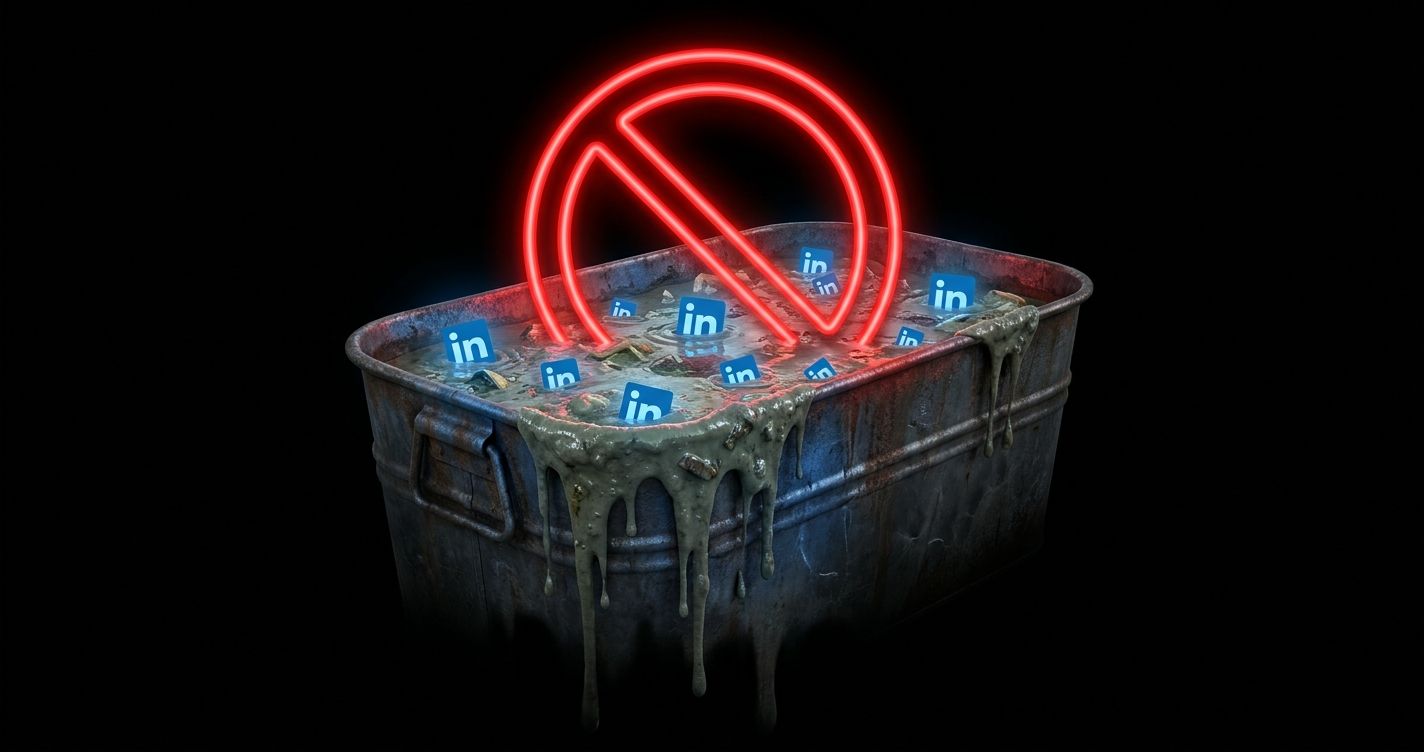
I don’t know about y’all, but I feel like LinkedIn has become the pits since the popularisation of AI with wanky executives who have found a new way to blow some up each others asses.
If you have spent even thirty seconds on the platform over the past two years, you know what I mean.
The unrelating format: a corporate worker or executive takes a completely mundane news event, feeds it into a prompt generator, and spits out a long, eerily structured essay opining on how a minor daily occurrence relates to "thought leadership," "synergy," or some other hollow piece of corporate brainrot.
It’s essentially a theatre of professionalism where machines are writing posts for other machines to index, leaving real human professionals feeling completely crowded out of their own platform.
However, the last little glimmer of hope has broken through the clouds like sunshine after a storm: LinkedIn has introduced a user-reporting button that allows the community to flag a post if it “seems like AI slop.”
Let’s stop and look past the immediate corporate update to appreciate the absolute, staggering irony of this moment.
The most wild and fascinating part of this feature isn't that the filter exists; it is the language they chose to use.
LinkedIn said: fk a polite, sanitized, or buttoned-up phrase like “It appears this content was generated using artificial intelligence.”
They went straight for the internet slang version we’re come to know and love, embedding the term “AI slop” directly into their user interface. Lol.
It almost reads like an admission of defeat from the supreme sanctuary of corporate seriousness.
By adopting the vocabulary of the digital resistance, LinkedIn is openly validating a reality that independent creators have been eye rolling about for months: the automated content flooding our feeds isn't "innovative thought leadership." It is low-value, extractive visual pollution that is actively destroying the emotional and intellectual infrastructure of online communities.
The platform has realised that if it continues to allow automated scripts to simulate human wisdom for cheap metric spikes, the entire cooperative game of the professional network will collapse.
The introduction of the slop button changes the power dynamics of digital authority.
The algorithm has been rewarding the high-volume, automated posters who could churn out five flawless carousels a day without a single human error.
But this new filter introduces healthy, democratic human friction back into the loop.
It means that hyper-perfection is no longer an asset, but a profound corporate liability.
The moment your content sounds a little too much like the last guys slop soup, the audience now possesses an algorithmic emergency brake to tank your distribution.
This gives power back to the community. And that’s exactly what it needs right now.
For the modern marketers, the era of using AI to short-change your audience or fake your industry expertise has reached systemic rejection.
If your brand communication relies on automated text generators to look active on the feed, I would pump the brakes.
Pumping the feed full of lazy, meaningless word soup is now a reportable offence.
Reject the sterile templates of the corporate machine toot your own horn the old fashioned way; with your own two hands.