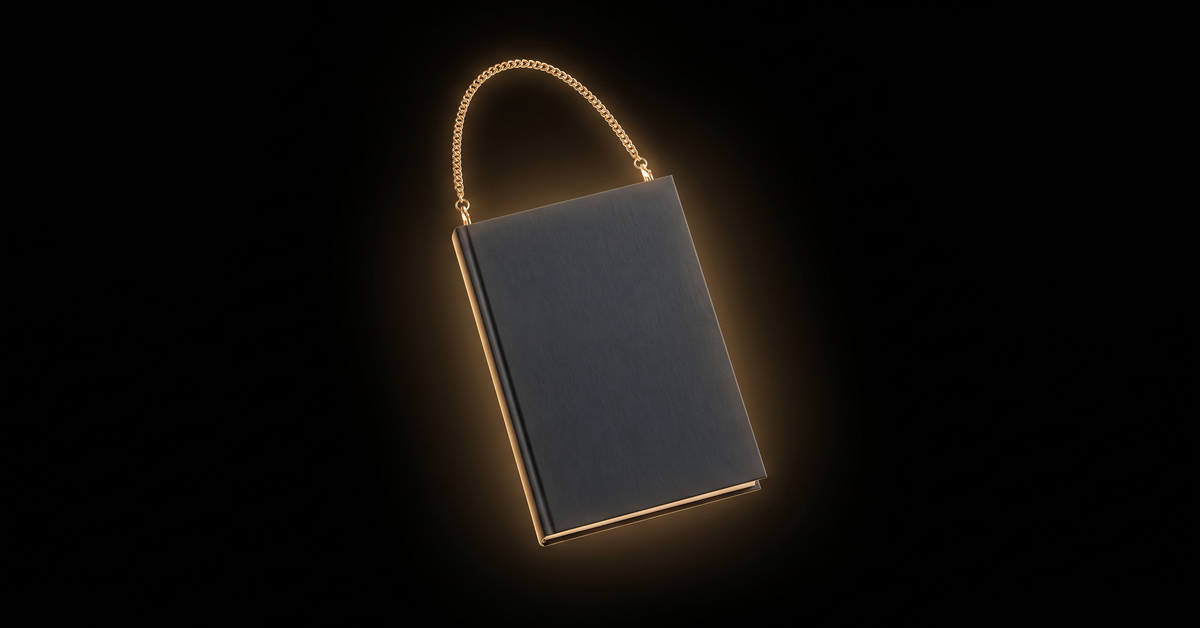
I don't know if I'm just in a mood, but all I've been seeing on socials recently is everyone is suddenly acting like a literary critic, an amateur historian, or a deeply serious existential philosopher. We're deep in the era of the Pseudo-Intellectual Consumer.
And look, I get it. The internet has finally grown tired of the brainless hypebeast, the hyper-curated "Clean Girl," and the aesthetic of pure, unadulterated luxury consumption.
Nobody wants to look like a mindless consumer anymore. Instead, the ultimate status symbol right now is looking like you possess a massive, tortured, deeply intellectual inner life.
Gen Z and young Millennial consumers are unironically turning heavy, depressing, existential philosophy paperbacks into runway fashion accessories. Independent book clubs are replacing nightclubs as the venue to see and be seen. TikTok feeds are packed with creators meticulously curating their "reading stacks" based on how the book spines match their outfit's colour palette.
For marketers, this isn't a sign of a sudden global spike in collective IQ. It is something much more fascinating: a brilliant evolution of intellectual posturing as a core consumer identity.
In a hyper-visual digital culture where everything feels shallow, synthetic, and fleeting, consumers are desperate to signal depth, history, and substance. But because we still live in a fast-paced attention economy, they need to signal that depth instantly. They don't have time to spend years studying mid-century philosophy, but they do have time to buy a tote bag from a niche indie publisher that hints they understand it.
This is exactly why luxury brands like Miu Miu are successfully launching international literary clubs, and why indie publishing houses are seeing unprecedented surges in merchandise sales. Consumers aren't necessarily buying these books and cultural artifacts to read them cover-to-cover; they are buying them to use as a cultural shield. Carrying a specific book or wearing a t-shirt from an obscure art press sends an immediate signal to the world. It says, "I am far too intelligent, cynical, and media-literate to be tricked by basic, mainstream marketing."
The beautiful irony, of course, is that this desire is the single most effective marketing framework on earth right now. By elevating your brand's vocabulary, aligning your products with high-brow cultural touchstones, or introducing intentional intellectual friction into your campaigns, you give the consumer the precise tool they need to look smarter than their peers.
How Brands Can Lean Into the Mind Game
To tap into the pseudo-intellectual consumer base, brands must stop trying to make their messaging as simple and digestible as possible. For years, the golden rule of marketing was to write at a fifth-grade reading level. Simple. Fast. Effective.
The pseudo-intellectual trend completely subverts this. Consumers want to work for it. They want complex sentences, obscure historical references, and inside jokes that require a quick Google search to fully comprehend.
When you make your brand's narrative a riddle, solving it gives the consumer a massive hit of intellectual validation. They feel like they belong to an elite tier of consumers who "get it," which drives intense brand loyalty and organic, word-of-mouth advocacy.
The Takeaway:
Stop talking down to your audience. The modern consumer doesn't want simple, they want to feel challenged, even if that challenge is ultimately just an aesthetic illusion.
Injecting literary references, historical depth, or philosophical irony into your product design and messaging gives your audience a high-level tool for self-expression.
Make them feel smart, and they'll make you rich.
Quick maths baby.