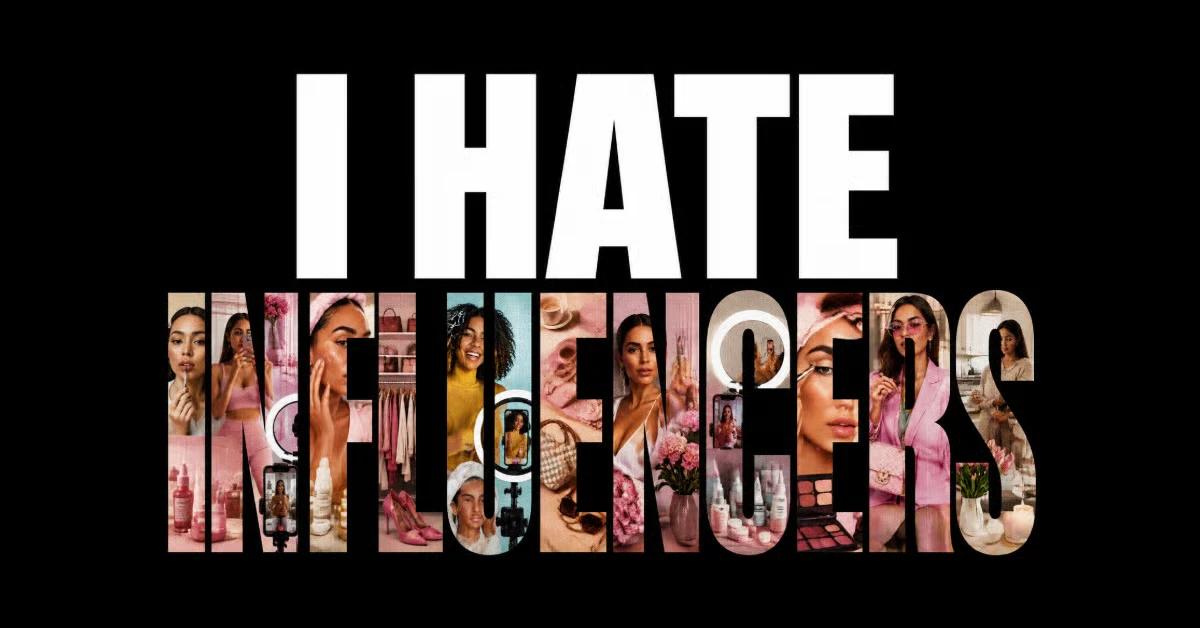
I have a question for you, if you "hate influencers", why?
It's an interesting phenomenon I've observed over the years, and I think it's always one of two things, critique of consumer culture, or disguised misogyny.
I've seen a lot of content as of late in the form of the influencer takedown essay. The format has become a highly lucrative creative template. A commentator sits in front of a ring light, uses a hyper polished editorial tone, and spends twenty minutes systematically tearing down a prominent lifestyle creator.
They dissect her morning routine, mock her vocal fry, analyse her product recommendations, and declare her entire digital footprint to be a toxic blight on the cultural landscape.
On the surface, these videos are wrapped in a glossy layer of progressive intellectualism. They are presented as a righteous, socially conscious critique of capitalist excess, a defence of the modern consumer, and a necessary exposure of marketing deception.
But if you look at the underlying sociology of who is actually being targeted by this online colosseum, an age long double standard emerges. This relentless wave of public indignation isn't an egalitarian strike against the machinery of consumerism, it's more of an algorithmic witch-hunt.
And it has become the ultimate socially acceptable way to perform misogyny under the guise of social activism.
We have to look past the self righteous rhetoric of the comment sections and call out the absolute disparity in how the internet allocates its rage. The lifestyle space, which is overwhelmingly designed, populated, and consumed by women, is treated by the collective hive mind of the web as a shallow, parasitic vanity project that deserves non stop public stoning. Yet, if you look at the parallel, male dominated sectors of the influencer economy, the moral outrage is conspicuously silent. In fact, they are never even really called "influencers" and almost always "creators."
We do not see twenty minute viral takedowns tracking the deceptive marketing tactics of finance bros peddling volatile cryptocurrency schemes to vulnerable young men. We do not see a coordinated public outcry against tech creators hyping up un-optimised, resource guzzling software models, or fitness influencers selling unverified, dangerous chemical supplements under the banner of the hustle routine. Those operations are comfortably categorised by the public as business, tech innovation, or raw entrepreneurial drive. But the moment a woman converts her personal style, her domestic eye, or her skincare routine into a multi million dollar independent enterprise, her commerce is immediately pathologised as a moral failure.
The systemic devaluing of female labour is a tale as old as time, but the modern interest based algorithm has given it a terrifying new level of efficiency.
And unfortunately, female directed outrage seems to be one of the highest converting drivers of digital engagement on the market. It capitalises on internalised biases, encouraging us to jump on the hate train because it allows the audience to perform some kind of misplaced ethical superiority.
By banding together to collectively destroy a lifestyle creator's credibility in the replies, the internet mob convinces itself that it is actively fighting the capitalist system, completely oblivious to the fact that they are simply acting as unpaid distribution agents for a platform that monetises their hostility.
I want you to look at this landscape with absolute, centrist discernment. But to do so, you need to separate genuine commercial accountability from obsessive personal degradation.
It is entirely valid, and indeed necessary, to critically evaluate the consumerist loops of modern marketing, to demand transparency in paid sponsorships, and to reject the synthetic performance of perfection that floods our feeds.
It is not necessary or ok to pick apart a woman's physical appearance, psychoanalyse her relationship dynamics, and treat her livelihood with a level of vitriol that we never apply to the corporate boards of traditional manufacturing. Because that's where it stops being a cultural critique. It becomes a bloodsport.
I think it is good to stop and ask yourself sometimes, "Why am I having these feelings toward this person? Are those feelings my own, or am I parroting everyone else? Do I need to stop being unkind and touch grass?"
You may be surprised by your answers.