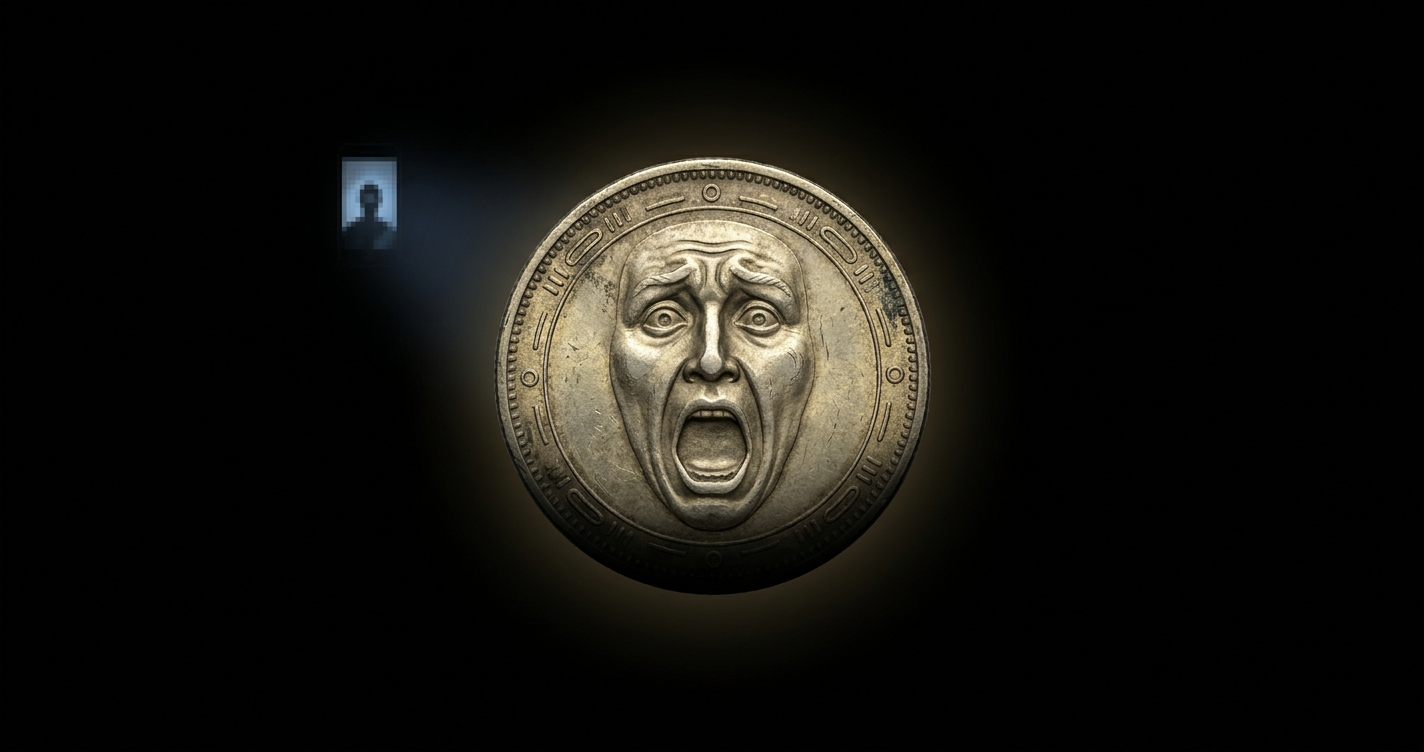
I literally spent over twenty whole minutes of my life tonight watching a video of a person reacting to another person reacting to a movie trailer.
Guys. Like, be so for real.
I had to stop (eventually, after exiting the rabbit hole) and ask myself when we turned human emotion into a mass-produced consumer commodity. Shortly after I remembered, oh yeah, for a while now. But hey, we carry on.
The modern social media feed is filled with rot that culture critics are calling the Reaction Economy. So, instead of consuming art, news, or culture directly, we consume the spectacle of other people consuming it. (yes, chat, we are cooked.)
If you look at the trending pages on any of the main platforms right now, the highest-velocity visual assets are unfortunately no longer the original creative works themselves.
Instead, they're the hyper-stylised video frames of creators gasping, crying, or shouting at a screen in the corner of the layout.
It’s almost like we’ve outsourced our emotional processing to strangers with sub-par ring lights. Meanwhile, we've turned human vulnerability into a flat currency designed entirely to farm algorithmic engagement metrics. Help. I hate it here.
The rapid rise of this behavioural subculture is a direct and concerning symptom of a profound digital loneliness.
The algorithm has long recognised that authentic human expression, like maybe a sudden tear, or a gasp of pure shock… maybe even a gut-wrenching laugh, is the highest-converting form of visual data on the digital market.
By serving us an endless loop of people merely reacting to things, the platform perfectly mimics the psychological feeling of sitting in a living room with a friend, sharing a collective cultural experience.
It's like a simulated intimacy infrastructure built to combat the absolute isolation of the modern screen-bound lifestyle. We watch someone else get excited about a cinematic sequence or an album drop because it validates our own reactions.
It offers a cheap, transactional substitute for the real-world communal anchors we have slowly allowed to atrophy.
But the true danger of this loop is the systematic flattening of our internal emotional landscapes. I feel as though if we constantly filter our experiences through the pre-packaged reactions of content creators, we start losing the ability to feel things privately and honestly. And that’s a slippery slope.
Because we then become hyper-aware of the invisible audience watching us. Always subconsciously preparing our own faces to match the trending aesthetics of the timeline.
The moment a piece of art or breaking news hits the web, our immediate reflex is no longer to sit with the discomfort, the wonder, or the grief of the moment. Our reflex is to check how everyone else feels and is reacting to it.
We're surrendering our cognitive and emotional sovereignty to a dystopian black-box system that rewards performative shock value over deep, quiet contemplation.
We're turning our inner lives into a derivative copy of a copy.
Here’s my take (whether you want it or not): if your brand communication relies on cold, clinical data or sterile promotional graphics, you are not sh*t to the modern user within this landscape.
To survive, you must learn how to design for emotional immediacy.
Why are you trying to show people the functional specifications of your product, when capturing the un-edited, visceral human reality of what it feels like to actually interact with your brand in real life is the standard?
Provide the raw material that provokes a genuine, un-choreographed response. That's how you cut through the synthetic noise of the feed by delivering an undeniable proof of life.
And I understand that as independent operators navigating this hyper-connected wilderness, we have to establish a fierce internal boundary against the commodification of our attention.
But the open web is rapidly turning into a hall of mirrors where no one is actually looking at the world. Everyone is just looking at each other looking at the screen.
If you find yourself feeling the overwhelming urge to click on a reaction loop or broadcast your immediate thoughts to a public comment section, genuinely, consider pulling the emergency brake.
Put your phone face down on the table for two seconds. Sit with the silence. Allow yourself the luxury of a private, unmonitored emotion. One that doesn't need to be validated by an applause emoji or captured for a data-tracking pixel.
True creative isn't about participating in the constant, noisy theatre of the feed. Instead, it's about possessing the depth to feel something real, completely on your own terms. All without telling a single soul on the internet that you did it.
Give it a go, babes. You may just find your own agency coming back with it.
-Sophie Randell, Writer