If you’ve been to a fast-casual restaurant or tried to order a quick meal online lately, you have likely run face-first into the newest and most embarrassing piece of restaurant infrastructure: the generative AI menu.
Driven by corporate promises of reduced labour costs and optimised ordering flows, major hospitality brands are rushing to replace human cashiers, and, apparently, their graphic designers too.
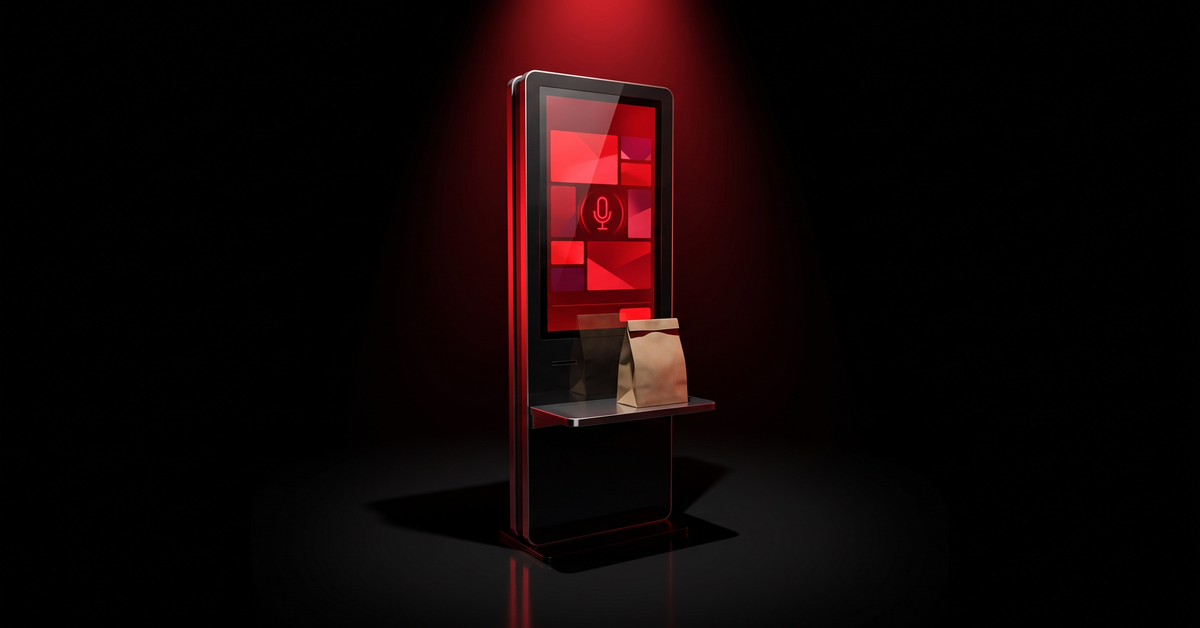
I’m talking about the digital boards with conversational AI voice bots and dynamic, shifting menus. On paper, tech vendors pitch this as the ultimate consumer convenience: a frictionless system that can predict exactly what you want based on the time of day, the local weather, or what’s the most popular selling item at the time.
But out in the real world, this technology achieves the opposite of its intended effect.
This is the curse of the AI menu, a masterclass in how hyper-optimisation can turn away a hungry customer in an instant.
The Psychology of Dining Friction
To understand why AI menus are causing such a massive drop in customer conversion metrics, you have to look past the technical engineering and unpack our psychology. Eating is fundamentally an emotional, sensory, and deeply instinctual human behaviour. Duh.
So, when a consumer walks into a restaurant, they are already operating under a specific cognitive load: they are hungry, possibly tired, and looking for a straightforward, predictable path to relief.
When you replace a simple, scannable, static menu board with an interactive AI bot or a dynamic screen that constantly shifts its layout to cross-sell you premium items, you introduce immediate cognitive friction. Or a “hell naw” response.
A perfect real-world example of this backlash hit the headlines when Wendy’s faced a massive public relations storm after executive statements regarding “dynamic pricing” and AI-driven menus were widely interpreted by consumers as a plan to introduce surge pricing for burgers during the lunch rush. Even though the brand quickly clarified its intentions, the damage was done.
That’s because the modern consumer doesn’t see an AI menu as a helpful assistant; they view it as an adversarial corporate gatekeeper designed to manipulate their choices, hide cheaper value items, and extract the maximum amount of cash from their wallet. Also, AI public sentiment is allll the way down, with some consumers going out of their way to avoid interacting with or using it at all costs.
If you try to force their hand there, they’ll be backing out of your drive-through faster than you can say “I’m Lovin’ It.”
The Illusion of Efficiency
What makes this trend particularly counter-productive for restaurant operators is that it actively breaks the primary promise of fast-casual dining: speed.
With a traditional cashier (yes, a human), the transaction relies on intuitive social cues. A human can instantly process an awkward custom request, read a customer’s confused body language, and offer a quick, reassuring workaround.
An AI voice bot at a drive-thru or an interactive screen forces the customer into a clunky script. If the system mishears a single ingredient or fails to parse a localised accent, the entire ordering process grinds to a halt. The customer is forced to repeat themselves to a machine, triggering an immediate spike in cortisol and public embarrassment.
By prioritising automated optimisation over intuitive human design (and jobs), brands are accidentally transforming a low-stakes convenience purchase into a frustrating, high-stress chore. The second an interface makes a customer feel stupid or manipulated, they will happily walk across the street to a competitor that still offers a basic piece of printed cardboard.
The Takeaway:
Frictionless technology becomes a profound failure the moment it complicates a simple human desire. If your brand operates in the hospitality, retail, or e-commerce space, stop assuming that adding an automated layer to your user journey inherently improves it.
It does not.