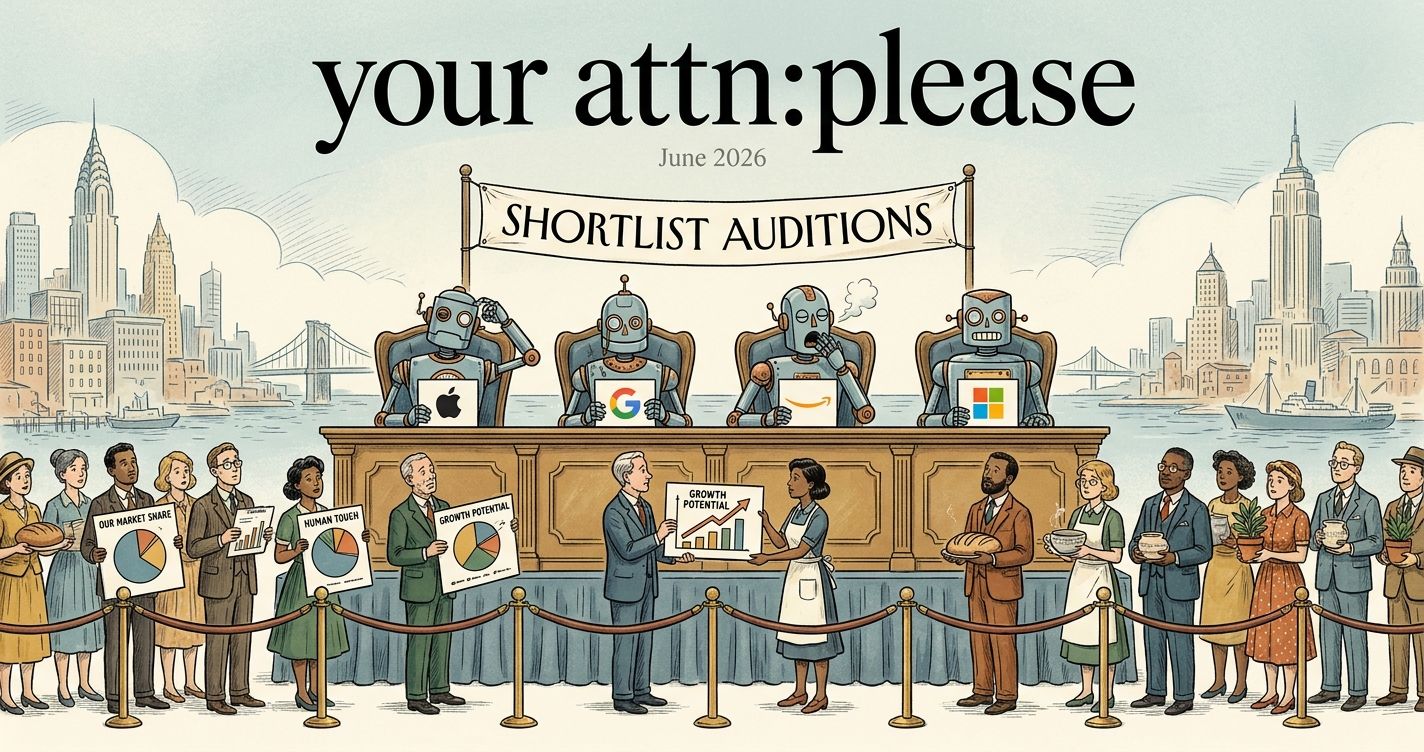
Share of model is your slice of the AI conversation. It is the number of times AI engines cite your brand divided by all the citations for a question, across ChatGPT, Perplexity, Gemini and Copilot. It is the new share of voice. You measure it by running the same buying questions through each engine every month and counting who gets named.
I run a New Zealand social and education brand. For years the metric that mattered was share of voice: out of all the noise in your category, how much of it was you. Now there is a new version of that same idea, built for AI search. It is called share of model. It asks: out of all the brands the AI could recommend, how often does it pick you. This guide covers what it is, why it matters more than rank now, and exactly how to measure it across the main engines.
What share of model actually means
Share of model means your portion of the brand mentions inside AI answers. If a question gets answered with five brands named, and one of them is you, your share of model for that question is one in five. Average it across all your priority questions and all the main engines, and you get your real standing in the AI conversation.
Old share of voice counted mentions across media, ads and social. Share of model counts mentions inside the AI answer, because that answer is now where buying decisions start. When someone asks ChatGPT "who should I hire for social media in Auckland," the brands it names are the shortlist. Everyone else does not exist for that buyer.
So share of model is not a vanity number. It is the shortlist. It tells you whether the machine that millions of people now trust puts you on the list or leaves you off.
Why it beats rank position now
It beats rank position because rank position is about a list nobody reads anymore. When the AI answers in one block, there is no page two, no list of ten links to scroll. There is the answer. Being ranked fourth on Google means little if the AI summary names three brands and you are not one of them.
Share of model captures the thing that actually decides outcomes: presence in the answer. A brand can rank poorly on classic Google and still get cited heavily by Perplexity because its content is clear, factual and well structured. The opposite is also true. You can rank well and still get skipped by the AI because your page buries the answer.
For small Kiwi brands this is the opening. You do not need to outrank a national chain on every keyword. You need to be one of the few brands the AI keeps naming for your specific questions. That is a far more winnable game.
How to measure it across the engines
You measure share of model by testing a fixed set of questions on each engine and counting brand mentions. The method is the same whether you do it by hand or with a tool. Consistency is everything. Same questions, same engines, same day each month.
Here is the manual process:
- Build a list of 20 to 50 priority questions. The real ones your buyers ask. Mix category questions ("best [thing] in [city]") with problem questions ("how do I fix [problem]").
- Run every question through ChatGPT, Perplexity, Gemini and Copilot. Add Google AI Overviews if it serves your market.
- For each answer, list every brand named. Mark which one is you.
- Count your mentions and divide by the total brand mentions. That is your share of model for that engine.
- Average across engines for your overall figure. Save it. Repeat monthly.
The number you get is rough on day one and meaningful by month three, once you can see the trend.
Reading it per engine, not just overall
Read it per engine, because each engine sources differently and you will win in different places. Your overall share of model hides useful detail. Breaking it out by engine shows you where you are strong and where you are missing, so you can target your work.
What the splits tell you:
- Perplexity shows its sources openly. If your share is low here, your content structure is the problem. Tighten your definitions, data and headings.
- ChatGPT and Gemini lean on trusted training sources plus live retrieval. A low share here often means weak third-party presence. You need mentions on sites the AI already trusts.
- Google AI Overviews leans on pages that already rank with strong author trust. A low share here ties back to classic SEO and E-E-A-T.
- Copilot pulls from the Microsoft and Bing index. Worth a separate look if your buyers are in business and corporate settings.
A brand might hold 30 percent share on Perplexity and 5 percent on ChatGPT. That split is a map. It tells you exactly which lever to pull next.
Tools that track it for you
Several real tools now track share of model automatically. Profound, Otterly and Peec all monitor brand mentions across the main AI engines and chart your share over time. Ahrefs offers a feature called Brand Radar built for the same purpose. They run your question set on a schedule so you skip the manual logging.
My advice for a small team: start by hand for one or two months. Doing it manually teaches you which questions matter, which rivals keep appearing, and what the answers actually look like. That understanding makes you better at the work itself. Once you know your priority questions cold, hand the repetitive tracking to a tool and spend your time improving content, not logging spreadsheets.
Whatever you use, judge yourself on the trend. A single reading is noise. Three months of climbing share of model is proof your GEO work is landing.
Frequently asked questions
What is share of model in simple terms?
Share of model is how often AI engines name your brand compared to all the brands they name for a question. If five brands get mentioned and one is you, your share is one in five. It is the AI-search version of share of voice. Higher share means the AI recommends you more often than rivals.
How is share of model different from share of voice?
Share of voice measures your presence across all media, ads and social mentions. Share of model measures only your presence inside AI answers. Share of voice was about being heard in the market. Share of model is about being on the shortlist the AI hands to a buyer who just asked it a question.
How many questions do I need to measure share of model?
Between 20 and 50 priority questions gives a reliable read for a small business. Fewer than 20 and one odd answer skews the whole number. Use the real questions your buyers ask, mixing category questions with problem-solving ones. Keep the list fixed so your month-to-month trend stays comparable.
Why does my share of model differ across AI engines?
Because each engine sources content differently. Perplexity rewards clear structure and visible sources. ChatGPT and Gemini lean on trusted training data plus third-party mentions. Google AI Overviews favours pages that already rank well. A low score on one engine points you straight at the specific weakness to fix.
Can a small NZ brand realistically grow its share of model?
Yes, and more easily than it could grow Google rank. You do not need to beat big players on every keyword. You need to be one of a few brands the AI keeps naming for your specific questions. Clear answers, real data and consistent brand mentions get a small brand cited fast.