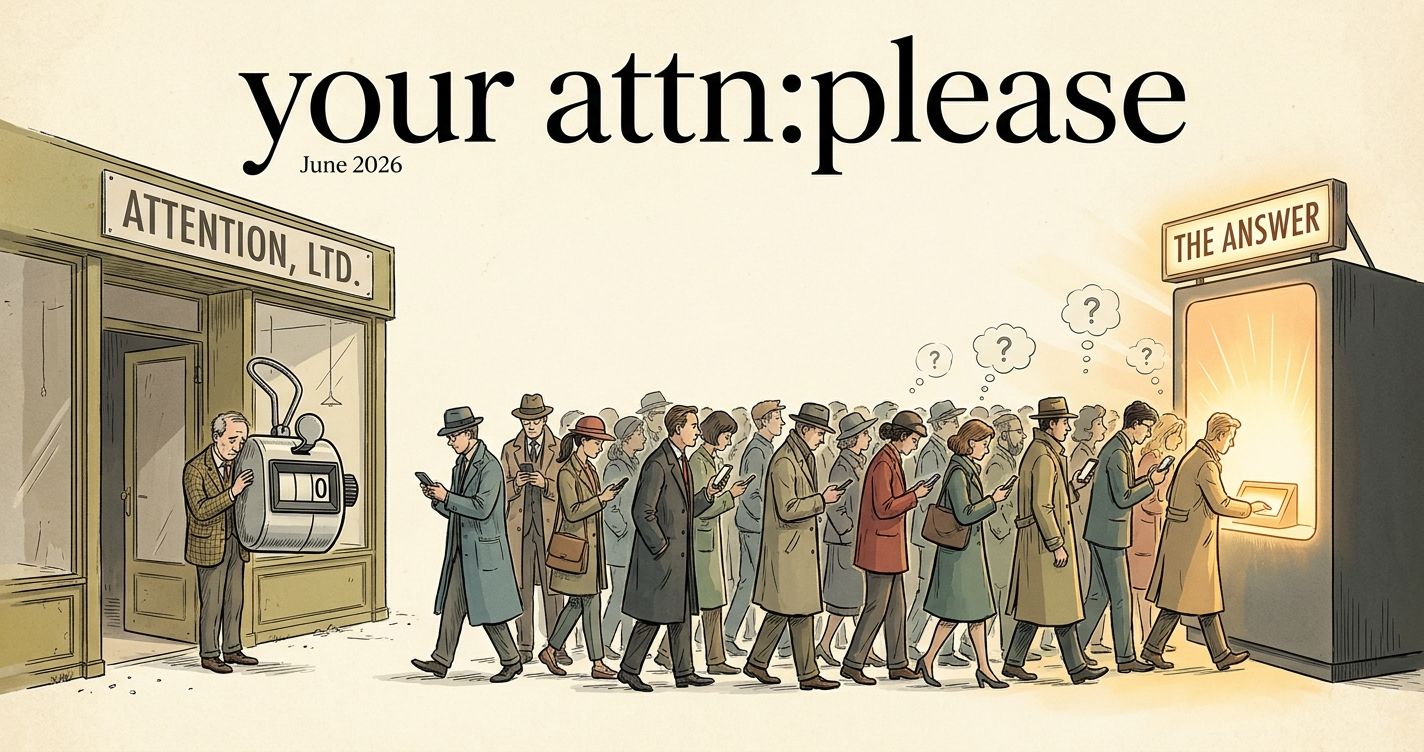
You measure AI visibility by counting citations, not clicks. Track three things: how often AI engines mention your brand, whether they link to your pages, and where you sit inside the answer. Run the same set of buying questions through ChatGPT, Perplexity, Gemini and Copilot every month. Watch the trend.
I run a social media and education brand in New Zealand. For years we measured everything by clicks. Rank position, impressions, click-through rate. That whole scoreboard is now half blind. A huge share of searches end inside an AI answer with no click at all. The customer reads the answer, gets what they need, and never lands on your site. So the old numbers say "nothing happened" while the AI quietly recommends your competitor. This guide covers what to track instead, and how to actually do it without a big tool budget.
Why clicks stopped telling the truth
Clicks stopped telling the truth because the answer now lives in the search result itself. AI engines like ChatGPT, Perplexity and Google AI Overviews read the web, summarise it, and hand the user a finished answer. Roughly two in three searches now end with no click. Your traffic graph cannot see any of that.
Here is the trap. Your Google Analytics shows flat or falling traffic. You assume your content is failing. But the content might be working harder than ever. It is feeding the AI answer. The AI is using your words. The user is acting on your advice. You just never see them because they never clicked.
That is the gap GEO measurement closes. GEO stands for Generative Engine Optimisation. It is the practice of getting quoted inside AI answers. To know if it is working, you need a new scoreboard built for a no-click world.
The shift: from clicks to citations
The shift is from "did they click my link" to "did the AI quote my brand." A citation is any time an AI answer names you, links to you, or uses your content to answer a question. Citations are the new currency. They are what you count when there are no clicks left to count.
Think of it like this. In the old search, you won by being a link a person chose. In the new search, you win by being a source the machine trusts enough to repeat. The person never sees the list of ten links. They see one answer. You are either in that answer or you are invisible.
The good news for Kiwi businesses: this levels the field. You do not need a million-dollar backlink profile to get cited. You need clear answers, real data, and a brand the AI keeps running into. A small Auckland firm with sharp, well-structured content can get quoted ahead of a giant with a lazy blog.
What to track instead
Track five things. They make up the new scoreboard. Each one answers a different question about whether AI is recommending you. You do not need all five on day one. Start with the first two.
- AI Citation Rate. The pages of yours that get cited divided by the pages you track. This tells you how often your content earns a quote.
- Share of Model. Your citations divided by all citations for a question, across the main engines. This is your slice of the AI conversation, like share of voice for the AI era.
- Response Inclusion Rate. The prompts that mention your brand divided by all the prompts you test. This tells you how present your name is.
- Position and prominence. Where you sit inside the answer. First source named beats a footnote at the bottom.
- AI referral traffic and conversions. The clicks and sales that do come from AI tools, tracked separately from normal organic.
The first two are the heart of it. Citation Rate tells you if your content is good enough to quote. Share of Model tells you if you are winning against rivals.
How to actually measure it
You measure it by testing the same questions on a schedule. Pick the questions your buyers actually ask. Run them through each AI engine. Record who gets named. Do it the same way every month so the trend means something. You can do this by hand or with a tool.
The manual method, which costs nothing:
- Write 20 to 50 real buying questions. Use the words your customers speak. "Best social media agency in Auckland." "How do I grow on Instagram without ads." Not keywords. Full questions.
- Run each one through ChatGPT, Perplexity, Gemini and Copilot.
- For each answer, log three things in a spreadsheet: were you mentioned, were you linked, and which rivals showed up.
- Repeat on the same day each month. Watch the numbers move.
The tool method, for when you want it automated. Several real tools now track this for you. Profound, Otterly, and Peec all monitor brand mentions across AI engines. Ahrefs has a feature called Brand Radar built for the same job. They run your prompts on a schedule and chart your Share of Model so you are not doing it by hand. Start manual to learn what matters, then automate once you know your priority questions.
What good looks like
Good looks like steady upward movement on citations and Share of Model over months, not a single perfect score. Early on, getting mentioned in even one in five relevant answers is a real foothold. The aim is to climb, query by query, until the AI names you before it names your competitors.
Do not chase a magic number. The engines change their answers constantly. The same question can give a different answer next week. That is why the trend matters more than any single reading. A brand that is cited 15 percent of the time this quarter and 30 percent next quarter is winning, even though neither number sounds huge.
Tie it back to money where you can. Watch your AI referral traffic and what those visitors do. A small trickle of visitors who arrive already half-sold, because the AI vouched for you, can convert far better than cold search traffic ever did.
Frequently asked questions
What is the difference between AI visibility and normal SEO?
Normal SEO measures whether your page ranks in a list of links and gets clicks. AI visibility measures whether AI engines quote and recommend your brand inside their answers. SEO counts clicks. AI visibility counts citations. They overlap, but they need different scoreboards because AI answers often end with no click at all.
Can I measure AI visibility for free?
Yes. Write 20 to 50 real buying questions, run them through ChatGPT, Perplexity, Gemini and Copilot, and log who gets mentioned in a spreadsheet. Repeat monthly. It takes an hour or two and costs nothing. Paid tools like Profound or Otterly automate it once you know which questions matter most.
How often should I check my AI visibility?
Monthly is the right rhythm for most small businesses. AI answers change constantly, so a single reading means little. Running the same question set on the same day each month gives you a trend you can trust. Check the priority questions you most want to win more often if you are running an active campaign.
Why is my website traffic falling but my content still ranks?
Because AI answers are doing the reading for your visitors. They get your information inside the AI answer and never click through. Your content can be working hard, feeding those answers, while your traffic graph shows nothing. This is exactly why you need citation tracking, not just click tracking.
Which AI engines should I track in New Zealand?
Track ChatGPT, Perplexity, Google AI Overviews, Gemini and Copilot. ChatGPT and Google AI Overviews reach the most people. Perplexity shows its sources openly, so it is the easiest place to see if your structure is working. Start with those three, then add Gemini and Copilot as you scale up.