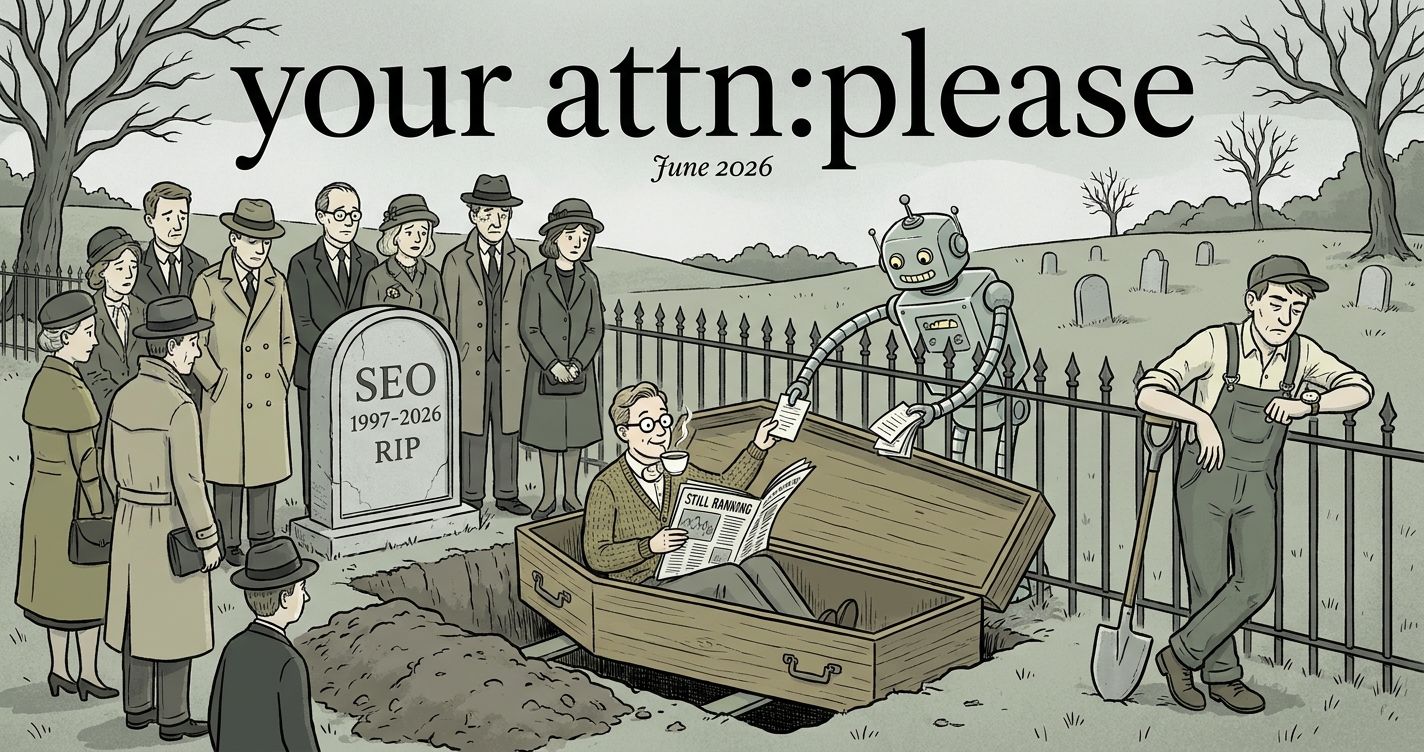
No, SEO is not dead. It just got a second front door. Classic SEO still ranks the links and still feeds the AI answer, because engines like Google's AI Overviews lean on pages that already rank well. What changed is that a new door opened next to it: getting quoted inside the AI answer itself. You now need both.
I run a social media and education brand in New Zealand. Every few months someone tells me SEO is finished. They have been saying it for a decade. It is not true now and it was not true then. What is true is that search changed shape. This guide busts the myth, explains what actually changed, and shows why SEO still matters more than ever.
Is SEO dead?
No. SEO is not dead. It changed. The old job was to rank in a list of ten links. That job still exists, and it still drives traffic. The new job is to get cited inside the AI answer that now sits above the list. SEO did not die. It grew a second front door.
The "SEO is dead" headline comes back every time search shifts. It said the same when mobile arrived, when voice search arrived, and when featured snippets arrived. Each time, SEO adapted and kept working. AI search is the latest shift, not the funeral.
Here is the part people miss. The AI answer does not invent its sources. It pulls them from pages on the web. Many of those pages are the ones that already rank well in classic search. That means your SEO work is what feeds the AI in the first place.
What actually changed
What changed is where the answer shows up. AI answers now sit at the top of search, above the old list of links. People read the answer and often stop there. The link is still there. Fewer people scroll down to click it. So the prize shifted from rank alone to being the source the answer quotes.
Three real changes drive this.
- The answer moved to the top. Google's AI Overviews appear above the organic results. The summary comes first.
- The click is shrinking. Industry research in 2026 shows the majority of searches now end with no click. People take the AI answer and move on.
- The query got longer. People ask full questions in plain language instead of typing two keywords.
None of this kills SEO. It reshapes the goal. You still want to rank, because ranking feeds the AI. You also want to be quoted, because quoting is where the attention now lands.
How SEO still feeds AI
SEO still matters because the AI trusts pages that classic search already trusts. Google's AI Overviews draw heavily on high-ranking pages with strong expertise signals. ChatGPT and Perplexity pull from trusted sources plus live web retrieval. In every case, the foundation is the same content quality SEO has always rewarded.
The signals overlap almost completely.
- Topical authority. A site that covers a subject deeply ranks well and gets quoted often. Building topic clusters of linked pages can lift organic traffic by 40 percent or more, and that same depth makes you a go-to source for AI.
- E-E-A-T. Experience, expertise, authority, and trust. Google's March 2026 core update made E-E-A-T its top quality signal. Named authors with real credentials help you rank and help the AI trust you.
- Backlinks and mentions. Links from strong, relevant sites still feed both. AI also reads unlinked brand mentions across the web.
- Freshness. A visible "last updated" date and a regular refresh cycle help rank and help citation. AI favours current sources.
Do good SEO and you have already done most of GEO. They are not separate projects. They are one project with two payoffs.
What you should do differently
You do not throw out your SEO playbook. You add a few moves that make your already-ranking pages easy for AI to quote. The work is small. The payoff is showing up in the answer, not just the list.
- Lead every page with a direct answer in the first two sentences. AI lifts that block.
- Add a clean definition near the top of the page.
- Pack in real data with named sources. Numbers get quoted more than claims.
- Use question-style headings, short paragraphs, lists, and tables.
- Add an FAQ section that mirrors how people really ask.
- Add schema markup so the AI understands your page structure.
For a Kiwi business, the timing is a gift. Most local competitors are still doing 2019 SEO and have not touched the second door at all. Keep ranking, then make your top pages answer-first, and you can own the AI answer in your niche before anyone else notices the shift.
The bottom line
SEO is not dead, and chasing the "it's dead" headline will only cost you. The businesses that win do both. They rank, which feeds the AI, and they structure for citation, which gets them quoted. Same content, two front doors, double the visibility. Drop SEO and you starve your GEO of the trust it needs to work.
Frequently asked questions
Is SEO still worth doing in 2026?
Yes. SEO is more valuable now, not less, because ranking feeds the AI answer. Google's AI Overviews and tools like Perplexity pull from pages that already rank well and show strong expertise. Drop SEO and you remove the foundation the AI draws from. Strong SEO is the base GEO is built on.
Did AI search kill organic traffic?
It reduced clicks, not value. Most searches now end with no click because people read the AI answer. But being the source that answer quotes still drives brand awareness, trust, and customers. The goal shifts from counting clicks to tracking citations and mentions inside AI answers.
What is the difference between SEO and GEO?
SEO earns a rank in the list of links. GEO earns a quote inside the AI answer. SEO wins clicks; GEO wins citations. They share the same foundation of quality content and authority, so most good SEO work also helps GEO. You need both, built on one set of well-made pages.
Will Google stop ranking pages because of AI Overviews?
No. The ranked list still exists below the AI answer, and the AI itself relies on ranked pages to build that answer. Google needs strong, rankable content to feed its summaries. Ranking remains essential. What changed is that ranking now also feeds a second surface, the AI answer.
How do I make my existing pages work for AI?
Take your top pages and rewrite the opening to answer the core question in two sentences. Add a definition, real stats with named sources, question-style headings, an FAQ, and schema markup. You keep the SEO value you already built and make the same page easy for AI to quote.