Don't get me wrong. I've always been a bit of a fan of tinned fish in general.
I love anchovies, and tuna is a great protein staple in my diet. But it has... a reputation. And I know that y'all know what I'm talking about.
For some, it's functional, forgettable. Something you ate at your desk because it was there, not because you wanted it. For others, it was the devil's pet food, the thought of it alone, gag-worthy. And at the most, it was food without aspiration, without identity, and without a story worth telling.
And then Fishwife came along. The brand saw that emptiness and treated it like a creative brief.
Conservas culture has always existed strongly throughout the world.
In Spain and Portugal, tinned fish carries history, ritual, even romance. Somewhere along the way, that richness was flattened into bulk packs and corporate branding designed to disappear into the pantry like doomsday prep.
Fishwife reversed that flattening by treating tuna as something worth looking at, talking about, and even building a life around. From a marketing lens, it was about meaning. Far too many food products lean into novelty and burn out as fast as they shine. Fishwife was not that brand, not that product.
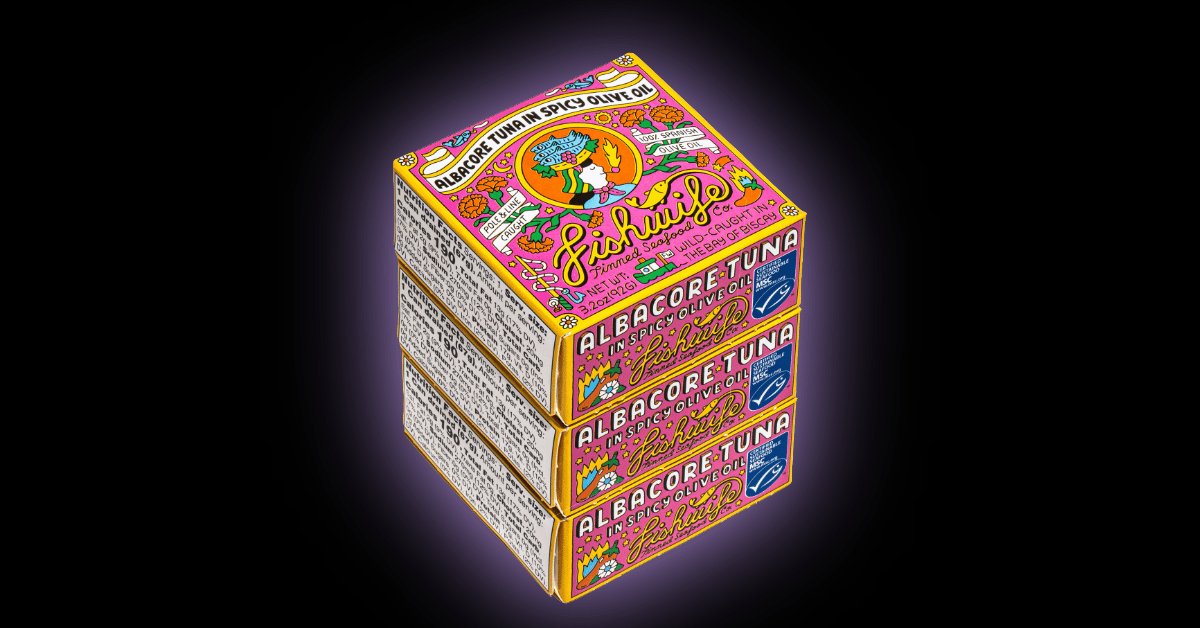
The most obvious signal is the packaging.
Loud colours, playful illustrations, and a visual language that feels closer to an art print than a grocery SKU. Designed by artist Danny Miller, the tins refuse the visual seriousness (and painfully boring) that dominates legacy seafood brands.
They are flirty, expressive, and absolutely gorgini. I'm not just glazing for glazing's sake. These tins are fabulous-you don't hide them in a cupboard. You don't want to.
You leave them out as a statement piece of their own.
And I think that matters more than it sounds.
Younger consumers are fluent in corporate aesthetics. Or, aesthetics in general, really. But that means they know what mass production looks like. When something visually resists that language, it signals independence, taste, and intention before you even really know what's inside.
The name does similar work.
"Fishwife" pulls from a historical, gendered insult and keeps its edge intact. Rather than sanding it down, the founders leaned into it, allowing the word to feel confident and slightly confrontational. There's no press-release feminism here. Just a sharp understanding of humour, reclamation, and cultural timing.
And crucially, the product holds up.
Fishwife sources from small-boat fisherfolk and sustainable aquaculture farms, with an emphasis on traceability and quality. Like?? Come onnn. Talk about nailing each aspect.
Tuna packed in Spanish olive oil instead of water changes the eating experience entirely. Richer texture. Better flavour. A sense that the price is justified once the fork hits the plate.
This is where many brands fail. Values are easy to talk about. Delivering a materially better product is harder. Fishwife does both without self-congratulation.
Its growth has also been deeply tied to internet literacy.
I.e. they're the cool fish on the block.
Co-founder Caroline Goldfarb's existing online presence meant the brand entered social spaces naturally, not as a performance. Recipes, jokes, collaborations, and events feel like participation rather than promotion. A tuna fish sandwich block party makes sense in the Fishwife universe. A stiff brand activation would absolutely not.
That looseness builds trust.
The brand understands the room, which is why attention from outlets like Vogue and Refinery29 felt earned rather than engineered.
Collaborations follow the same logic. Female-founded brands. Chilli crisp companies. Partnerships that add texture instead of reach-for-reach dilution. Each one reinforces a shared worldview rather than chasing scale for its own sake.
One of the lesser known strengths of the brand is its recipe content.
Simple, unfussy, and genuinely helpful. For audiences unfamiliar with conservas culture, recipes act as translation. They show how tinned fish fits into a life that values ease, aesthetics, and pleasure. Behaviour changes when imagination is given something concrete to work with.
What Fishwife has done here is no anomaly.
As consumers grow tired of innovation theatre, brands that cut through are often the ones willing to revisit overlooked categories and treat them with care, humour, and cultural fluency.
In this case, tuna, of all freaking things, became a canvas. Taste became identity. And a pantry staple became something people actively want to be seen with.
For marketers, the lesson isn't about colour palettes or influencer tactics. It's about restraint, confidence, and knowing when to let meaning emerge instead of explaining it to death.
And for you, it's a signal of hope. If canned tuna can rebrand, so can you x.
-Sophie Randell, Writer