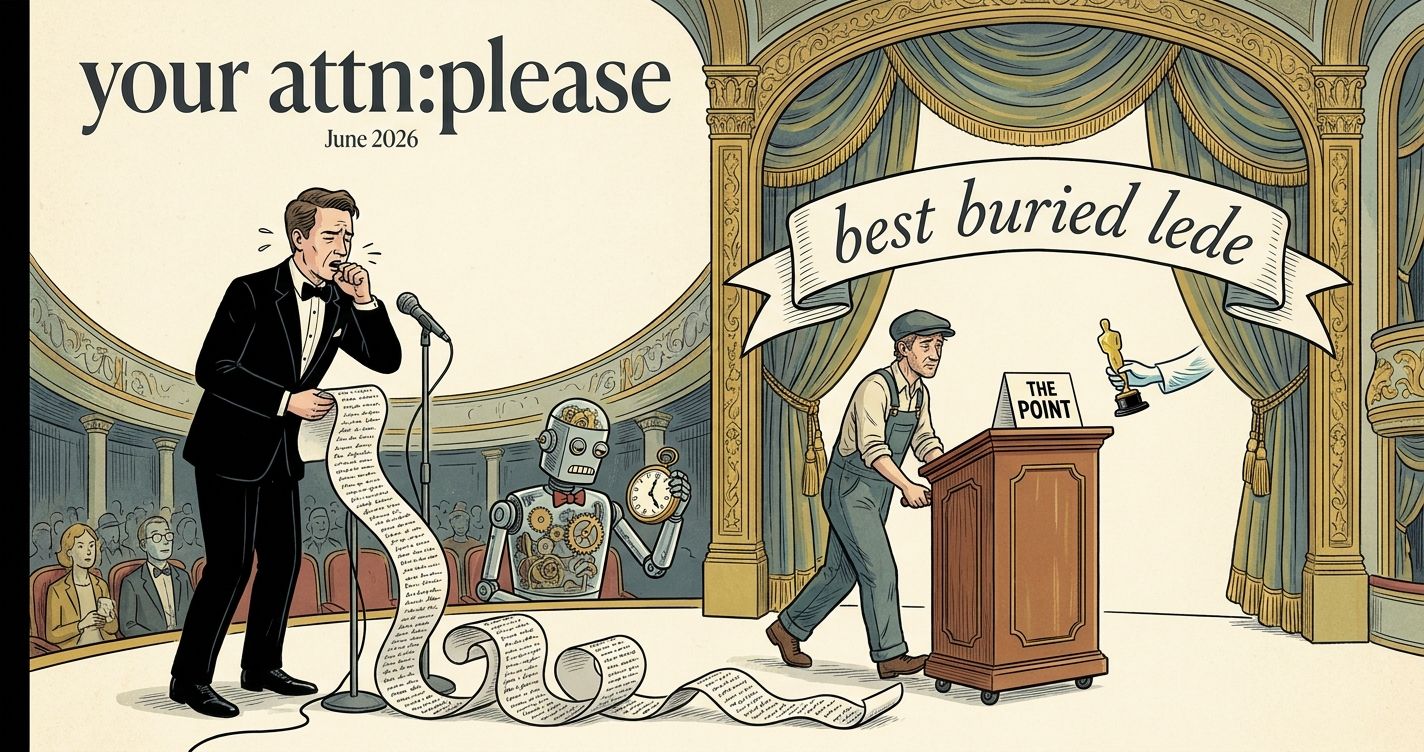
AI never quotes your best blog post because the answer is buried. The machine lifts a clean answer block from the top of a page. If you open with a story or a long wind-up, there is nothing to lift, so it skips you. The fix is the two-sentence rule: answer the question in the first two sentences, then explain.
I run a social media and education business in New Zealand. I have watched genuinely great posts get ignored by ChatGPT while thinner pages get quoted. It is not about quality of thought. It is about where you put the answer. Our SEO partner, The Optimisers, drilled this into us, and it is the single highest-return change you can make. This guide explains the rule and how to apply it.
Why your best post gets skipped
Your best post gets skipped because it makes the reader wait. AI search reads a page looking for a direct answer to a specific question. It finds that answer, lifts it, and credits the source. If your answer sits in paragraph six, after the intro and the backstory, the machine never reaches it cleanly.
About 65 percent of searches now end with no click, according to widely reported 2026 data. The AI answers, the user reads, nobody scrolls. So the only way to win is to be the source the AI pulled from. A buried answer means a missed citation, every time.
Quality is not the problem. Your post can be the smartest thing written on the topic. If the structure makes the machine work to find the point, it moves on to a page that hands the point over fast.
The two-sentence rule
The two-sentence rule is simple: answer the question fully in the first two sentences of the page. Not a tease. Not a setup. The actual answer, stated plainly, as if someone asked you out loud and you had ten seconds to reply. Then you explain underneath for the reader who wants depth.
Think about how you talk. A mate asks, "How do I get my content quoted by ChatGPT?" You do not start with "Well, in today's evolving search landscape." You say, "Put the answer at the top and add a clear definition." Then you explain. Write the way you would answer the question to their face.
This is what GEO preaches and what most blogs ignore. Practise it on your own pages and you have done the one thing that matters most.
Lead with the answer, then explain
Structure every page in two layers. The answer first, the explanation second. The top of the page is for the machine and the skimmer. The body below is for the reader who wants the full story. You serve both without choosing.
Here is the shape.
- The answer block. First two sentences. Direct, plain, complete.
- The credibility line. Who you are and why you know this.
- The detail. Sections that each open with their own short answer, then explain.
Notice every section heading on this page opens with its own answer before the detail. That is the rule applied all the way down. Each "##" section is a small page with its own answer block. The AI can lift any one of them.
Write the answer the way people ask
Match your words to the question. AI search runs on long, spoken questions now, not short keywords. People type and say full sentences. "How do I get cited by AI search" not "AI citation." Your answer should mirror that phrasing so the machine connects your page to the prompt.
Use the words real people use. If your audience says "get quoted by ChatGPT," write that, not "achieve generative engine citation." Plain words match plain questions. Jargon breaks the match.
A quick test. Read your opening line out loud. If it does not sound like a direct answer to a real question someone would ask, rewrite it. The closer your phrasing is to the prompt, the higher your odds of being the quoted source.
Two openings, side by side
The difference between cited and ignored is visible in the first line. One opening leads with the answer. The other warms up. The first gets lifted into AI answers. The second gets skipped. Same topic, same writer, completely different result.
Here is the warm-up opening, the kind most brands write.
- "In an age where artificial intelligence is reshaping how we find information, businesses everywhere are asking how they can stay visible. The landscape has shifted dramatically over the past year, and the rules are changing fast."
Here is the answer-first opening.
- "To get quoted by AI search, answer the question in your first two sentences and add a clear definition near the top. The machine lifts clean answer blocks. Bury the answer and it skips you."
The second one has a number of liftable claims in three sentences. The first one has none. Guess which one ChatGPT pulls from.
How to fix a post you already published
You do not need to rewrite old posts. You need to re-open them. Most underperforming pages have a strong answer hidden in the middle. Find it, move it to the top, and tighten it into two sentences. That one edit can flip a page from ignored to cited.
Run this pass on your priority pages.
- Find the real answer. It is usually already in the post, just buried.
- Move it to the top. Rewrite it as a direct two-sentence answer.
- Cut the wind-up. Delete the "in today's world" intro entirely.
- Add a definition. One plain sentence defining the main term.
- Open each section with its answer. Apply the rule all the way down.
For a Kiwi business with thirty existing blog posts, this is a weekend of work that can lift your whole site's citation odds. You are not creating anything new. You are surfacing the answers you already wrote.
Frequently asked questions
What is the two-sentence rule?
The two-sentence rule means answering the page's core question completely in the first two sentences, before any intro or story. AI search lifts the direct answer block from the top of a page. Stating the answer first, then explaining underneath, gives the machine a clean block to quote and credit to you.
Will leading with the answer hurt my reader experience?
No, it helps. Readers skim too. Leading with the answer respects their time and lets them decide if they want the detail below. The people who want depth read on. The people in a hurry get what they came for. You serve both, and the machine, with one structure.
Does this work for product and service pages, not just blogs?
Yes. Open any page with a direct answer to the question it targets. A service page can open with "We manage organic social media for New Zealand brands and have added over 180,000 followers to our own account in a year." Plain, specific, liftable. The rule applies to any page you want quoted.
How short should the opening answer really be?
Aim for 40 to 60 words across the first two or three sentences. Long enough to fully answer the question, short enough that the machine can lift it whole. If your answer needs more than that, it probably contains two answers. Split them across two sections, each with its own block.
Do I still need long, detailed content?
Yes. The detail still matters for depth, trust, and ranking. Answer-first does not mean short. It means the answer comes first and the depth follows. A long, thorough page that opens with a clean answer block wins both the citation and the ranking. Lead with the answer, then go deep.