Guys, we are so back.
Back as in, we’re getting to know our neighbours like the good old days.
For the last decade, we’ve all believed in this concept of the “global village." We traded the person across the street for a digital avatar across the ocean, convinced that proximity was an outdated constraint.
Then, the pandemic happened. As our digital tools became lifelines, they simultaneously revealed a stark reality: when a crisis hits, an algorithm cannot bring you a bag of groceries or check on your elderly father. The only thing that can do that is community. Something we seem to have lost over the years.
But today, we are witnessing the birth (or maybe, rebirth) of what Vox calls “neighbourism.” A practice of radical, everyday care rooted in proximity. It's a deliberate pivot from digital fatigue back to the tangible. One where the people who share our streets are seen not as strangers, but as co-creators of our safety and joy.
The drive toward neighbourism is more than a social trend and instead an actual biological necessity.
Research shows that a sense of belonging is as vital to human health as food and shelter. Go figure.
When we feel connected to those around us, our heart rate slows, stress-reducing brain regions activate, and our overall resilience increases. This is why I will die on the hill of the importance of community. It’s in our nature to want to be close to others.
A 2025 study in Psychology Today found that knowing just six neighbours is enough to significantly reduce feelings of loneliness and improve mental well-being. These weak ties, the casual hello at the mailbox or the brief chat over a garden fence, are what sociologists call “bumping spaces.” Unlike the high-pressure curation of social media, these low-stakes physical interactions provide almost like a social cure that buffers against anxiety and depression.
This is why the return to irl experiences is a digital detox that restores the self-esteem and confidence that constant online comparison has completely eroded over the last decade.
This shift sounds all nice and dandy and kind of feels like a pipe dream.
But it’s genuinely being built in real-time through hyper-local groups that emerged when institutional gaps became impossible to ignore:
- Christchurch, New Zealand. Following the 2010-12 earthquakes, residents leaned into social infrastructure like libraries, pubs, and parks to facilitate informal support networks. These third spaces became the blueprint for post-pandemic resilience. This proved that community-led initiatives are often more effective at identity-building than top-down government policies.
- The UK mutual aid surge. During the COVID-19 lockdowns, thousands of local groups formed to provide food, healthcare, and emotional support. Larger and more formal institutions struggled with bureaucracy. But these groups operated on a reciprocal model, focusing on the process of just simply helping rather than pre-set outcomes. And they did an amazing job. Because many are now permanent fixtures that address long-term needs like food insecurity through things like community fridges.
- Minneapolis, USA. In recent years, neighbourism has taken a radical turn toward community-led safety. Residents have stepped in to deliver groceries, to offer transport for those afraid to walk alone, and even coordinate childcare! In this day and age, this is almost unheard of. This goes way beyond "charity" in the traditional sense. This is a fully collaborative and community-based process that builds alternative forms of inclusion against the logic of transactional systems.
At its core, neighbourism is about moving from a transactional life to a reciprocal one.
From an individualistic “every man for themselves” mindset to one centred on community.
It’s the belief that safety and aid are not products we buy (via security systems or police, or government “supports”), but a relationship we build. This is found in the "Care Manifesto." It's the idea that acts of "not caring" often happen unthinkingly. And to truly care for our neighbours is a radical act of resistance against a culture of isolation.
The path forward is deceptively simple.
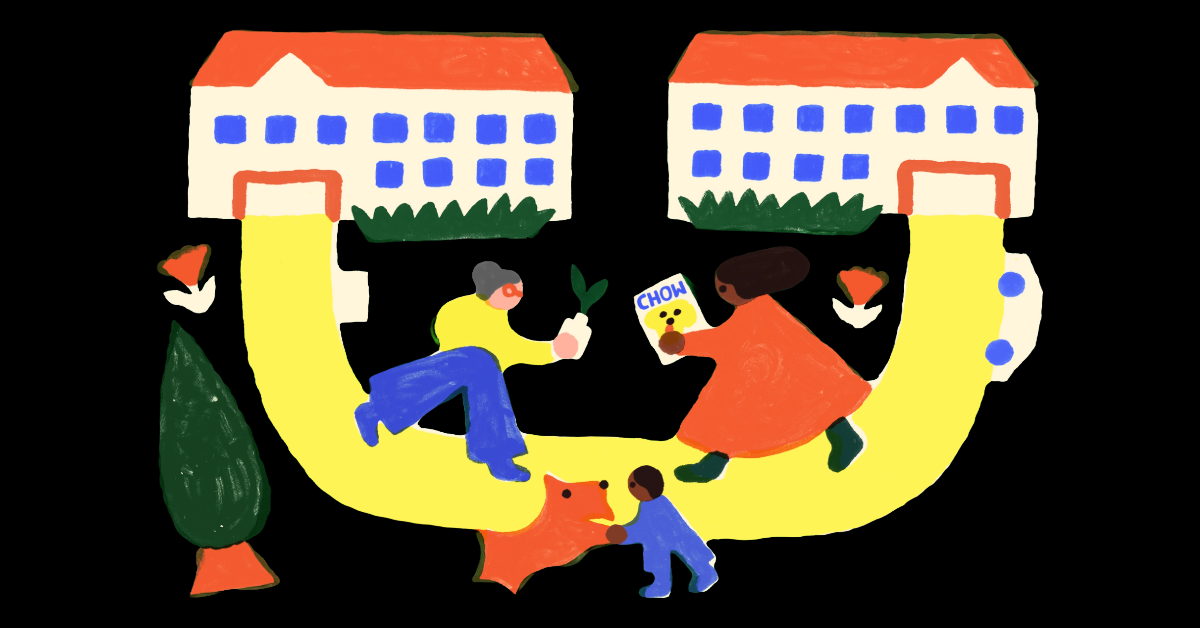
It starts with "bumping" into one another again. It’s the community garden where social bonds form organically over watering cans. It’s the "knock-knock" card for a new neighbour or a casual morning tea that transforms a street from a collection of houses into a mutual aid network.
As we emerge from an era of digital exhaustion, we are relearning a fundamental truth: our ability to thrive is inextricably linked to the well-being of the person on the other side of the fence.
It’s not a return to the past; it is a way to build a more resilient, joyful, and human future. Outside of the internet.
-Sophie Randell, Writer