In 2006, Andy Sachs didn’t know the difference between turquoise and lapis, and frankly, neither did most of us.
But when Miranda Priestly delivered THE monologue on the trickle-down economics of a cerulean sweater, not only did she give Andy the schooling of her entire life, but she also gave a generation of viewers a vocabulary for cultural relevance.
Twenty years later, the release of The Devil Wears Prada 2 has proven that the film’s cultural cachet is both intact, and a whole weapon of its own.
Other summer blockbusters rely on exhausting, rumour-fuelled press tours or leak culture to stay afloat. But the marketing for the sequel has felt like a seamless extension of the Runway universe. It is, truly, a masterclass in how to navigate a marketing landscape that has shifted from print-and-television dominance to a digital-first, immersive reality.
The nostalgia of the grind
To understand why the sequel has landed so effectively, we have to look at the bones of the original. For zillennials, the 2006 film was more than a fashion movie because it served as the ultimate workplace cautionary tale.
It romanticised the burnout as brilliance ethos of the mid-2000s, where suffering for your career was the only status symbol you strived for.
Re-entering this world in 2026 feels like a homecoming, but with a modern edge. The sequel’s narrative - pitting a legacy-defending Miranda against a high-powered Emily Charlton - hits home because the audience has grown up.
We are no longer the wide-eyed Andys; we are the Emilys who finally got the promotion and realised the view from the top is complicated. The film taps into a deep-seated nostalgia for an era of monoculture, where a single magazine cover could shift the global economy, while simultaneously acknowledging that the world has long moved on.
Marketing without the stunts
The most striking thing about the sequel’s rollout is what was missing. There were no manufactured feuds between cast members. No method acting horror stories. And no tacky publicity stunts. Instead, the marketers treated the film as the high-fashion relaunch that it was, with Meryl Streep even gracing the cover of Vogue – a nod to the reference.
In 2006, marketing was a one-way street: you saw a trailer on TV or a poster on a bus. In 2026, the film’s marketing team understood that the audience doesn’t want to be sold a movie; they want to live in its aesthetic.
So they leaned into organic integration. By the time the film hit cinemas, we had already seen Miranda-approved Starbucks orders on TikTok and Google AI try-on tools that let fans step into the Runway closet.
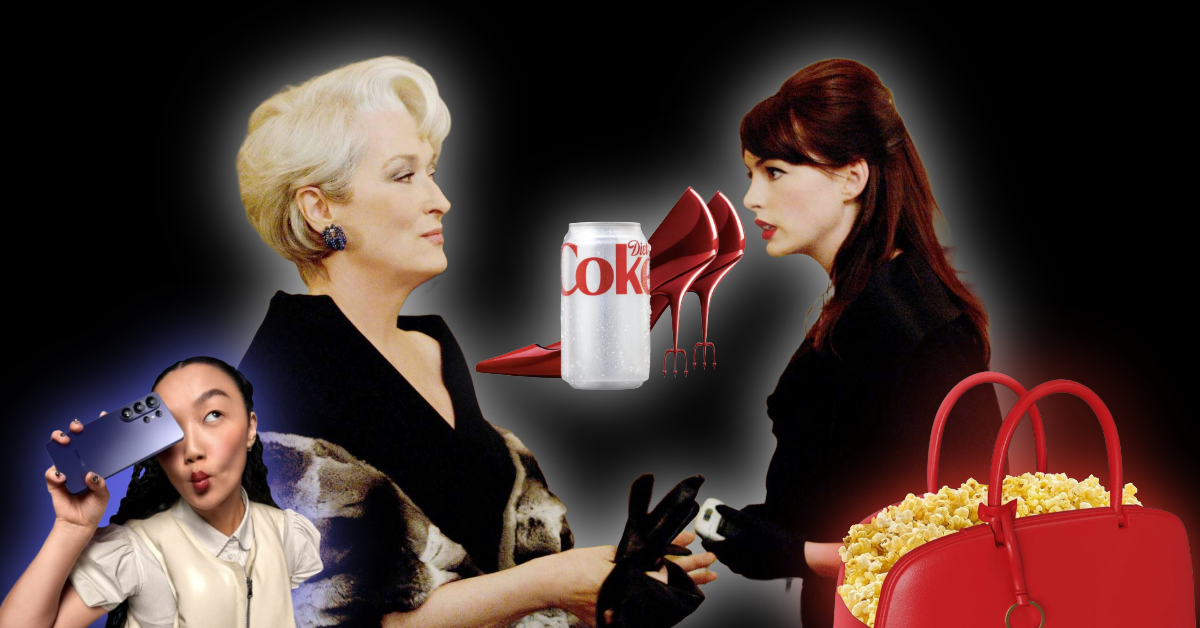
This method marketing saw the stars appearing in Vogue not as actors promoting a project, but as icons inhabiting a world. It blurred the lines between fiction and reality so effectively that when the Diet Coke ads dropped, focusing on the silent, panicked respite assistants feel the moment their boss leaves the room, it felt like a shared cultural joke rather than a commercial.
The new brand landscape
Brands have moved from simple product placement to narrative participation. Twenty years ago, a brand might pay to have their logo on a shopping bag in a scene. Today, brands like Samsung and Old Navy are creating entire sub-campaigns that exist within the film’s logic.
Samsung’s Galaxy S26 Ultra campaign showed how a modern-day Emily would use AI to manage the chaotic schedule of a fashion mogul. Old Navy sold Miranda-approved Cerulean, a direct nod to the fans who have spent two decades quoting the original.
This is the Cerulean Effect in action: taking a niche piece of film history and turning it into a retail event.
The strategy was split into two tiers: the aspiration (partnerships with Dior and Valentino) and the accessibility (Walmart and Starbucks). This ensured the film felt elite yet inescapable. It respected the film’s high-fashion roots while acknowledging that the people who grew up watching it are now the primary drivers of the consumer economy.
From gatekeepers to content creators
Perhaps the biggest shift between 2006 and 2026 is the democratisation of The Look.
In the original film, Miranda Priestly was the ultimate gatekeeper. She was the person who decided what was in.
Today, that power has fractured and is diffused across millions of creators.
The sequel’s marketing leaned into this by allowing the audience to be the insiders. Instead of keeping the fashion a secret, they released style evolution breakdowns on social media weeks before the premiere. They understood that in 2026, gatekeeping is dead and engagement is the new currency. By giving fans the tools to recreate the Runway look, they turned every viewer into a walking billboard for the film.
The Devil Wears Prada 2 is the perfect example of how to respect the past while mastering the present.
It trades the loud marketing of the 2020s for a sophisticated, quiet luxury approach that allowed the film's inherent style to do the talking.
It reminds us that while the tools of the trade have changed, the core of the Prada appeal remains the same. We all want to be part of the room where the decisions are made.
And as long as there is cerulean to be debated, we’ll be watching.
-Sophie Randell, Writer