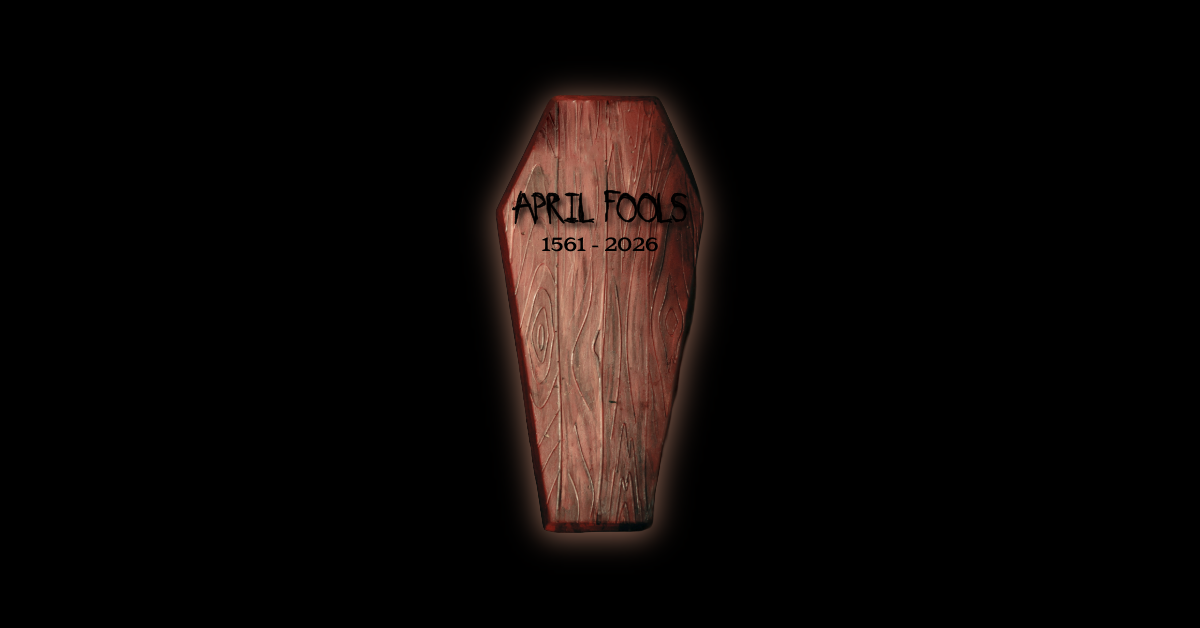
I did an interview recently with Zahra from New Zealand Marketing Mag, where we landed on the topic of the April Fools’ brand post.
If you’re unfamiliar and perhaps don’t live on earth, some context: for decades, April 1st was the one-day brands were allowed, even encouraged, to lie to us. But like, in a fun way.
We’d get fake announcements for some bs like "stuffless Oreos" or "pickle flavoured smoothies" (not that the latter is hard to imagine these days). We’d all share a brief, collective laugh, and move on. It was a harmless bit of "humanising" theatre.
But Zahra and I both agreed that in 2026, the tradition has… soured. It’s almost even become a liability. As our social feeds become an ouroboros of misinformation, the brand prank has shifted from a light-hearted gag to another exhausting exercise in what experts call epistemological dread.
The primary culprit in the death of the April Fools' prank is the sheer volume of AI slop we navigate daily.
In an era where generative AI can create photorealistic videos of CEOs saying things they never said, or deepfake product drops that look indistinguishable from reality, every day on the internet feels like a test of our (my) sanity.
Consumers in 2026 are already spending a massive portion of their digital lives performing reality checks, checking sources, squinting at finger counts in photos, and looking for the uncanny valley in video clips.
When a brand steps in on April 1st to intentionally add to that noise, it’s no longer a prank. It’s a contribution to the very mental fatigue that makes people want to log the f*ck off. We are tired of being lied to, even when the lie is supposedly "all in good fun."
The data supports this vibe shift.
According to recent sentiment analysis from 2026, engagement with April Fools' content has seen a steady decline, with negative sentiment rising as users call out brands for being out of touch.
The misinformation pivot began years ago, but it reached a breaking point this spring. Many major corporations that stepped back during the global crises of the early 2020s realised that their absence was actually preferred. Brands have discovered that authenticity drives more long-term ROI than a viral trick.
A 2025 study highlighted that brand authenticity scores are significantly lower for campaigns that use deceptive AI hooks, as Gen Z and Alpha consumers increasingly value radical transparency over clever marketing.
The brands that did manage to survive April 1st, 2026 didn't do it by lying.
(Hate to break it to ya’ll already planning next year's prank posts.)
They did it instead by leaning into the absurdity of the day while offering something tangible. We are seeing a move away from the “hehe, gotcha!" and toward "The Ploy."
Take Dunkin’, for example. Their 2026 strategy had no fake donut made of pickles in sight. Instead, they leaned into the collective scepticism of the internet by offering real rewards using the code "STILLNOTAJOKE." By acknowledging the audience's guard was up and rewarding them for it, they turned a day of distrust into a day of loyalty.
Similarly, brands like iFixit have pivoted toward high-end corporate satire. Rather than trying to fool people into buying a fake tool, they used the day to mock the very tech industry trends (like planned obsolescence or AI-everything) that frustrate their customers. This resonates because it positions the brand on the side of the consumer, rather than treating the consumer as the punchline.
The danger for brands today is that a failed prank results in more than a gigantic fkn sigh.
It results in a PR crisis. In a high-speed information environment, a fake announcement can be screengrabbed, stripped of its context, and circulated as fake news within minutes.
Once that happens, the brand loses control of the narrative. If a consumer feels genuinely tricked into excitement for a product that doesn't exist, the resulting disappointment isn't funny; it’s a reason to hit unfollow.
The conclusion here: trust is the new currency.
As marketing analysts have noted throughout this year, trust has become the most fragile and valuable currency in the digital economy. In our current landscape, the most successful brands don’t need to pull pranks out their asses. They need to actually provide a moment of clarity in a sea of synthetic confusion.
The April Fools' prank as we once knew it, the low-effort Photoshop and the cheeky press release, is effectively dead. What remains is a high-stakes test of a brand's emotional intelligence.
We don't want to be fooled anymore; we just want to know what’s real.