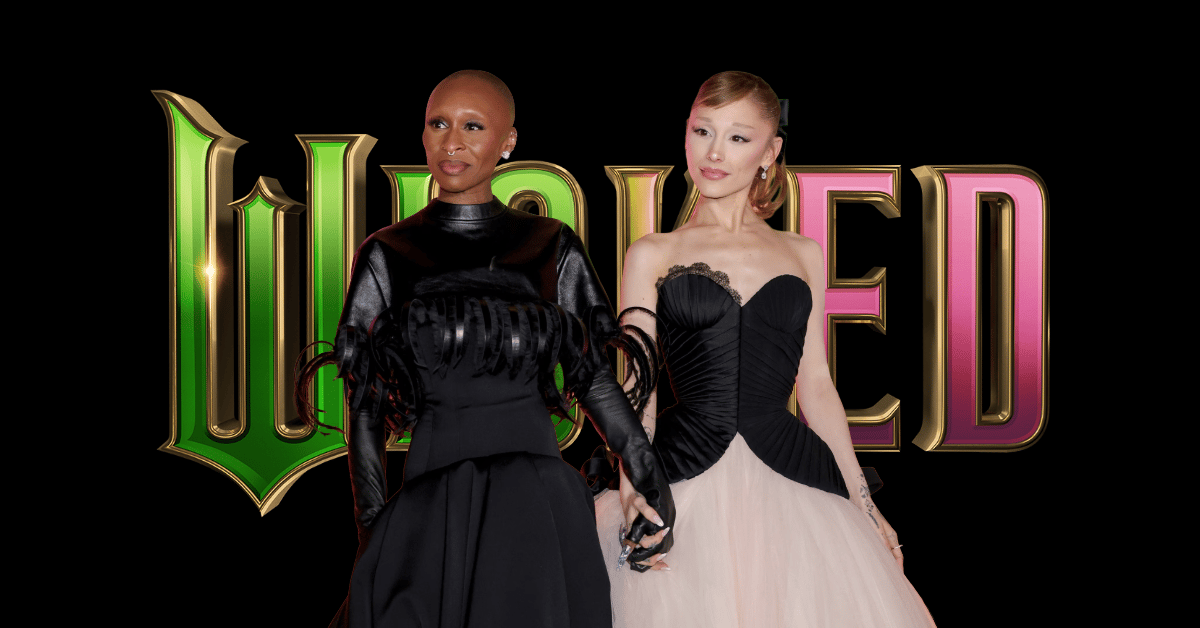
There's a particular kind of discomfort that happens when a press tour stops feeling like a celebration and starts feeling like a hostage situation.
Wicked has officially crossed that line.
What was meant to be Hollywood's glittery two-part musical revival has morphed into a never-ending cycle of viral crying clips, uncomfortable interviews, parasocial meltdowns, and fandom discourse that borders on forensic analysis.
It's messy, chaotic, and, frankly, very hard to watch.
And yet over 400 brands have signed onto the
The disconnect is staggering.
While the cast appears emotionally threadbare, the campaign is only getting louder. This is the culture-marketing tension we need to talk about: when a franchise becomes so commercially inflated that the human beings carrying it start to look like collateral damage.
And if you've seen even a snippet of the tour on your social feed, you'll know exactly what kind of collateral damage I'm talking about.
This isn't about the stars' personalities. It's about a system built to extract maximum emotional labour while pretending it's all part of the "fun."
Wicked is serving as a real-time case study in what happens when talent becomes content. Not performers, not professionals, but highly visible, highly monetised, infinitely dissected branding assets.
The discourse didn't sour because people suddenly decided to be mean.
It soured because audiences can sense when a media machine is running hotter than the people inside it. They can tell when a press tour has stopped being PR choreography and become a spectacle of psychological and physical stress. They can feel when the vibe shifts from whimsical musical magic to "hold on, is everyone actually okay?"
But despite that shift, the commercial apparatus keeps humming.
It's business as usual. Teal-washed collabs. TikTok filters. Corporate tie-ins. Branded playlists. Cross-promotions with everything from makeup lines to stationery companies. It's the marketing equivalent of throwing merchandise at a house that's visibly on fire.
This is where the ethical dilemma kicks in.
At what point do brands acknowledge the emotional cost of the publicity ecosystem they're actively fuelling? Where is the line between amplification and exploitation?
If you're going to attach your brand to a cultural moment, do you have any responsibility for the wellbeing of the people driving that moment?
Right now, the answer appears to be: no.
Brands are operating under the outdated assumption that "all press is good press." Even if the press tour is held together by tears, tension, and an internet that can smell burnout from 30 paces. But Gen Z doesn't buy that. They see overexposure as a red flag, not a flex. They see emotional instability as a sign that the marketing strategy has crossed into uncomfortable territory.
They don't want to participate in the commodification of distress. And right now, Wicked looks like distress wielding a Swarovski wand.
The emotional labour expected of today's talent has become absurd.
They're promoting a movie, discourse about weight, about mental health, about friendships, about co-dependency, about who stood too close to whom, about why someone cried in an interview, about whether someone's body language changed between press stops.
Every micro-expression becomes viral fodder. And every moment of perceived fragility becomes a marketing opportunity for someone else.
Brands get awareness. Studios get revenue. Social platforms get engagement. The cast gets emotional hazard pay in the form of public scrutiny.
We're so used to celebrity functioning as a semi-public utility that we forget there's a human body under the gown and a human brain behind the campaign.
When a press tour starts to look like a slow public unravelling, the question isn't "what's wrong with them?" The question is "why the f&%k are we still watching this?" And if we're still watching, why are brands still cashing in?
There has to be a line.
A moment where you stop turning a chaotic cultural moment into monetisable content and start considering whether the conditions causing the chaos are worth interrogating. If brands want to build empires around talent, they can't pretend they're bystanders when the marketing starts to erode the people involved.
A reflection of a marketing industry that will happily ride a cultural phenomenon right up to the point of public breakdown, as long as the engagement numbers hold.
A reminder that visibility is not the same as vitality. And a warning that parasociality is not a substitute for care.
The Wicked lesson here isn't about friendship or magic or defying gravity. It's if a brand campaign is big enough, nobody knows when to stop. Not the fans. Not the studios. Not the sponsors. And certainly not the machine that keeps spinning, even when the people inside it look like they're about to fall apart.
And that's a scary place to be in, all in the name of capitalism.
-Sophie Randell, Writer