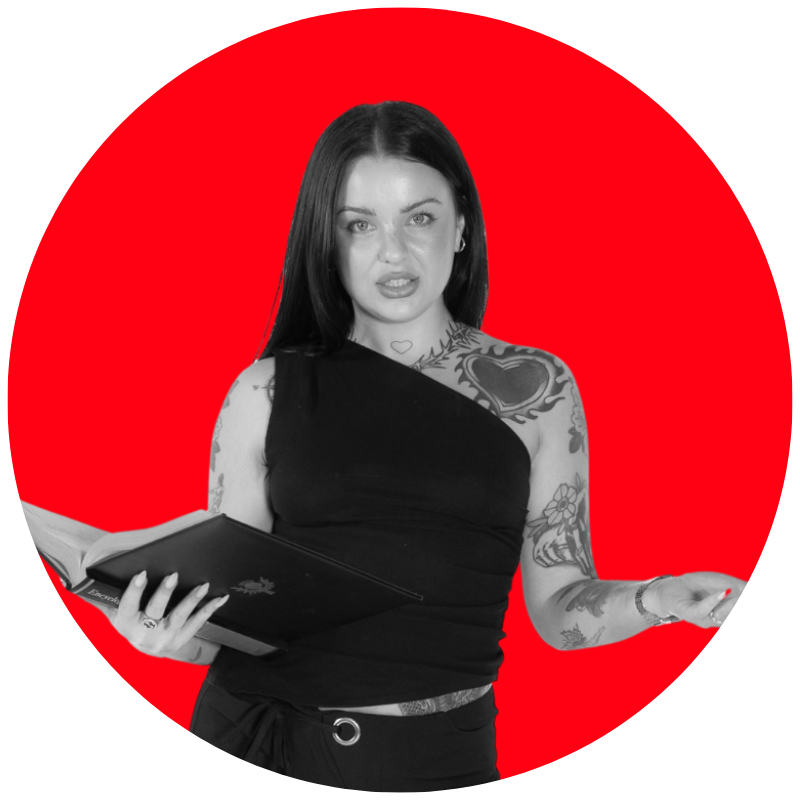
Influencer culture is finally getting weirder.
Great news for a strange little freak like me.
She's sleek, she's chic, she's oh-so-couture - and she's also totally unattainable.
That's why she's an influencer. That's why she stands out. That's why brands want her.
Because she's so damn poised, it's almost not human.
Think OG Instagram era: coordinated feeds, soft-glow presets, and an insatiable need to look like you have your life together 1000% of the time.
Whether it's perfectionist fatigue or the overwhelming amount of carbon in the air has finally started to melt our brains, I'm unsure. But I'm so totally here for it.
Last year we saw the rise of Tube Girl, aka Sabrina Bahsoon, the London-based viral sensation who turned filming herself dancing on the tube into a full-fledged phenomenon.
She embodies radical confidence without the traditional markers of "influence." No carefully angled selfies. No manicured brunch tables. Just pure, unfiltered, high key chaotic energy.
Tube Girl's rise signalled a shift.
And it's not just her.
The internet is slowly becoming full of people embracing their inner weirdo.
The essence of going goblin mode rejects aesthetic perfection in favour of chaotic, slouchy, and deeply unserious behaviour. All three of which are my natural state of being.
There are TikTok creators thriving off sheer randomness-like people narrating their lives as medieval jesters, or cosplaying as cryptids in the grocery store.
This shift reflects a deeper exhaustion with perfection.
Years of hyper-curated influencer culture have left audiences burned out on the unattainable. The rise of "vibe-first" influencers proves that people are more interested in authenticity (or at least, something that feels authentic) than in flawlessly executed branding.
There's also a psychological appeal. When someone like Tube Girl unabashedly dances in a public space, it gives the viewer permission to embrace their own weirdness.
It's freeing, it's fun, and most importantly, it's engaging. Social media today is less about looking perfect and more about feeling like you're in on the joke.
How brands can tap in: and no, I don't mean being "unhinged" like Duo the owl.
But nothing kills the weird little freak energy faster than a brand trying too hard to replicate it.
1. Being a freak is like a fart. If you have to force it, it's probably sh*t.
Instead of trying to manufacture viral weirdness, brands should look at how they can tap into natural internet humour. Let creators take the lead. The second something feels too calculated, it loses its magic.
2. Give influencers room to be themselves.
The rise of personality-driven content means influencers perform best when they're not boxed into a brand's rigid guidelines. A good partnership allows creators to weave a brand into their existing vibe, not force them into corporate weirdness.
3. Lean into cultural moments.
Tube Girl's success wasn't just about dancing on public transport. It was about fearless self-expression. Brands should focus on the why behind these trends rather than the surface-level gimmick.
4. Put down the Internet slang
You don't need to literally say "goblin mode" to acknowledge chaotic energy. The best brand voice is one that understands the culture without desperately clinging to it.
We're in an era where the most compelling people online aren't those who look untouchably perfect. They're the ones who make you want to hit "post" without overthinking it.
Influencer culture is getting weirder, looser, and more fun.
Brands that recognise this shift and adapt accordingly will thrive.
Those that insist on outdated, ultra-polished influencer marketing? Well, let's just say they might find themselves dancing alone on the metaphorical tube.