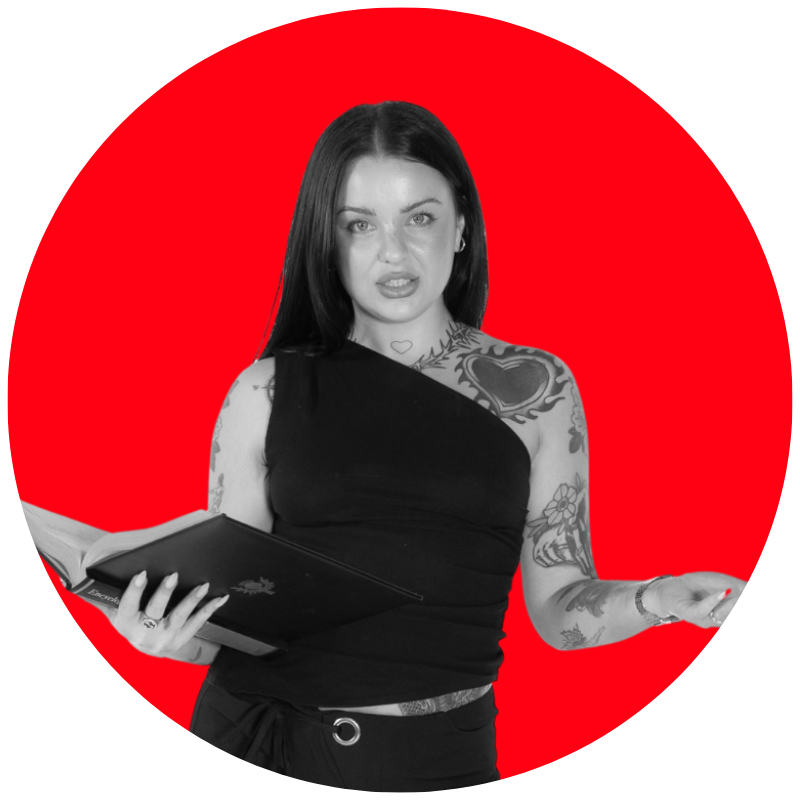
Tell me why my feed for the majority of this year has looked like a dystopian version of Don't Worry Darling.
There are more soft-spoken, home cooks in designer dresses than normal influencers these days.
It seems the 'trad wife' phenomenon has taken over the internet. And now, BBC is releasing a documentary about these 'problematic' creators that have been on the rise since the overturning of Roe v. Wade in 2022.
But on a larger scale, this begs the question: can trends actually be harmful?
If you're unfamiliar with trad wives, the term refers to women who are 'traditional,' stay at home wives and mothers. They perform domestic tasks like cooking and housework, dedicating their lives to caring for their children and husbands.
Online, the term was originally associated with women who make content about this particular lifestyle. These creators often encourage others to adapt their slower, folksy way of living.
Creators like Nara Smith, Lydia Millen and Hannah Neelman are all famous for the aesthetically pleasing, seemingly blissful, countryside-esque lifestyle they depict in their content. Social media users have labelled these women as 'trad wives.'
These include submitting to their husbands and promoting domesticity.
However, the growing class of influencers who identify as so-called trad wives don't necessarily identify or align with such ideals. Instead, many see it as a new life of aspiration they're leading, not a political stance against feminism.
Regardless, their videos promoting a return to the 1950's idea of housewifery are often met with backlash. For example, in one of her videos, creator Jasmine Darke tells viewers she's 'teaching her daughter that it's perfectly acceptable to depend on a man.' And it's causing widespread controversy.
Is this just a content trend where women genuinely enjoy floating around their homes with a feather duster, picking pretty flowers from the garden for a centrepiece, and baking bread from scratch?
Or does this phenomenon pose real danger, strictly enforcing female submissiveness and male domination?
The influencers who make this content may not be explicitly political. But the subtext here can't be ignored. And regardless of intention, this kind of content could perpetuate harmful ideals, pandering to those who believe women's rights have gone too far.