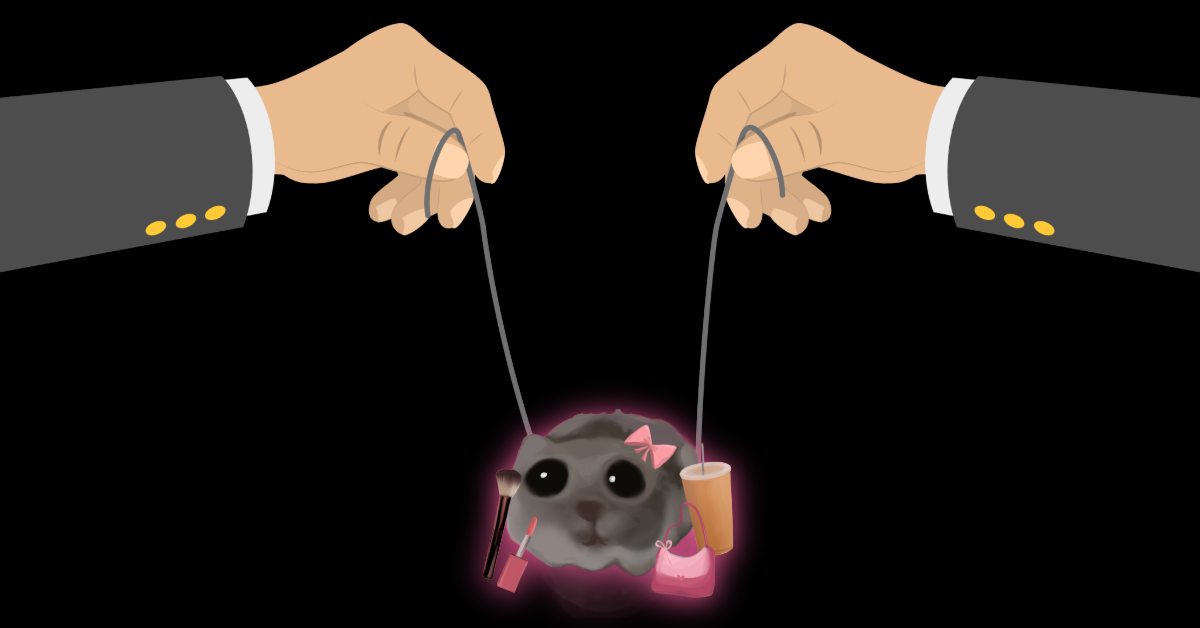
Earlier this week, I wrote about women infantilising themselves through trends like "good at blue store" rewarding and credit card magic wands.
Which feels like some f*cked up anti-feminist parallel reality where grown women market dependence as aspirational lifestyle. Except it’s real.
And then Kareem Rahma pointed out something this week that clicked everything into place for me: infantilisation and nostalgia aren't just aesthetic choices or individual worldviews.
They're institutional strategies. Like a sealant spread across generations to contain and keep people marking time instead of allowing evolution, unless such evolution profits the old. This is our cultural recession, and it's not accidental.
Institutions infantilise entire generations.
Rahma aimed this analysis at Millennials specifically: brands and corporations treat us like children, and we buy into it.
I know that life is hard, particularly adult life. But it's no excuse to regress into children. Because as a result, we feel increasingly incapable of doing "adult things" like buying houses, getting married, having kids, even starting businesses. His question: should we maybe be revolting?
The argument is that nostalgia and infantilisation function as pacifying handcuffs.
They don't prevent us from hurting ourselves or each other - they prevent us from dismantling institutions for the better.
If you keep people in a permanent state of childhood, they won't demand structural change, which in turn won't threaten existing power.
Look at online culture – we get "Kidcore" trending with bright and "cutesy" aesthetics.
MSCHF gives us oversized boots that look like they’re straight out of Astro Boy’s closet. Entertainment delivers Harry Potter's uncanny valley comeback. Despite that entire generation having aged out of the target demographic decades ago.
This holding pattern has been in place for twenty years. It's what Kyle Fitzpatrick calls a closed loop of the past covering the whole of Millennial adulthood, and most of Gen Z's too. We're trapped in cultural stagnation disguised as comfort.
We keep seeing trends emerge that are based in learned helplessness and that reward staying in this fugue state.
The credit card wand where grown women cosplay as princesses being rewarded for tolerating hardware stores. The thirty-year-old teen trends where adults dress and act like teenagers. Boy kibble and girl dinner. Reductive gender stereotypes presented as cute relationship content about incompetence.
None of these are individual moral failures. This is not our fault, but it is a real pattern. When entire cultural movements reward helplessness, dependence, and regression to childhood, something institutional is happening.
Infantilised consumers are profitable consumers.
Children beg for things. Adults with purchasing power who've been conditioned to think like children make impulse purchases based on emotional triggers rather than rational needs. They're easier to market to because their desires are less complex.
Infantilised workers are compliant workers. People who feel incapable of adult responsibilities like buying houses or starting businesses don't threaten existing economic structures. They stay in jobs they hate because they don't believe they could do anything else.
They certainly don't organise for better conditions. Because they've internalised that they're not competent enough to demand more.
People stuck in nostalgia loops aren't building new futures the same way people conditioned to learned helplessness don't dismantle oppressive systems. They retreat into comfort media, aesthetic trends, and consumption as coping mechanisms.
This ties directly into the broader cultural shift toward conservatism we've been tracking.
Quiet luxury, traditional gender roles, modest fashion, the bleached brows dropping 71% while everyone returns to natural conservative aesthetics.
All of it points the same direction - regression instead of progress.
Infantilisation and conservatism work together. Keep people nostalgic for the past so they don't imagine different futures. Keep them feeling helpless so they don't demand structural change. Keep them consuming comfort content so they don't organise for change.
Ok, so how do we fix it?
Awareness is the first step.
Recognising that your "good at blue store" content or your credit card wand birthday or your boy kibble dinner is participation in a larger pattern that keeps you passive and compliant.
Reject learned helplessness actively.
Every time you encounter messaging that you're incapable of adult responsibilities, question it. Are you actually incapable of understanding how retirement accounts work? Or has society just decided it's cuter if you pretend not to know? Are you genuinely bad at hardware stores? Or have you been conditioned to perform incompetence?
Build competence deliberately.
Learn the things you've been told are too hard. Start the business, buy the house (if you can), develop actual skills instead of leaning into cutesy helplessness. Financial independence at this point is political resistance.
Create new culture instead of just consuming nostalgia.
Make art about the present and future. Build communities around forward momentum instead of backward glancing. Demand entertainment that challenges you instead of comforting you with familiar IP.
Infantilisation and nostalgia are institutional tools keeping entire generations trapped in cultural stagnation.
Rahma asked if maybe we should be revolting. The answer is yes. But first we have to recognise we've been deliberately kept in a state that makes revolt feel impossible.
-Sophie Randell, Writer