We used to be a real country.
All Millennials will remember the iconic “duck face.” Despite being the target of extreme ridicule, the duck face was prominent throughout every MySpace and Bebo profile during the mid-2000s.
It was silly, even a little ironic. It was Hot Girl Sh*t.
The way we present our faces online has continued to evolve since then. We've gone from ironic performance to performative detachment, and again to something even stranger; a split in our culture. Between hyper-curated AI avatars or “Instagram face” and aggressive authenticity. Let's take a look at how we got here.
The performance era: millennial duck face (2010-2018)
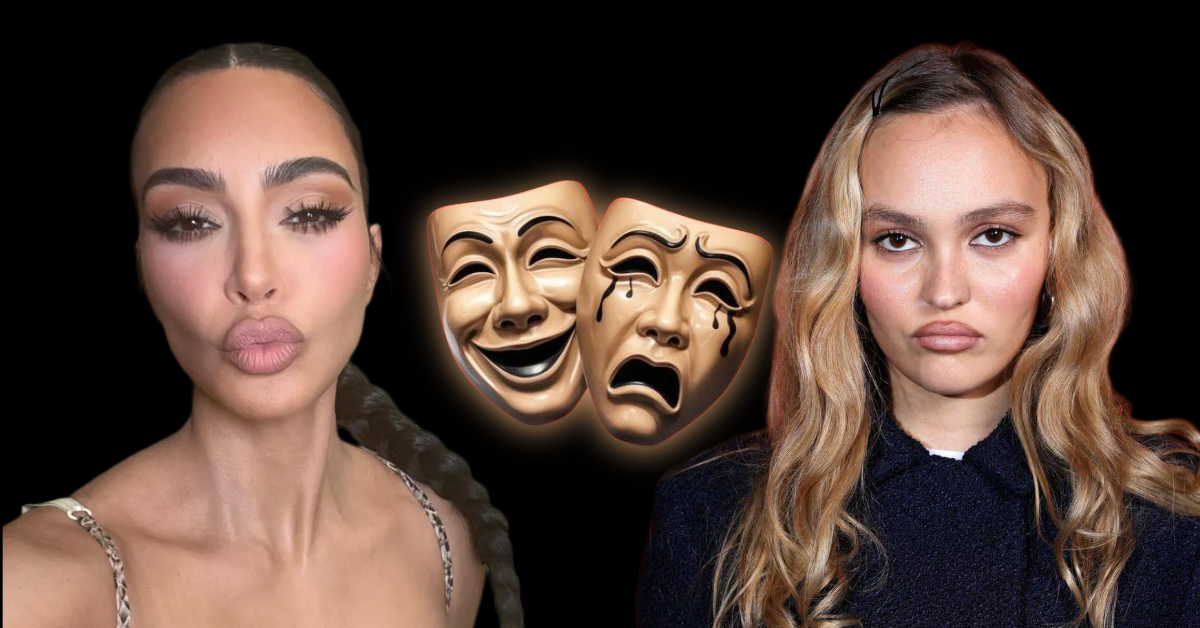
The millennial duck face was an invitation. Exaggerated pouts, strategic angles, high-energy expressions. Peace signs and tongue-out poses. This was truly the Main Character era - the birth of the selfie as a tool for validation where the signal was aspirational effort. But also, the pre-cringe era, where we were free.
The performance was obvious and that was fine. Everyone understood you were trying and nobody was pretending otherwise. The duck face communicated: I am putting in effort to look good, and I want you to notice.
The duck face said: if you’re Pete Wentz and you just HAPPEN to stumble across my Bebo, I better be pouting to the gods, and you better marry me for it.
The detachment era: Gen Z stare / dissociative pout (2019-present)
The Gen Z pout is a barrier.
The sulky expression, the SSRI stare, relaxed features, slightly parted lips, vacant deadpan “I’m medicated to the nines and I don’t care about anything” look. This is performative unbotheredness, a shield against cringe culture.
This was a direct reaction to millennial “try-hard” energy. By appearing numb or dissociative, you communicate that you're too cool to care about the act of taking a photo. The effort is still there, but now you're performing effortlessness. The pout says: I'm so unbothered by validation that I barely registered this photo was happening.
The pout says: I’m a cool girl and cool girls don’t smile.
Where the millennial face was an invitation to engage, the Gen Z face is a deflection. Don't perceive me too much. I'm here but I'm not really here (because I’m high as kite, or want to look like I am.)
The fork: hyperrealism vs the ugly shot
Now we see the road ahead of us split into two conflicting directions. The next stage of digital faces isn't one aesthetic - it's a binary choice that reveals your values.
Path one: The lobby face (hyper-surrealism)
The Instagram Face evolved. Thanks to GLP-1s and the excessive promotion of cosmetic procedures, we are now seeing an AI-adjacent, doll-like aesthetic where your face looks like it's in a rendering state - perfectly smooth, symmetrical, almost alien – definitely not real.
The lobby face. Like you're waiting in the metaverse lobby for your actual body to load.
The signal is status through technology. Your body is a project, and you have the resources to maintain an inhumanly perfect digital avatar. Filters, surgery, makeup, lighting - all deployed to achieve a face that looks less human and more like an optimised version of human. Because you are optimised – because you can afford to be.
This is the same logic as the AI surrealism we're seeing in fashion. Lean into the synthetic. Make the digital intervention obvious. Your face becomes art direction.
Path two: the ugly shot (aggressive authenticity)
The ugly shot isn't actually ugly, but a high-status performance of being real. The 0.5x wide-angle distortion. Intentionally bad lighting. Blurry night-out photos. Zoomed-in weird expressions. Bleached brows, messy hair and makeup. Strategic imperfection.
The signal is status through rejection. You're cool enough that you don't need to look traditionally pretty to be relevant. This is anti-design of the face. It says: I'm so secure in my social position that I can post unflattering photos and it doesn't matter.
But make no mistake - this is still curated. The ugly shot requires knowing exactly which kind of ugly reads as authentic versus actually unflattering. It's performed authenticity, carefully calibrated to signal that you're not performing. And it’s also privileged, because it takes a certain amount of pretty to pull off ugly, and get away with it.
Why both exist simultaneously
We're choosing between being perfectly synthetic or strategically messy. And both choices are responses to the same problem: AI made polish cheap, which made authenticity expensive.
The lobby face leans into synthetic perfection as aesthetic statement. The ugly shot rejects it as proof of human realness. One says status through technology. One says status through rejection. Both are performances and both are calculated.
Your face is no longer a static thing you have - it's a variable tool you deploy depending on what you want to signal. Instagram Face for aspirational content. Ugly shot for authentic moments. The mask is whatever serves the performance.
The dissonance as the new default
Are we moving toward a world where your face is strategic currency? The millennial duck face was singular; everyone did the same pose because everyone wanted the same signal. The Gen Z pout was also uniform - detachment as universal aesthetic.
But now? You toggle between hyper-synthetic and aggressively authentic depending on context. Your face becomes a tool for different platforms, different audiences, different moments. The performance is the switching itself.
The final evolution: The biological hard-drive (Frame-mogging)
If the Millennials were performative and Gen Z is dissociative, a new subculture, spearheaded by figures like Clavicular, is moving toward the purely biological.
In the era of looksmaxxing and frame-mogging, the "digital mask" isn't a pout or a filter; it’s the obsessive optimisation of bone structure and horizontal volume. It moves the performance away from the "software" of expression and into the "hardware" of the skeleton.
In this world, "status" isn't signaled by how you move your face, but by the fixed width of your shoulders (the frame) and the prominence of your collarbones. To "mog" someone is to exist in the same physical or digital space and rendered them invisible simply by having superior genetic proportions.
It is the ultimate "blackpill" conclusion to our digital evolution: if the face can be faked with AI and filters, the only thing left that is "real" is the bone.
The end of the human expression?
We have reached a strange terminal point.
We started with the duck face, a fun, albeit a little desperate human plea to be seen as attractive. We moved to the SSRI stare, a plea to be seen as coolly detached. We arrived at the lobby face, which turned us into polished avatars.
But with this frame-mogging bullshit, the "mask" has become the body itself. We aren’t performing a mood at all—we are performing a blueprint.
Whether we are leaning into the hyper-synthetic or the aggressively authentic, the goal remains the same: to survive the gaze of the camera. The digital mask hasn’t slipped—it’s just become permanent, tangible. We’ve stopped trying to show people how we feel and started trying to prove that we exist in the most perfected version possible.
The duck face was a joke we were all in on.
The new digital face is a war of attrition where the only way to win is to stop being human and start being a masterpiece of geometry.
-Sophie Randell, Writer