I read an article by the BBC today about Keith Haring and it hooked me.
Mostly because over the last few years, I’ve seen his artwork fkn everywhere. The only thing is, Keith Haring died of AIDS complications in 1990.
"His brilliance is in danger of being diluted," the title read. And you know what, I’d have to agree.
Keith Haring spent his final years creating radical art about HIV activism, safe sex education, and queer liberation. His work was protest. Political. It was explicitly, urgently about the AIDS crisis devastating his community.
Thirty-six years later, his kinetic pop art adorns H&M hoodies and Uniqlo T-shirts. Pandora sold charms, necklaces, and rings using his designs with messaging about vague concepts like inclusivity and diversity.
…with zero mention of his activism. They extracted the aesthetic and erased the meaning. Santisation like this is a whole f*cking problem.
So, we’re gonna chat about it.
How brands profit from radical art while gutting the message.
The Keith Haring Foundation distributed over $5.7 million in charitable grants in 2024. These went to supporting organisations helping those involved in HIV/AIDS education, prevention, and care. The brand collaborations funding this work make Haring's art accessible. Which is something that very much aligns with his belief that art is for everybody.
But accessibility without context is literally just commodification.
When Pandora described their collection as inspired by principles of inclusivity and diversity without mentioning why Haring created that work (HELLO, his queerness, his activism, his death from a disease the government ignored), they turned radical protest into palatable product. The aesthetic survives. The depth gets erased.
This pattern is everywhere.
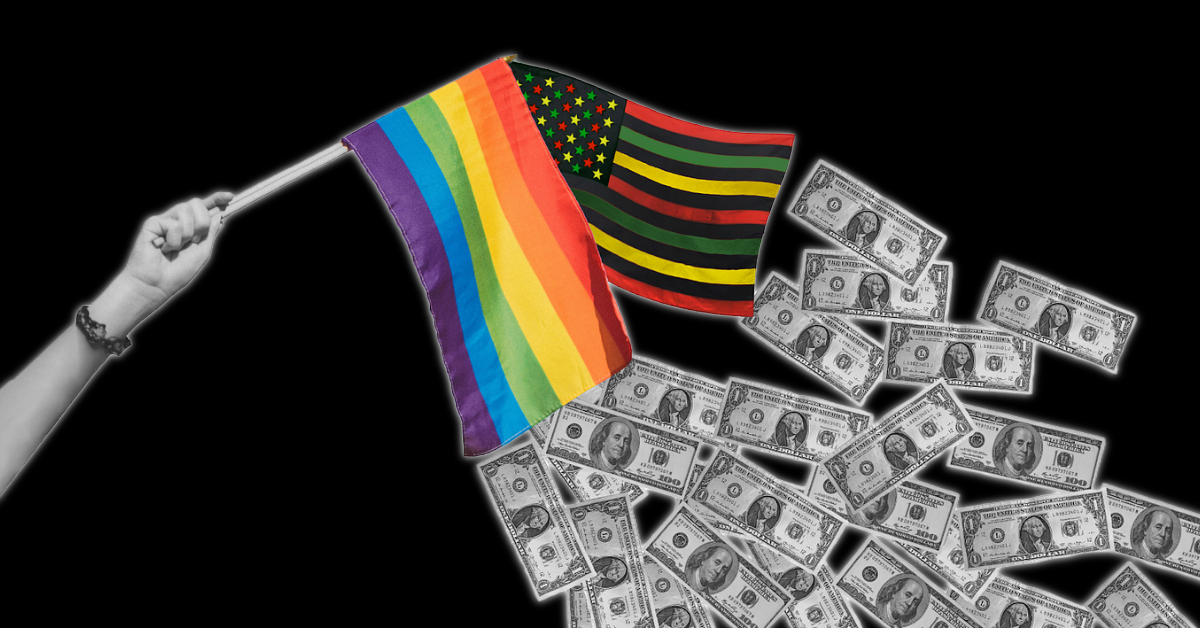
Rainbow capitalism does the same thing every damn June. Brands slap rainbows on products, sponsor Pride parades, and market themselves as LGBTQ+ allies. All while funding anti-LGBTQ+ politicians.
They commodify queer identity into bland consumerism, stripping Pride of its radical roots as protest against police brutality and systemic oppression. Same with February for Black History month. The performance of allyship replaces actual advocacy. And the aesthetics of solidarity become profitable while the substance gets discarded.
Feminist slogans get printed on fast fashion made in sweatshops. Black Lives Matter becomes brand messaging from companies that don't even employ Black people in leadership. Environmental activism gets co-opted by corporations greenwashing their way through climate destruction.
Why this matters beyond marketing critique:
When brands extract the aesthetic of radical movements while erasing the actual meaning, they actively dilute the movements (not to mention profit dishonestly lol). Pride becomes a depoliticised party instead of urgent and necessary protest. And Keith Haring becomes cute squiggly designs on a tee instead of AIDS activism.
Revolution merely becomes content.
Younger generations encounter these sanitised versions first. They see rainbow products and assume that's what allyship looks like. Or they see Haring's art divorced from context and miss the entire point of why he created it and the history gets buried under merchandise.
And meaning - actual meaning, the kind worth fighting for - gets warped through commercial exploitation until it's unrecognisable.
We allow brands to squeeze the life out of things because we've accepted that everything eventually becomes product.
Art, activism, identity, struggle - all of it gets flattened into marketable aesthetics emptied of substance.
Keith Haring established his foundation a year before he died because he knew his work had purpose beyond pretty pictures. That purpose - HIV/AIDS education, queer visibility, radical accessibility - still matters.
But you wouldn't know it from the Pandora collection. That’s erasure, babes. And that aint cute.
-Sophie Randell, Writer