It’s been a banner decade for reading.
Between the aesthetic hauls of BookTok and the rise of annotated-chic, books have been rebranded as the ultimate lifestyle accessory. But look closer at the spine, and you’ll see the cost.
We used to call them authors. Now, they’re individual brand units tasked with feeding a 24/7 content cycle just to keep their titles on the shelves.
This isn't just about books.
It’s everything from the recording studio to the potter’s wheel. The creative world is undergoing a forced metamorphosis. We are witnessing the death of the artist as a dedicated vocation and the birth of the creative-as-creator, a role where the primary product isn't the art itself, but the performance of making it.
In 2026, writing a 100,000-word novel is only half the job, and frankly, it’s the less profitable half.
To survive, authors must become main characters themselves. Success today looks less like a Pulitzer and more like a perfectly curated writing featuring a $40 candle and a specific brand of mechanical keyboard.
The TikTok-ification of literature has turned authors into their own marketing departments. We see the day in the life reels and the emotional reaction videos to their own plot twists. It’s effective, sure, but it’s an extraction. Every hour spent editing a 15-second transition is an hour stolen from the prose.
We’ve traded deep work for high-frequency engagement.
The music industry serves as the canary in this particular coal mine. Labels used to sign talent, now they sign data. If you aren't already viral-ready, you’re a liability.
Songs are now engineered for the snip. Musicians are incentivised to bury the melody in favour of a 15-second hook that functions as background noise for a GRWM or makeup transition video.
We’re seeing a generation of artists who are influencers who sing, where a relatable personality is a prerequisite for a record deal, and holding a song hostage until it reaches a certain number of TikTok creates is standard operating procedure.
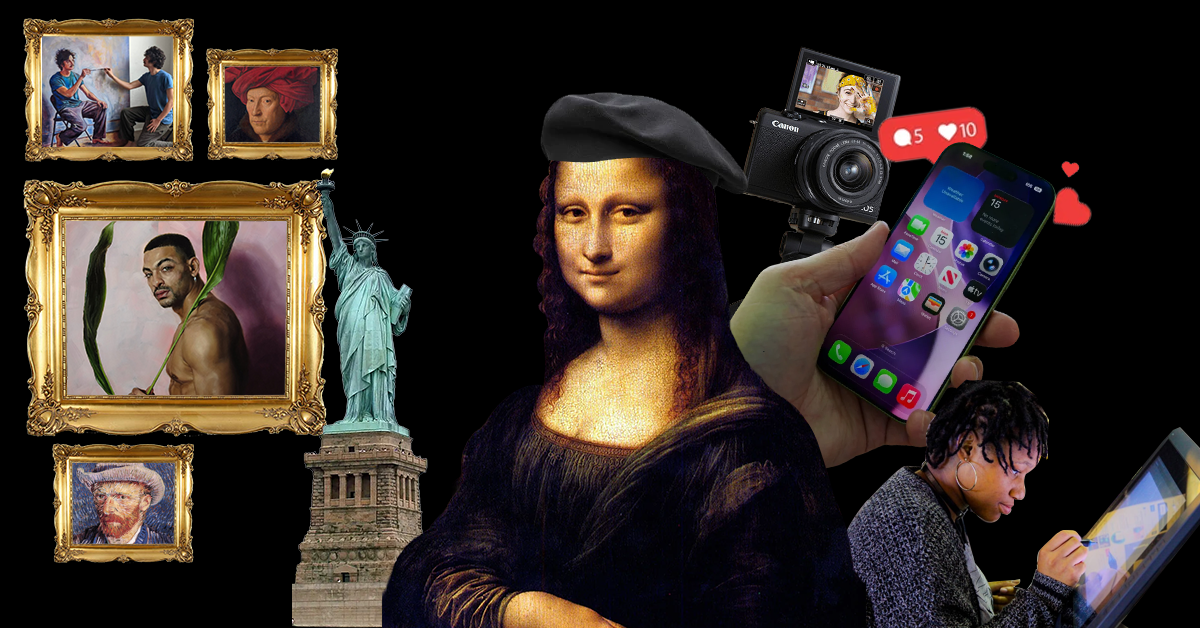
Even visual arts have been flattened by the scroll.
The traditional gallery, once the gatekeeper of prestige, has been bypassed by the digital gallery, which is far more democratic and far more exhausting.
To stay relevant in a feed that refreshes every millisecond, artists have become "aesthletes." The goal isn't necessarily to produce a masterpiece, but to produce volume. The work in progress video is now almost more valuable than the finished canvas because it provides sticky content for the algorithm. I can’t tell you how many Reels I’ve seen recently with the OST “show you working, not your work.”
The artist is no longer a craftsman, but now a curator of their own identity, selling the behind-the-scenes vulnerability, because that’s what the metrics reward.
We’ve democratised access, but we’ve also commodified the soul.
While social media has allowed independent creators to bypass the old-school gatekeepers, it has replaced them with a far more demanding boss: the algorithm.
This is the new survival contract for the creative class. You can be an artist, but only if you’re a content creator first.
You can have the career, but only if you’re willing to turn your internal life into a public-facing brand. The danger is that art may become a secondary byproduct of the grind. In the race for attention, the creator survives, but the artist might just get lost in the feed.
My question is: what more precious parts of humanity will the algorithm take from us? Only time will tell.
-Sophie Randell, Writer