I’ll be honest with y’all.
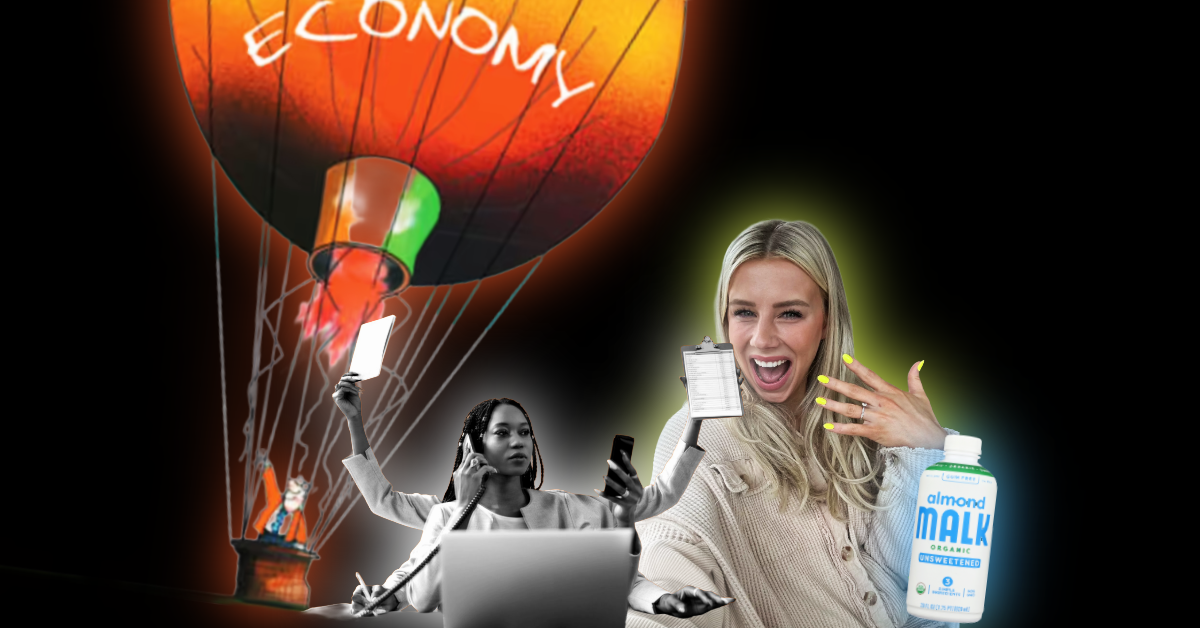
If I see one more GRWM featuring a minimalist apartment, a specific brand of overpriced almond milk (you knowwww the one) and a creator talking about their productivity hacks in a voice so soothing it’s actually clinical, I might throw my phone into the sea. I know, I hark on about "peak polish" but holy f*ck you guys, it’s boring.
Because when everybody and their mother is using the same lighting kits and the same freaking scripts, nobody is actually memorable. I couldn’t tell you one of these creators handles or name any defining feature. Because there are hardly any.
I recently went down a rabbit hole of creator strategy videos, and one piece of advice hit me like a cold espresso shot:
Stop trying to be a brand and start trying to be a world.
Okaaay. Now we’re talking.
So here is how you actually craft a recognisable strategy that doesn't feel like a carbon copy of everyone else on your FYP.
1. Archetype over niche
I know we’re often told that we need a narrow niche. “I help B2B SaaS founders optimise their LinkedIn headers.” Great. You’ve niche-d yourself into a coffin.
The creators who you actually pay attention to most of the time don't have such specific niches, instead they have archetypes. Instead of positioning as marketing expert, they are the chaotic older sister who happens to know a lot about SEO or the cynical philosopher of the creator economy.
You see the difference? Your archetype gives you permission to be human.
It’s essentially your two-word brand. Are you Aggressively Helpful? Quietly Revolutionary? A Sardonic Expert? Pick your two words and let them dictate your tone, because your audience is looking for a character to follow, not a textbook to read.
2. Welcome to your cinematic universe
We talk a lot about visual identity, but usually, that just means picking a hex code and a font. It’s cute but it’s not really a brand. Closer to a stationary set.
A recognisable brand feels like entering a distinct world the second someone lands on your profile. So if your brand was a movie, what would the production design look like?
- The textures: is your world neon and glass, or thrifted sweaters and old paper?
- The mood: are we in a fast-paced thriller or a slow-burn indie flick?
When you treat your content like an era much like a pop star launching an album, you give your audience visual signals to cling to. Consistent colours and fonts are the bare minimum; consistent energy is the goal. You want people to see your thumbnail and feel the vibe before they even read the hook.
3. The hot take economy
If you don't have a "villain" in your industry, you don't have a brand.
Generic advice is a commodity. In the age of AI, I can get a Top 10 Tips for Productivity list in four seconds. What I can’t get from a bot is your specific, slightly spicy, potentially controversial opinion on why those 10 tips are actually ruining our lives.
Digital trust in 2026 is built on H.U.M(AN). connections:
- Hooking with a POV, not just a fact.
- Understanding the deep, dark pains your audience actually feels (not just the ones they admit to).
- Messaging that sounds like a DM, not a press release.
Stop playing it safe. If everyone agrees with your "brand strategy," you’re just background noise.
4. Stop re-inventing the wheel
The most successful creators I know are actually the laziest (in a smart way). They don't wake up every day wondering what to post. They use content pillars as a compass (this is something I really need to work on myself lol).
Take one big idea, one pillar video or deep-dive essay, and chop it up. One long-form YouTube video becomes three TikTok rants, two LinkedIn hard truths, and a spicy tweet thread. In the name of both efficiency and omnipresence.
You want to be the creator who is everywhere, but you can only do that if you stop trying to be a different person on every platform. Use the same voice whether you're writing a 2,000-word deep dive or a 15-second clip.
The bottom line is this; we don't want to follow people who are famous; we want to follow people who feel like us, or better yet, the version of us we want to be.
Stop trying to be perfect. Start being distinct. In a world of AI-generated perfection, the most recognisable thing you can be is a person with a messy, loud, and incredibly specific point of view.
-Sophie Randell, Writer