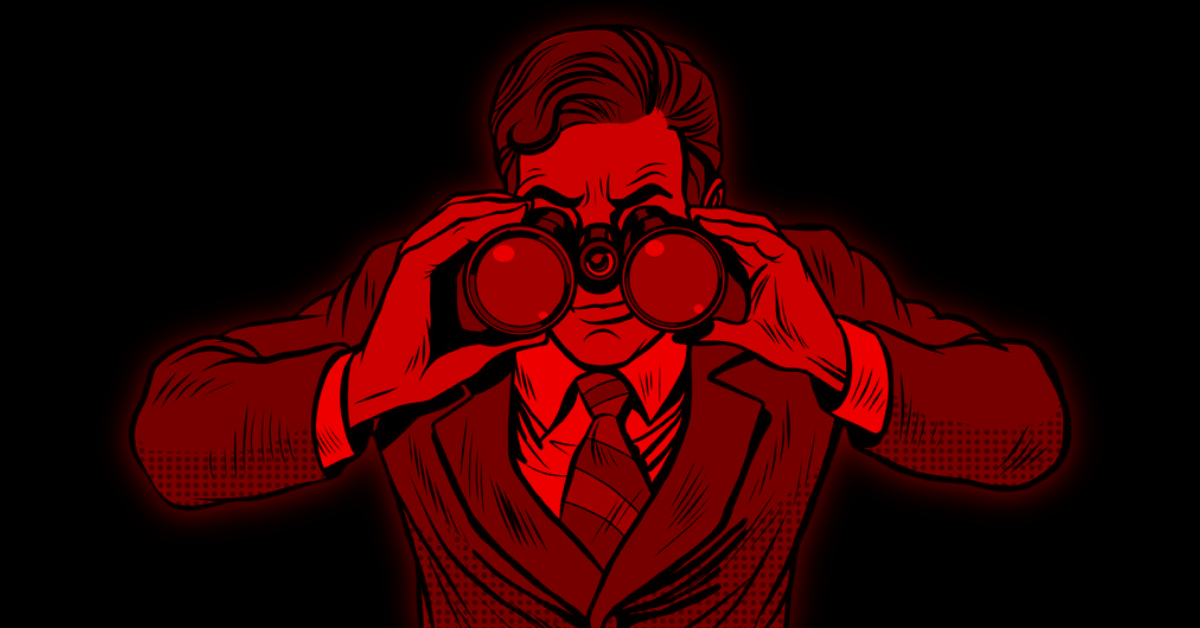
Dude, do you mind, you’re scaring the hoes?
And by hoes, I mean ALL OF YOUR CUSTOMERS.
Take your business hat off for one moment and zoom out. You know that feeling when a brand emails you about something you only mentioned once in a conversation near your phone? Or when an ad follows you across the internet for weeks after you looked at a product one time? That’s what you’re doing. That's the creepiness-to-value ratio tipping the wrong way.
We live in an era where surveillance is simultaneously everywhere and under extreme scrutiny.
The Ring camera saga is the more recent/ extreme example. But AI is tracking every click and scroll of yours daily, collecting data for brands you probably didn’t know you were giving them to. And customers are getting increasingly uncomfortable with how much companies know.
As marketers, we loooooove personalisation. The data shows how well it works for acquisition and retention. But what we're not measuring is how often that personalisation crosses the line from helpful to horrifying.
Customers are constantly making intuitive judgments about whether personalisation feels helpful or like surveillance.
Every interaction with your brand sits somewhere on this spectrum. And most brands have no idea which side they're truly landing on.
When personalisation provides genuine value, recommending something you actually need based on a purchase you made, remembering your preferences to save you time, etc etc, people appreciate it because it’s helpful personalisation.
When personalisation reveals that you're being watched more closely than you realised, like retargeting ads that follow you for months, emails that reference conversations you had offline, recommendations based on behaviour you didn't consent to tracking… that's surveillance. And surveillance makes customers want to leave.
Most marketing teams are optimising for metrics that don't capture creepiness.
You're tracking click-through rates, conversion rates, engagement metrics. What you're not tracking is the moment someone thinks "how the f*ck does this brand know that about me" and starts looking for the unsubscribe button.
AI and personalisation tools have made it so easy to hyper-target that brands do it without considering whether they should. Just because you can serve someone an ad based on their location data, browsing history, and inferred demographic information doesn't mean that level of targeting feels okay to the person receiving it.
The problem compounds when different parts of your tech stack share data in ways customers don't understand or expect.
They bought something from you once. And suddenly your entire ecosystem knows about it. Your email platform, your ad network, your SMS marketing, your app notifications.
From their perspective, they gave you one piece of information. From your perspective, you're maximising customer lifetime value. The gap between those two perspectives is where trust goes to die.
Helpful personalisation is transparent about what data you're using and why. Amazon showing you "customers who bought this also bought..." works because the logic is clear and the value is obvious. You understand why you're seeing the recommendation, and it helps you find related products.
Helpful personalisation respects boundaries. Spotify's year-end Wrapped campaign uses your listening data to create something you want to share. It also feels celebratory rather than invasive. Why? Because you actively chose to use Spotify to listen to music… the data collection was expected, the output slaps.
Helpful personalisation gives control back to the user. Netflix lets you manage your viewing history and profile preferences. You can delete things you don't want to affect your recommendations. The personalisation improves your experience, but you're not trapped in an algorithmic box you can't escape.
How to stop scaring the hoes (customers):
Ask yourself: Would a customer be surprised or uncomfortable if they knew exactly how you got this information about them? If the answer is yes to either, you're probably too far into surveillance territory.
Build in transparency: Tell people what data you're collecting and how you're using it. Not in a 10,000-word privacy policy nobody reads, but in plain language at the point of collection. "We'll use your email to send you order updates and occasional promotions" is way less creepy than silence followed by unexpected marketing emails.
Give people control: Let them opt out or delete their data. Show them what you know about them. Every layer of control you give back shifts the ratio from surveillance toward partnership.
And maybe most importantly: Just because you can personalise something doesn't mean you should. Sometimes generic is better than creepy. And sometimes broad targeting is more respectful than hyper-specific freaking stalking.
Personalisation works when it makes customers' lives easier without making them feel watched.
That's the line. One side is helpful recommendations and time-saving preferences. The other side is retargeting ads that follow you around the internet like a bad smell for three months after you looked at a product once.
We're living in the surveillance age whether we like it or not. But customers are getting wise to it. They're questioning how much companies know, deleting apps that feel too invasive, and most importantly, choosing privacy over convenience far more than they used to.
If your personalisation strategy tips too far into creepy, customers will leave.
So learn to ride the line. Ask whether the value you're providing is worth the creepiness factor. Because if it's not, you're not optimising for customer retention. You're optimising for customer flight.
-Sophie Randell, Writer