Everyone loves an exclusive club.
If you say you don’t, you’re lying. I’m sorry. There’s just something that feels so good about being somewhere most people aren’t. It’s human nature. Sue me.
Let’s face the facts: the public internet is not a place many people want to be right now. Overrun with bots, AI slop, engagement bait, surveillance, trolls, and an increasingly hostile attention economy that exhausts everyone who participates in it.
We know people are leaving, I’ve written about this a hundred times. Not logging off entirely, but retreating.
And I’ve noticed a number of people starting to build "private internets." Carving out intentional spaces that exist outside the algorithmic chaos. Creating what some are calling "dark forests", basically hidden, invite-only worlds where real humans gather (without the predators).
This is the middle ground for people who don't want to join the carnivalesque, sweaty underground wrestling clubs, but also can't stomach the public internet as it currently exists.
And it might be the most important shift in digital culture we're witnessing right now.
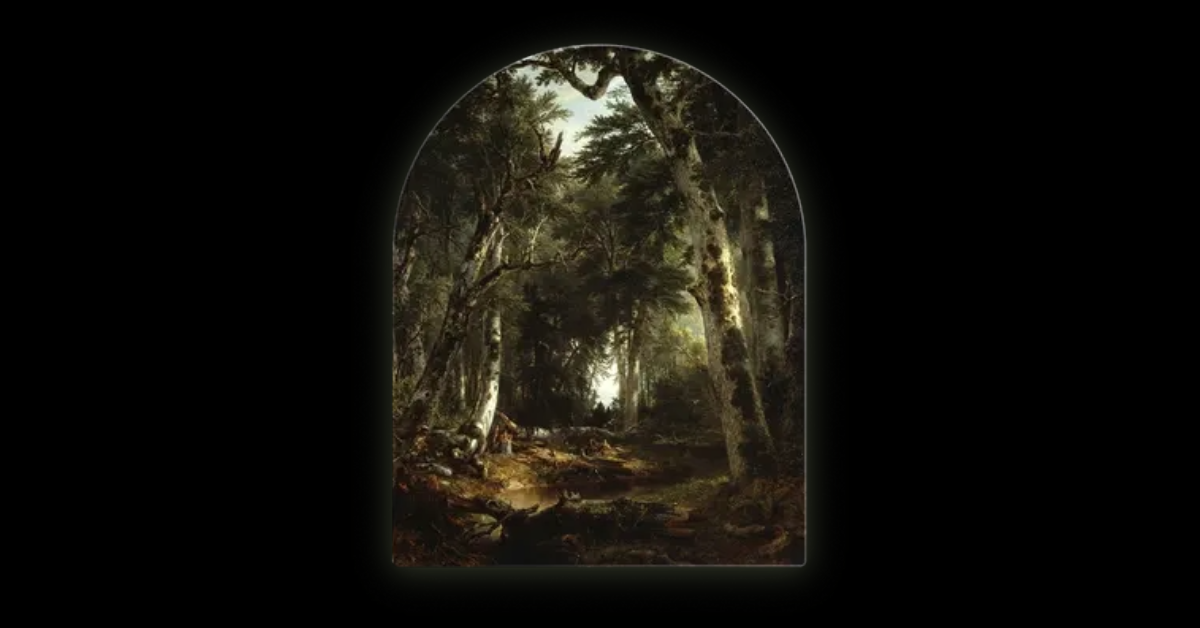
The concept of dark forests comes from Liu Cixin's sci-fi trilogy and was applied to the internet by Yancey Strickler back in 2019. The metaphor? Imagine a dark forest at night. It's quiet, nothing moves, you might assume it's empty. But it's not - it's full of life. The forest is quiet because that's when predators come out. To survive, everything stays silent.
The public internet has become that forest full of predators. Yes, real human ones, but also ads, tracking, trolling, bots and AI scraping your content dry to train its models.
We exist in a time where, increasingly, more content is generated by machines than humans. So real humans are going quiet and retreating to private channels where they can actually exist without being hunted. Strickler wrote about this six years ago. Now, in 2026, it's no longer theory and people are building the infrastructure to make it work.
Projects like Dark Forest OS, Moods Codex, and others are creating private, invite-only spaces that feel fundamentally different from the public internet.
These are not social media platforms trying to maximise engagement. They are not trying to scale to billions. They're just intentional communities of 20, 50, 200 people who actually want to be there.
Metalabel (the team behind DFOS) puts it perfectly: the most important places have always been the spaces we can't see. The group chats, shared docs, Discords with 50 active members. Groups, not audiences. Real communities held together with duct tape and volunteer time.
DFOS is building an operating system specifically for this. One that creates one unified world instead of ten different platforms smushed together.
This is what I mean by private internets where creative groups can actually collaborate and build without the noise. The team at Metalabel have moved entirely into their own DFOS space. “We're building the bridge to the new creative era. Where we're going: aligned, self-controlled, building and sharing value in worlds of our own.”
That's what people are craving. Genuine connection and collaboration in online spaces again. Something that’s been lost along the way of bots and optimisation and the whole mess that the internet has become right now.
For years, the internet playbook has been the same: get seen, get followers, build an audience, cash in.
Some people made it to the top, and everyone else burnt out from trying.
The indie internet rejects that entire model. It's not about scale or reach. It's about depth, quality over quantity and being known by the right 200 people instead of vaguely familiar to 20,000.
This ties directly into fractured virality - the shift from mass reach to niche community resonance. But it goes further. It's not just about reaching specific communities on public platforms. It's about creating entirely separate spaces where those communities can exist on their own terms.
No algorithms deciding what you see or jumpscare freaking ads interrupting conversation. No bots or trolls. No performance anxiety about posting (lorrrrd please.) Just people who chose to be there, gathering in a space they collectively control.
The timing isn't coincidental.
The public internet has become genuinely hostile (as I so often like to mention lol). AI is flooding platforms with synthetic content (see: Pinterest). Engagement bait dominates feeds. Privacy is an absolute joke. Community guidelines are inconsistently enforced. And the platforms themselves are increasingly unstable takes deeeeep breath.
People are tired. I AM TIRED. We are tired: exhausted from performing. And optimising and being forced to feed an algorithm that couldn’t care less about us. The public internet is hardly the most viable space for genuine connection or creative work. In fact, it’s laying in a hospital bed flatlining. Even Sam Altman, part of the cause of all this mess, recently admitted it.
The dark forest movement is saying, "Let's build something else."
Metalabel hinges on the idea that togetherness is the key to infrastructure designed specifically to make creative groups more capable. Not individuals building personal brands, but collectives working together in shared private spaces.
"As individuals our powers are limited," they write. "In groups we become exponentially stronger."
This is a fundamental shift in how we think about the internet. The first era empowered individuals to discover and become themselves online. This next era gives groups those same powers.
If this movement succeeds, and it already is in pockets across the internet, it would mean a complete inversion of how digital spaces work.
Instead of everyone performing for invisible audiences on public platforms, we'd see more small intentional groups gathering in private worlds they control. Instead of chasing scale, choosing intimacy. Instead of building personal brands, building collective capacity.
The public internet won't disappear. But it could eventually become a wasteland of bots talking to bots, ads served to no one, engagement bait circulating endlessly while many of the real humans have retreated to their dark forests.
The indie internet is here. The question is just whether you're ready to leave the carnival behind and find your forest.